NVIDIA DLSS 4.5 vs DLSS 5 is not simply a choice between two versions of the same upscaler. DLSS 4.5 improves NVIDIA’s existing Super Resolution and other rendering features, including Dynamic Multi Frame Generation. DLSS 5 adds a different technology, 3D-Guided Neural Rendering, which enhances lighting and materials using the game’s existing rendered scene.
A driver update can make newer DLSS models available, but it cannot put Neural Rendering into a game that has not been updated by its developer. Hardware support is different too; the two technologies shouldn’t be treated as one upgrade.
NVIDIA DLSS 4.5 vs DLSS 5: the main differences
| Question | DLSS 4.5 | DLSS 5 |
|---|---|---|
| Main change | Second-generation transformer models for Super Resolution and Ray Reconstruction, plus Dynamic, 5X and 6X Multi Frame Generation | 3D-Guided Neural Rendering for enhanced lighting and materials |
| Hardware | Super Resolution on supported GeForce RTX generations; 5X/6X and Dynamic MFG on RTX 50 | Local neural rendering on RTX 50 and RTX Spark; eligible GeForce NOW Ultimate cloud games |
| Game requirements | Matching DLSS features in the game and supported NVIDIA App override where applicable | Developer-added DLSS 5 integration and a supported game update |
| Can an App model override enable it? | Yes for eligible supported DLSS 4.5 models and modes | No, a normal Super Resolution model override does not unlock DLSS 5 |
DLSS 4.5 arrived in stages. The January update introduced second-generation transformer models for Super Resolution, while NVIDIA’s August 2026 release added a second-generation transformer model for Ray Reconstruction. Ray Reconstruction’s update improves image quality in supported ray-traced and path-traced games. Dynamic Multi Frame Generation and fixed 5X and 6X modes are separate DLSS 4.5 additions for compatible RTX 50 GPUs.
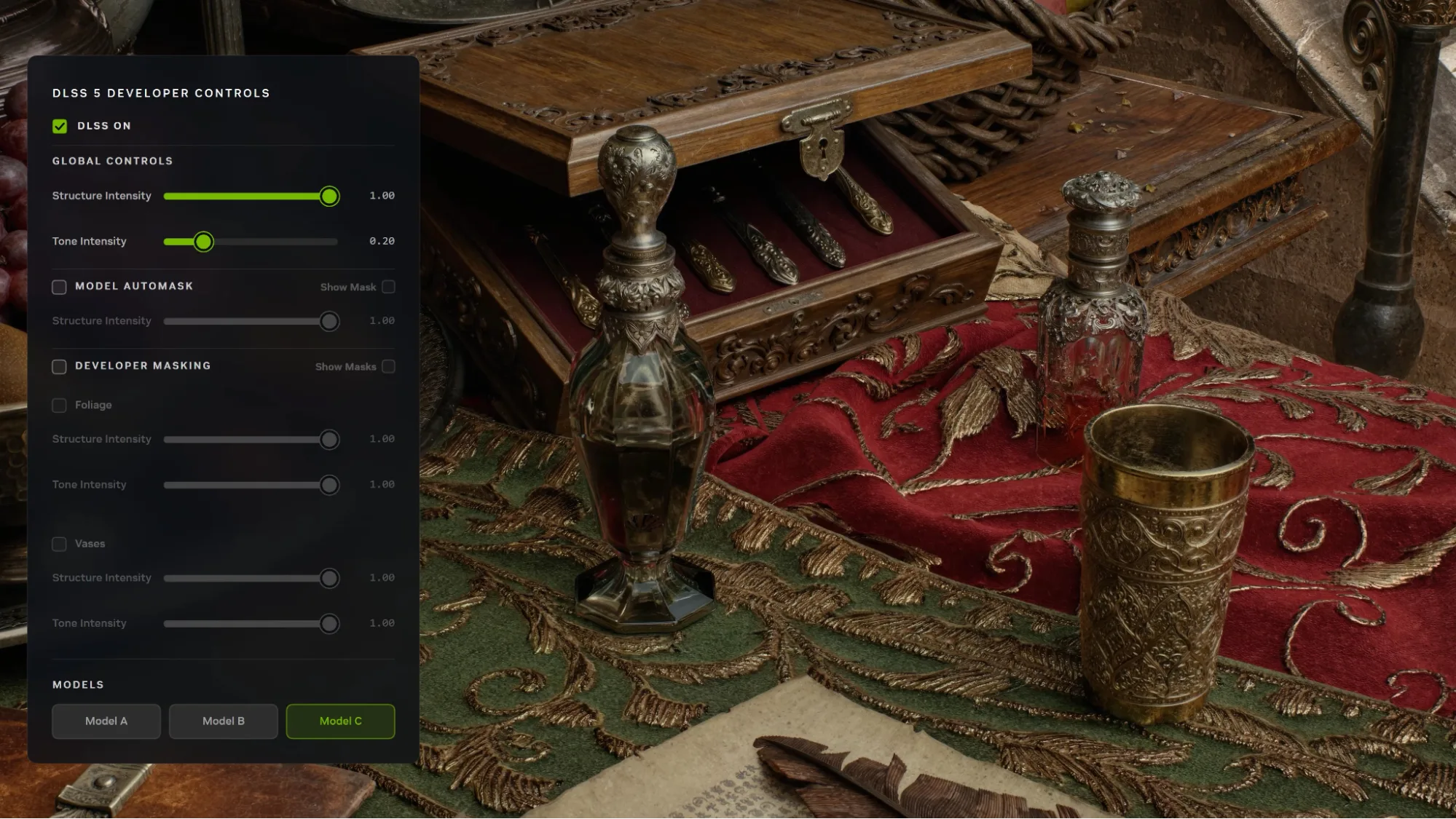
DLSS 5’s 3D-Guided Neural Rendering is a final graphics pipeline stage. NVIDIA says it uses the engine’s frame, geometry, textures and motion data to enhance visual details such as lighting, shadows and materials while letting developers control the style. It is not the same feature as generating multiple additional frames.
NVIDIA DLSS 4.5 vs DLSS 5: what Super Resolution improves
With DLSS 4.5 Super Resolution, NVIDIA introduced Models M and L alongside the older Model K. In the NVIDIA App, Recommended assigns M to Performance, L to Ultra Performance at 4K, and K to the remaining modes. The newer models aim for better edge clarity, motion stability and reconstruction in appropriate scenes.
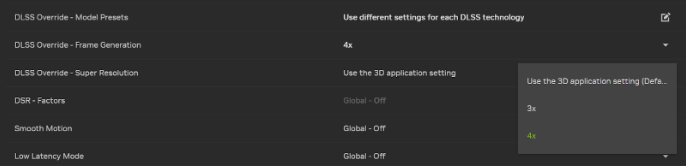
The Frame Generation side is separate. Dynamic Multi Frame Generation adjusts the generated-frame multiplier toward a target frame rate, while 5X and 6X are fixed multiplier options. Those newer Multi Frame Generation modes are for RTX 50 Series GPUs, rather than every RTX card that supports DLSS Super Resolution.
What does DLSS 5 add that DLSS 4.5 cannot do?
The central distinction in NVIDIA DLSS 4.5 vs DLSS 5 is that DLSS 5 adds 3D-Guided Neural Rendering, which NVIDIA describes as using AI to infer more realistic lighting and material appearance from the game’s authored rendering data. Developers tune the result to preserve the original artistic direction. The October 2026 neural model is faster and lighter than NVIDIA’s previous demonstration version.
The feature is integrated by developers into individual games. War Thunder’s Eagle’s Shadow update brought it live on 11 November 2026, following earlier implementations including NBA 2K27 and Hogwarts Legacy. Where Winds Meet is scheduled to get its update on 23 November. A graphics driver cannot make a future game patch arrive early.
NVIDIA DLSS 4.5 vs DLSS 5 GPU support
DLSS 4.5 Super Resolution models are available for supported RTX 20, 30, 40 and 50 Series systems in eligible games. However, NVIDIA warns that the newest M and L models can have a higher performance cost on RTX 20 and 30 GPUs, which do not have native FP8 support. Model K can remain a sensible alternative.
DLSS 4.5 Dynamic Multi Frame Generation and the fixed 5X and 6X modes require RTX 50 Series GPUs. That is a different compatibility condition from the Super Resolution component of DLSS 4.5.
NVIDIA’s currently announced local DLSS 5 Neural Rendering support is for GeForce RTX 50 and RTX Spark systems. Eligible GeForce NOW Ultimate streams can provide the feature without that GPU physically installed in the viewer’s computer. An RTX 40 or RTX 30 card does not gain local Neural Rendering simply by installing the latest Game Ready driver.
NVIDIA DLSS 4.5 vs DLSS 5: how to enable each
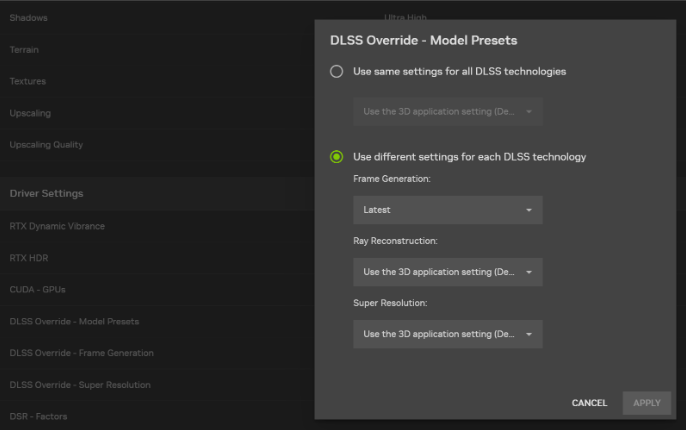
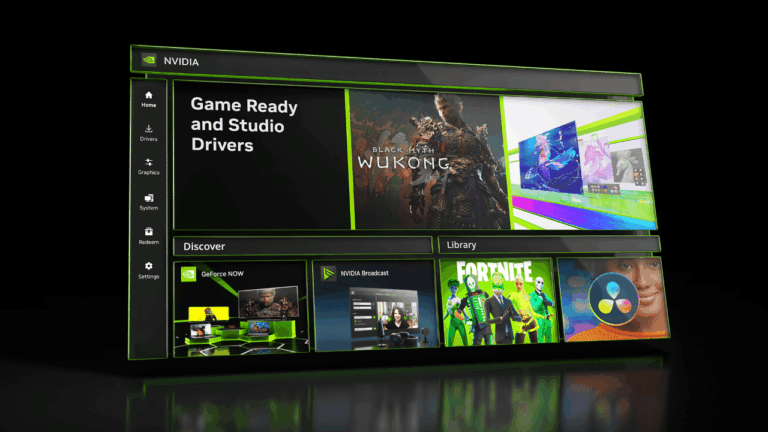
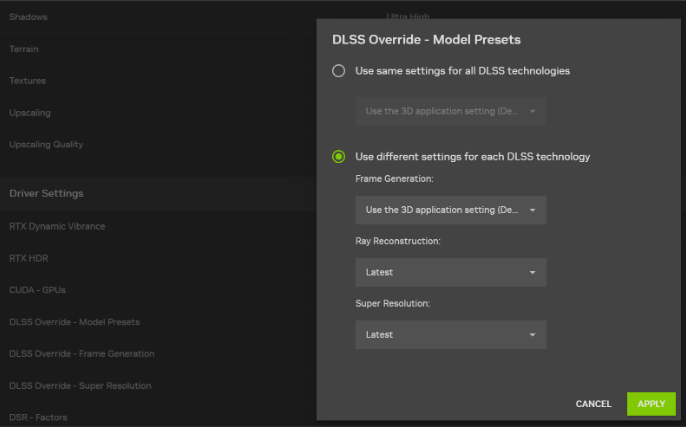
For DLSS 4.5 Super Resolution, open a supported game, enable its DLSS Super Resolution setting and use NVIDIA App > Graphics > Program Settings > Driver Settings > DLSS Override – Model Presets > Recommended. Apply, relaunch, and use Alt+Z > Statistics > Statistics View > DLSS to check the active model.
For DLSS 5, you need a supported GPU or eligible cloud environment and a game with the appropriate developer update installed. Look in that game’s own graphics options for the Neural Rendering implementation. NVIDIA App’s ordinary Super Resolution override cannot create DLSS 5 in a title that does not support it.
NVIDIA DLSS 4.5 vs DLSS 5: is DLSS 5 a replacement?
No. In NVIDIA DLSS 4.5 vs DLSS 5 comparisons, NVIDIA’s own DLSS technology overview presents them as different parts of a wider family of rendering tools. DLSS 4.5’s Super Resolution and Frame Generation functions continue to be useful and can be paired with other compatible effects when a game supports them.
Related Guides
For more on NVIDIA DLSS 4.5 vs DLSS 5, these guides cover model settings, GPU support and game updates.
Official source: NVIDIA: DLSS technology, feature descriptions and GPU compatibility.