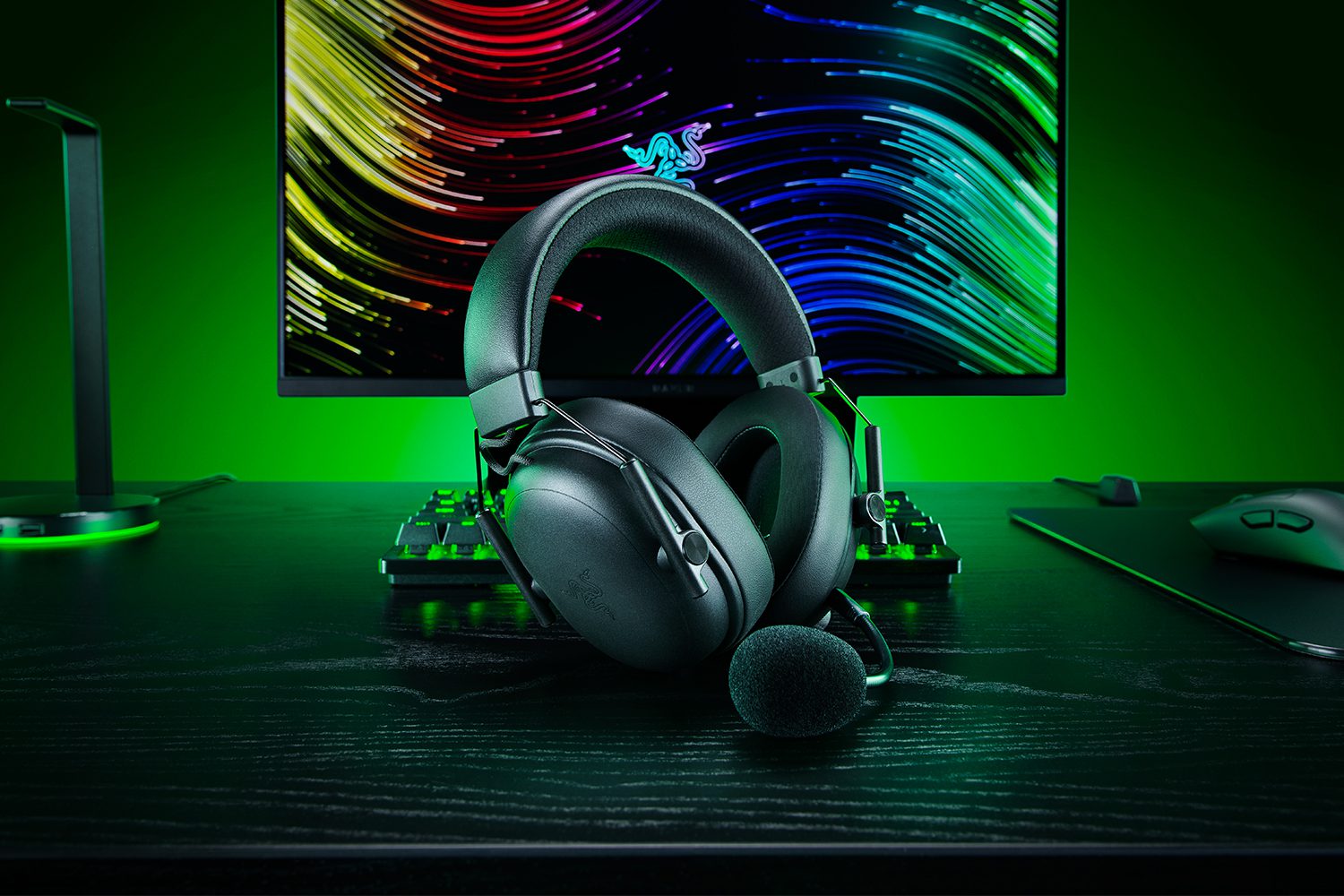
Razer BlackShark V3 review has a simpler challenge than most premium headsets: it needs to sound good, stay comfortable and keep latency low without charging Pro-model money for features most players will barely use. At £149.99, the standard BlackShark V3 sits in a very competitive part of the market, but that restraint is exactly what makes it appealing.
The headset keeps Razer’s esports-first identity with 50mm titanium drivers, a detachable wideband microphone and HyperSpeed Wireless Gen-2. It is not trying to be a lifestyle headset covered in touch controls and ANC. Instead, it puts positional audio, comfort and voice chat ahead of extras, and that focus works.
Razer BlackShark V3 review: price, versions and core hardware
Razer sells separate PC, Xbox and PlayStation versions at £149.99, which matters because platform support should not be assumed to be identical. The PC version is the clearest fit for competitive use, while console buyers should choose the matching version rather than buying on appearance alone.
| UK price | £149.99 |
| Versions | PC, Xbox, PlayStation |
| Wireless | HyperSpeed Wireless Gen-2 |
| Drivers | TriForce Titanium 50mm Gen-2 |
| Microphone | Detachable HyperClear Super Wideband 9.9mm |
| Focus | Competitive wireless audio |
Sound is tuned for games first
The Razer BlackShark V3 review makes the strongest impression with positioning rather than exaggerated bass. Footsteps and directional effects have enough separation to be useful in competitive shooters, while dialogue remains easy to follow. Bass has weight without constantly masking the mids, which is a better balance for long sessions than a booming cinematic preset.
Music listeners may want to adjust EQ because the default character is designed around game detail. That flexibility is available through Razer’s software, and it is preferable to a headset that sounds spectacular for explosions but muddy for everything else.
Low latency is useful, but the fastest mode costs battery
Razer pushes ultra-low-latency wireless heavily in the Razer BlackShark V3 review, and the important caveat is power. The fastest connection mode can noticeably reduce battery endurance, so it is best treated as a competitive setting rather than something every player needs all day.
For most games, the normal wireless mode is already responsive enough that the trade-off is difficult to justify. The low-latency option makes more sense for players who are sensitive to audio delay or want every part of the setup tuned for competitive response. Our low latency gaming explainer covers where wireless audio sits in the wider chain.
Comfort is one of the reasons the standard V3 works
The Razer BlackShark V3 review benefits from a relatively light frame and an uncomplicated suspension design. The earcups have enough depth for longer sessions and the clamping force is controlled rather than vice-like. Glasses wearers may still notice pressure depending on frame thickness, but this is generally an easy headset to forget about after the first few minutes.
That matters more than flashy materials. A gaming headset can have wonderful drivers and still be a bad purchase if it creates heat or a hotspot after two hours. The BlackShark V3 avoids that trap better than many heavier premium models.
The microphone is good enough to keep the boom attached
The detachable microphone is another strong part of the Razer BlackShark V3 review. Voice comes through with enough body for Discord and team chat without turning every consonant into a sharp hiss. It is not a replacement for a dedicated creator microphone, but it is better than the thin voice capture that still appears on expensive wireless headsets.
Background rejection is respectable rather than miraculous. Mechanical keyboards and a loud room can still get through, so sensible mic positioning matters. For anyone considering a separate microphone later, the headset works perfectly well as the starting point.
BlackShark V3 or V3 Pro?
The standard Razer BlackShark V3 review is arguably the easier recommendation because it keeps the things that matter most and avoids pushing the price into luxury territory. The V3 Pro adds features and refinement, but the normal V3 already covers excellent wireless performance, competitive sound and a capable microphone.
That is also why it compares well with broader alternatives. Our best gaming headsets guide and PlayStation PULSE Edge feature guide show how quickly premium audio products can climb in price once ANC and multi-device features are added.
Razer BlackShark V3 review is ultimately a buying decision about the complete experience rather than one headline specification.
Verdict
The Razer BlackShark V3 review is easy to like because it knows what kind of headset it wants to be. It sounds clean, places effects well, stays comfortable and offers genuinely low wireless latency when required. The battery hit in the fastest mode is real, but it is an option rather than a permanent compromise. At £149.99, the standard V3 feels better judged than many more expensive flagship headsets.
Razer lists current UK pricing and platform variants on the official BlackShark V3 page.