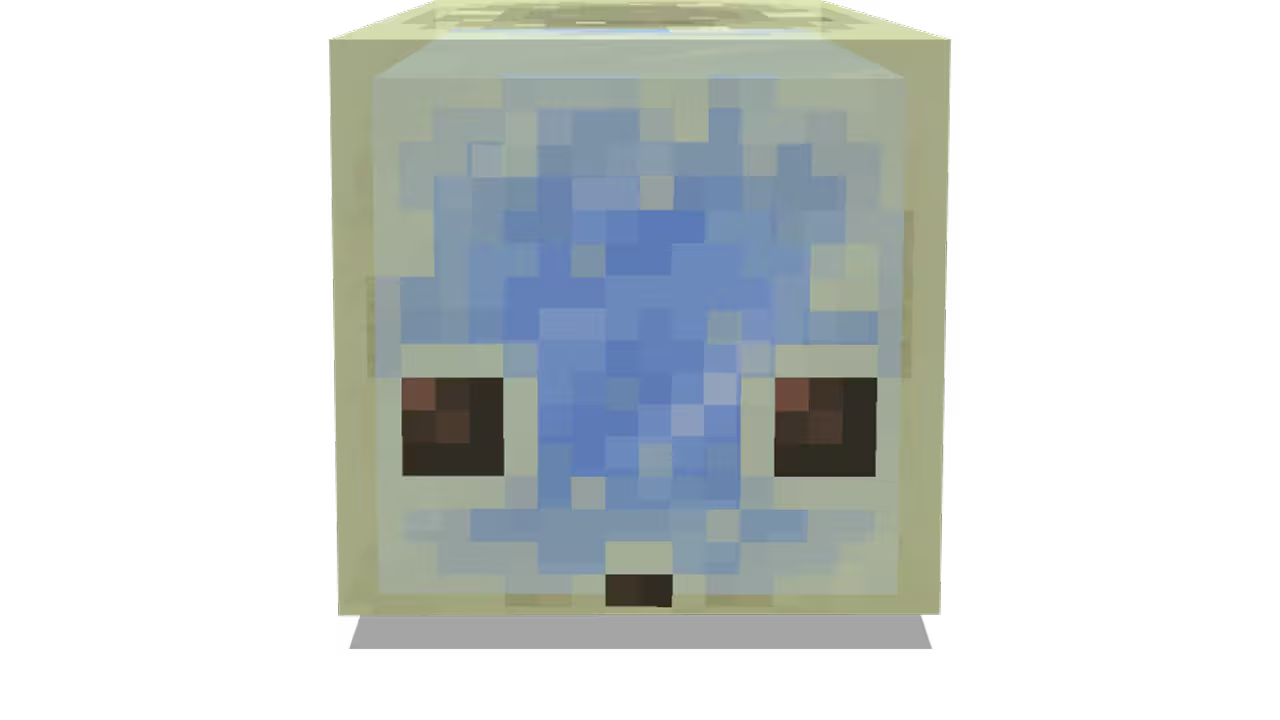
Sulfur Cube blocks and effects in Minecraft determine how the Chaos Cubed mob moves, bounces, slides and reacts after absorbing a block. Players can feed a Sulfur Cube different categories of blocks to transform it into a physical object with a new archetype and completely different behaviour.
Wood makes a Sulfur Cube fast and bouncy, ice makes it slide, wool makes it feel lighter and Honeycomb makes it sticky. More dangerous Sulfur Cube blocks and effects in Minecraft include TNT, which creates an explosive cube, and Magma Blocks, which make the cube damage entities on contact.
Not every individual Minecraft block produces a unique transformation. Compatible blocks are grouped into categories such as wood, stone, metal, wool and ice. Every block within a category gives the Sulfur Cube the same general archetype.
This guide covers all confirmed Sulfur Cube blocks and effects in Minecraft, what each category does and which blocks are best for different builds and minigames.
All Sulfur Cube Blocks and Effects in Minecraft
The following table provides an overview of the Sulfur Cube blocks and effects in Minecraft Chaos Cubed.
| Block category | Sulfur Cube type | Main effect |
|---|---|---|
| Loose minerals and soil | Regular | Balanced speed, bounce and friction |
| Wooden blocks | Bouncy | Fast movement with high bounce |
| Stone-like blocks | Slow Bouncy | Slow movement with high bounce |
| Metal blocks | Slow Flat | Slow movement with little bounce |
| Organic blocks | Fast Flat | Fast movement with little bounce |
| Wool blocks | Light | High bounce with stronger air drag |
| Icy blocks | Fast Sliding | Fast movement with no bounce |
| Mushroom blocks | Slow Sliding | Slow movement with no bounce |
| Soul Sand or Soul Soil | High Resistance | Very slow movement with high friction |
| Honeycomb Block | Sticky | Sticks with almost no bounce |
| TNT | Explosive | Can be primed and detonated |
| Magma Block | Hot | Damages entities on contact |
After a compatible block is absorbed, the Sulfur Cube stops behaving like an ordinary mob. Its artificial intelligence is disabled, and it becomes a physics-based object that players can punch, push and launch.
The absorbed block remains visible inside the cube, making it possible to identify the active effect without removing it.
Regular Sulfur Cube Blocks and Effects
Loose mineral and soil blocks create the Regular Sulfur Cube archetype.
The Regular archetype has:
- Medium movement speed
- Medium bounciness
- Medium ground friction
- Low air drag
- Buoyancy in liquids
This is the most balanced of the Sulfur Cube blocks and effects in Minecraft. It does not travel as quickly as a wooden cube or slide as far as an icy cube, but its predictable movement makes it useful for general experimentation.
A Regular Sulfur Cube works well for basic ball games, water-based challenges and builds where extreme movement would be difficult to control.
Wooden Blocks Make Sulfur Cubes Bouncy
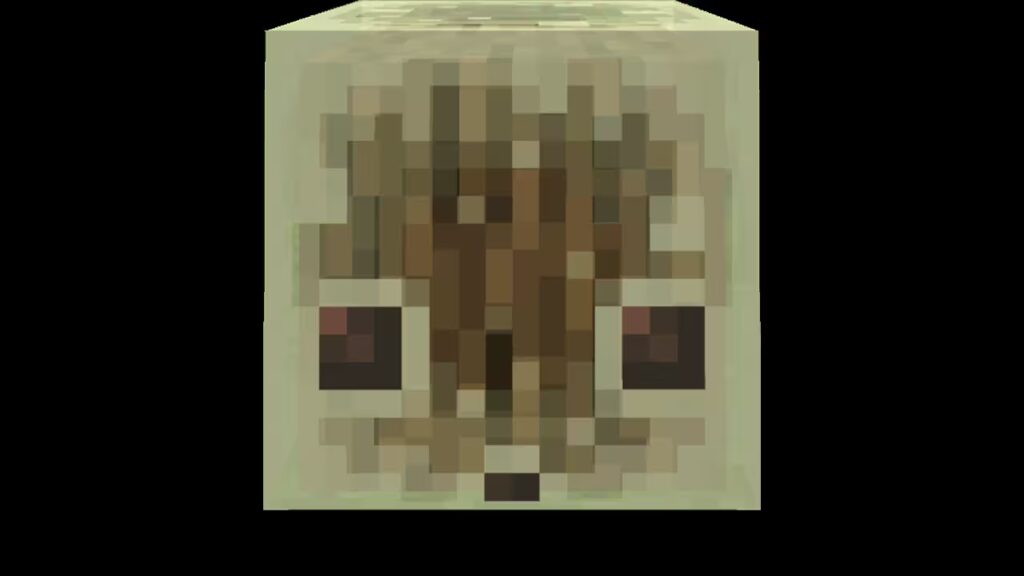
Wooden blocks create the Bouncy Sulfur Cube archetype.
A Bouncy Sulfur Cube has:
- Fast movement speed
- High bounciness
- Medium ground friction
- Low air drag
- Buoyancy in liquids
This transformation makes the cube behave like a fast-moving ball. It rebounds strongly after hitting walls, floors and other solid objects.
Wooden Sulfur Cube blocks and effects are particularly useful for:
- Football-style games
- Target challenges
- Pinball courses
- Knockback games
- Bounce puzzles
- Obstacle courses
Different varieties of wood can produce the same Bouncy archetype. This means players can use whichever compatible wooden block is easiest to obtain rather than hunting for one specific wood type.
Stone Blocks Make Sulfur Cubes Slow Bouncy
Stone-like blocks create the Slow Bouncy Sulfur Cube archetype.
This version retains high bounciness but moves more slowly than a wooden cube. It also experiences more air drag, giving it a heavier and more controlled movement style.
Slow Bouncy Sulfur Cubes are useful for:
- Smaller arenas
- Controlled ball games
- Precision bounce puzzles
- Heavy moving obstacles
- Builds where wood is too fast
The main difference between wood and stone is speed. Both categories create strong bounce, but stone produces a slower and more manageable cube.
Metal Blocks Make Sulfur Cubes Slow and Flat
Metal blocks create the Slow Flat Sulfur Cube archetype.
The Slow Flat archetype has:
- Slow movement
- Low bounciness
- Medium ground friction
- Medium air drag
This creates a heavier cube that stays close to the ground instead of bouncing over barriers.
Metal Sulfur Cube blocks and effects are suitable for:
- Weighted puzzle pieces
- Slow moving obstacles
- Controlled transport systems
- Defensive builds
- Ground-based challenges
The Slow Flat archetype is easier to contain than a Bouncy or Sliding Sulfur Cube, making it a good option for compact builds.
Organic Blocks Make Sulfur Cubes Fast and Flat
Organic blocks create the Fast Flat archetype.
A Fast Flat Sulfur Cube moves quickly but has little bounce. It can travel across the ground without repeatedly launching into the air.
This effect can be useful for:
- Ground races
- Moving targets
- Fast obstacle courses
- Delivery mechanisms
- Flat puzzle maps
Organic blocks provide speed without the high rebound caused by wood, giving players a more predictable option for fast horizontal movement.
Wool Blocks Make Sulfur Cubes Light
Wool blocks create the Light Sulfur Cube archetype.
The Light effect gives the cube:
- Slow initial speed
- High bounciness
- Medium ground friction
- High air drag
- Buoyancy in liquids
High air drag causes the cube to lose movement more noticeably while travelling through the air. It still bounces strongly but feels softer and lighter than the wooden version.
Wool Sulfur Cube blocks and effects can work well in floating challenges, gentle ball games and builds where players want high bounce without excessive travel distance.
Ice Blocks Make Sulfur Cubes Slide Quickly
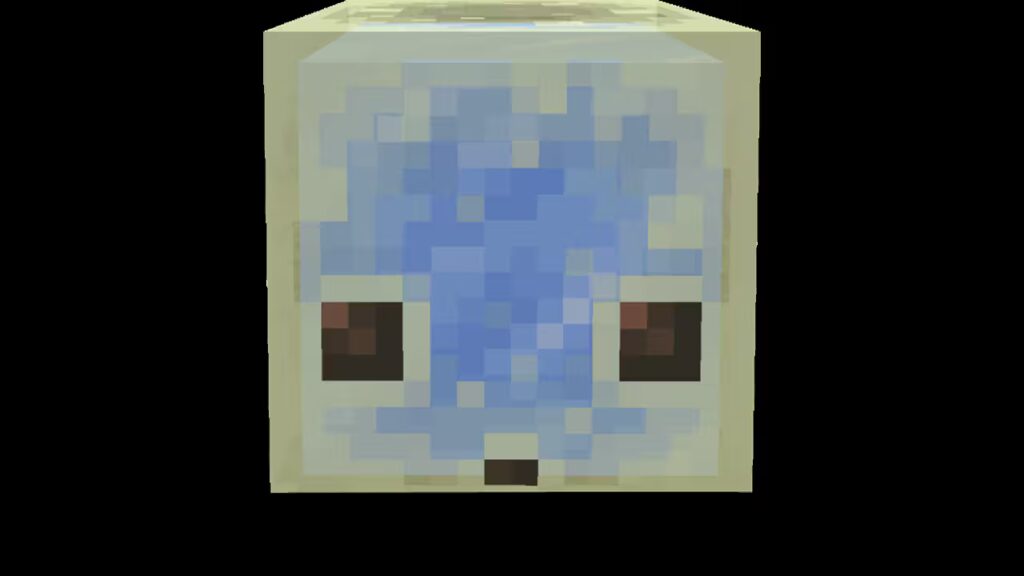
Icy blocks create the Fast Sliding Sulfur Cube archetype.
A Fast Sliding cube has:
- Fast movement
- No bounciness
- Low ground friction
- Low air drag
This allows it to slide long distances across suitable surfaces without bouncing.
Icy Sulfur Cube blocks and effects are useful for:
- Curling-style minigames
- Long racing tracks
- Sliding puzzles
- Fast delivery routes
- Moving hazards
- Ice-rink builds
Walls and barriers are important when using this archetype. With little friction to slow it down, a Fast Sliding Sulfur Cube can travel much farther than expected.
Mushroom Blocks Make Sulfur Cubes Slide Slowly
Mushroom blocks create the Slow Sliding Sulfur Cube archetype.
This transformation also removes the cube’s bounce and reduces its ground friction, but it travels more slowly than the icy version.
Slow Sliding cubes are better suited to:
- Precision puzzles
- Smaller courses
- Indoor games
- Controlled movement systems
- Target placement challenges
Ice is the better option for speed and distance, while mushroom blocks are better when accuracy and control matter more.
Soul Sand and Soul Soil Create High Resistance
Soul Sand and Soul Soil create the High Resistance Sulfur Cube archetype.
This effect gives the cube:
- Very slow movement
- Low bounce
- High ground friction
- Strong resistance to being pushed
The High Resistance archetype stops quickly and is difficult to send across long distances.
These Sulfur Cube blocks and effects are useful for:
- Weighted obstacles
- Defensive barriers
- Stationary puzzle pieces
- Slow challenge courses
- Builds where the cube must remain nearby
High Resistance is essentially the opposite of the Fast Sliding archetype. Ice allows a cube to travel freely, while Soul Sand and Soul Soil prevent it from maintaining momentum.
Honeycomb Blocks Make Sulfur Cubes Sticky
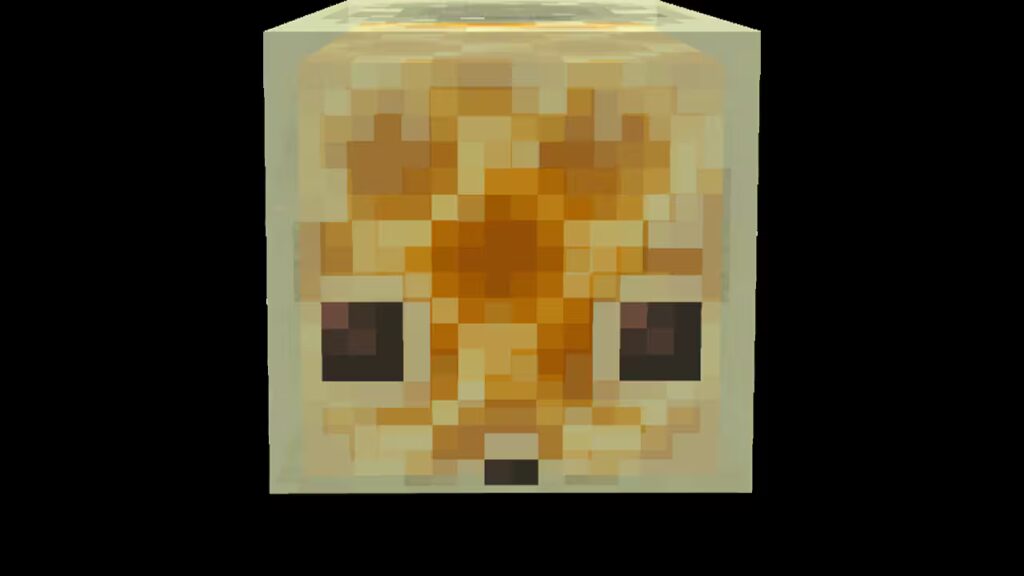
A Honeycomb Block creates the Sticky Sulfur Cube archetype.
The Sticky archetype uses movement similar to Fast Flat but has extremely high ground friction and no meaningful bounce. This allows the cube to grip surfaces instead of sliding or rebounding away.
Sticky Sulfur Cubes can be used for:
- Positioning puzzles
- Wall-based obstacles
- Catching moving cubes
- Controlled Redstone mechanisms
- Decorative placements
- Stopping points at the end of tracks
The Honeycomb Block is one of the special combinations highlighted in the Chaos Cubed update because its effect is immediately visible during play.
TNT Makes Sulfur Cubes Explosive
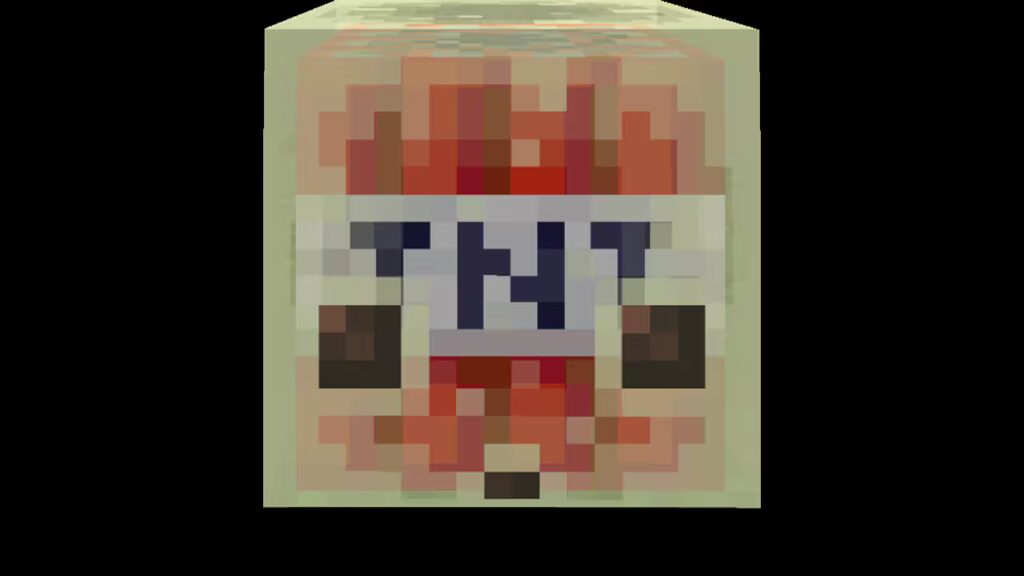
TNT creates the Explosive Sulfur Cube archetype.
An Explosive Sulfur Cube can be primed using:
- Redstone
- Fire
- A dispenser containing Flint and Steel
- A nearby explosion
TNT activated by fire or Redstone has a six-second fuse. If another explosion activates it, the fuse can last between 0.75 and three seconds.
Once the TNT is primed:
- The cube cannot be collected in a bucket.
- The TNT cannot be removed with shears.
- The cube explodes when the fuse ends.
- The explosion does not create smaller Sulfur Cubes.
Feeding TNT to a Sulfur Cube also unlocks the Uh Oh Husbandry advancement.
Explosive Sulfur Cube blocks and effects can be used for demolition, traps, timed challenges, Redstone contraptions and destructive minigames.
Magma Blocks Make Sulfur Cubes Hot
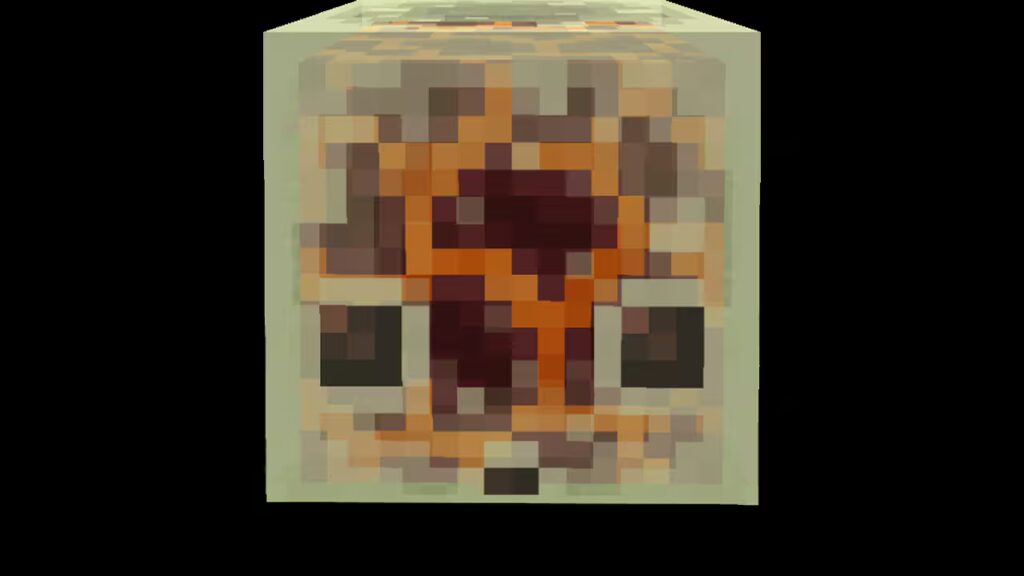
A Magma Block creates the Hot Sulfur Cube archetype.
The Hot archetype has movement similar to a Regular Sulfur Cube but damages entities that touch it.
This effect makes Hot Sulfur Cubes useful for:
- Mob traps
- Hazard courses
- Combat arenas
- Defensive obstacles
- Hot-potato games
- Moving damage traps
TNT and Magma Blocks produce different effects. TNT creates an Explosive Sulfur Cube, while Magma creates a Hot Sulfur Cube that deals contact damage.
Players should keep Hot Sulfur Cubes away from villagers, pets and mobs they want to protect.
Which Blocks Can a Sulfur Cube Absorb?
A Sulfur Cube can absorb compatible block items assigned to its archetype categories.
Players can feed a block directly by holding it and interacting with the cube. A Sulfur Cube can also:
- Follow a player holding a compatible block
- Detect compatible block items nearby
- Move towards dropped blocks
- Absorb a compatible block from the ground
- Receive a block from a dispenser
A Sulfur Cube cannot necessarily absorb every block in Minecraft. Compatibility is controlled by the lists assigned to each archetype.
When a block is compatible, the cube will accept it and display the block inside its body. When it is not compatible, the interaction will not produce an archetype transformation.
How to Change a Sulfur Cube Block
Use shears on a Sulfur Cube to remove the block it has absorbed.
Removing the block:
- Disables the active archetype
- Restores the cube’s normal movement
- Re-enables its artificial intelligence
- Allows it to absorb a different block
Players can then feed the cube another compatible block to change its effect.
Dispensers can also insert blocks, swap the current block and use shears to remove an absorbed block. This allows builders to automate Sulfur Cube transformations inside minigames and contraptions.
Best Sulfur Cube Blocks for Different Uses
The best choice depends on what the cube needs to do.
| Intended use | Best block category | Resulting effect |
|---|---|---|
| Fast ball game | Wood | Bouncy |
| Controlled bounce | Stone | Slow Bouncy |
| Ground race | Organic block | Fast Flat |
| Long slide | Ice | Fast Sliding |
| Precision slide | Mushroom block | Slow Sliding |
| Heavy obstacle | Metal | Slow Flat |
| Stationary object | Soul Sand or Soul Soil | High Resistance |
| Sticky stopping point | Honeycomb Block | Sticky |
| Light bouncing game | Wool | Light |
| Explosion or demolition | TNT | Explosive |
| Contact-damage trap | Magma Block | Hot |
| Balanced movement | Soil or loose mineral | Regular |
Wood, ice and Honeycomb provide some of the easiest effects to understand, while TNT and Magma Blocks create the most dangerous transformations.
Technical players can also combine multiple archetypes in one course, using dispensers and shears to change a cube as it moves between sections.
Why Sulfur Cube Blocks and Effects Matter
Sulfur Cube blocks and effects in Minecraft are the central gameplay mechanic behind the Chaos Cubed mob.
A Sulfur Cube is not simply a creature to find and display at a base. Its block absorption system allows the same mob to act as a bouncing ball, sliding game piece, heavy obstacle, sticky object, explosive device or moving hazard.
Players can create several Sulfur Cubes with different archetypes or repeatedly change one cube using blocks and shears.
Experimenting with Sulfur Cube blocks and effects in Minecraft is the best way to understand how speed, bounce, friction and special abilities alter the cube. Wood is ideal for bouncing, ice is best for sliding, Honeycomb creates a sticky cube, TNT produces an explosive cube and Magma creates a damaging Hot archetype.