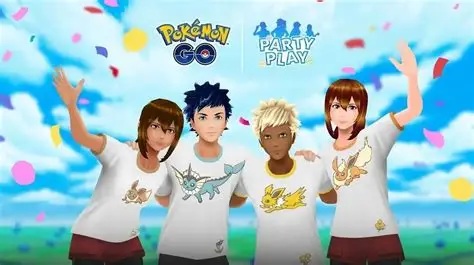
Pokémon GO Party Challenges are shared objectives selected during an active Party Play session, with every party member contributing toward one group target. The host chooses from the offered challenges, the party earns the displayed reward when the objective is completed and another challenge can then be selected.
How Party Challenges start
Create or join a Party Play group with two to four nearby Trainers.
At the beginning of the session, Pokémon GO Party Challenges appear as several choices for the host.
The group can compare the tasks and rewards before selecting one.
Once a challenge is active, progress is shared across the party rather than each Trainer needing to complete the entire requirement alone.
The Party tab shows both group progress and individual contributions.

Common challenge types
Pokémon GO Party Challenges can ask the group to catch Pokémon, catch particular types, make certain throws, spin PokéStops or Gyms, use Berries, raid and complete other normal gameplay actions.
The exact options rotate.
Choose a task that matches the area and event you are currently playing. A raid challenge is poor value when no raid is nearby, while catching tasks are usually easy during Community Day.
There is no benefit to deliberately choosing the slowest task.
How rewards work
Each offered challenge displays its reward before the host commits to it.
Pokémon GO Party Challenges can award item bundles, Stardust and Pokémon encounters, with the exact pool changing over time and during events.
That means there is no permanently fixed “all rewards” table that stays accurate forever.
The in-game selection screen is the current definitive reward list for your party session.
Typical item rewards
Ordinary Pokémon GO Party Challenges have historically included rewards such as Poké Balls, Great Balls, Ultra Balls, Berries, healing items and Stardust.
Encounter rewards can also appear.
Events may add different or improved rewards, so a task that paid one item bundle months ago should not be treated as a guaranteed 2026 reward.
Always compare the choices on-screen before selecting.
Encounter rewards can rotate
Some Party Challenges award a Pokémon encounter rather than only items.
The species pool has changed through updates and events, which is why static old reward charts age badly.
If an encounter is the reason you are doing Pokémon GO Party Challenges, choose the visible encounter task when it appears rather than assuming a particular Pokémon is always obtainable.
Shiny eligibility depends on the species itself and current game rules.
Complete multiple challenges in one session
Finishing one challenge does not end Party Play.
The host receives a prompt to choose another task, allowing the group to complete several Pokémon GO Party Challenges during the same session.
Current Party Play sessions can last up to three hours.
For medal or Special Research progress, chaining quick challenges is usually more efficient than selecting a difficult task with a slightly better ordinary item reward.
Challenge progress belongs to the active party
Progress only counts while the group is in the relevant Party Play session.
If the party ends, expires or breaks apart, do not expect an unfinished task to behave like permanent Special Research on each account.
Pokémon GO Party Challenges are temporary cooperative objectives.
Keep an eye on the session timer if the group is close to completing a longer requirement.
Party Challenges versus Party Power
Party Challenges are the cooperative objectives and reward system.
Party Power is the separate raid mechanic that charges through Fast Attacks and boosts a Charged Attack.
You can benefit from Party Power while raiding together even when the active Pokémon GO Party Challenges objective is something completely different.
Do not confuse the raid bonus with the reward for finishing the selected challenge.
Welcome Party and event research
Research can ask Trainers to complete a certain number of Party Challenges or perform actions while in a party.
Those research rewards are separate from the reward attached to the challenge itself.
A single completed Pokémon GO Party Challenges task can therefore contribute to research progress while also paying its own immediate Party Play reward.
This is especially useful during party-focused events.
Best challenge strategy
Pick objectives the group can finish naturally on the route you are already playing.
Catch and throw challenges are excellent when spawns are dense, spinning tasks suit city routes and raid tasks make sense during Raid Hours or raid-focused events.
Pokémon GO Party Challenges are deliberately dynamic, so the smartest guide is not an old frozen reward table. Read the three choices in front of you, compare the displayed rewards and select the fastest useful task for your current group.
Official site: Pokémon GO