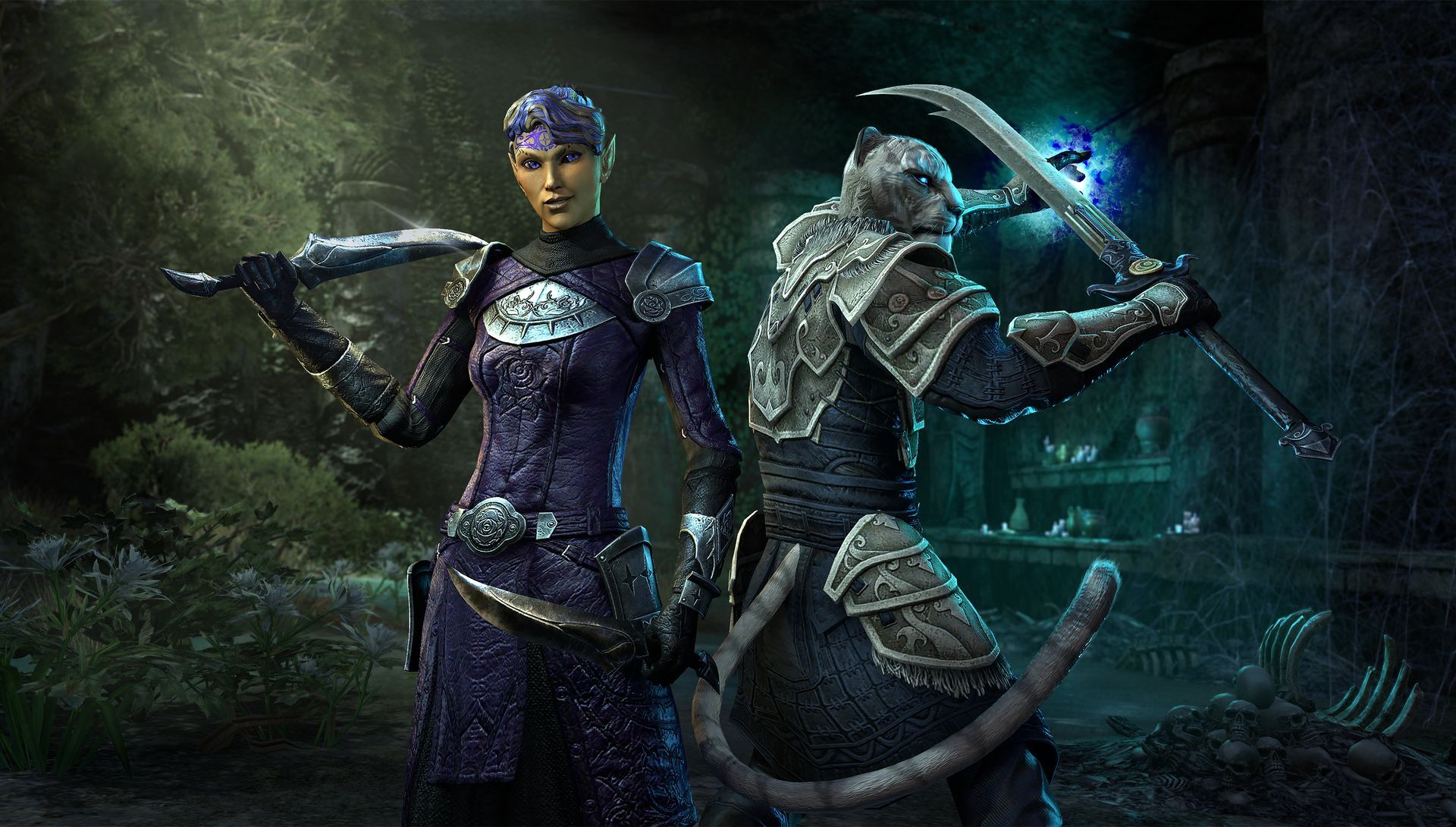
The ESO Best Companion for solo players depends on what your character needs most. If you survive easily but kill enemies slowly, an offensive ally may be helpful. If enemies overwhelm you, tanking or healing can be more valuable. All eight companions can equip different weapons and armour, so there is no factual basis for naming one permanent winner for every role.
This guide compares the most useful starting choices for solo tanking, healing and damage, then covers equipment and skills that make those choices work. The table focuses on the combat roles each companion can fill with the right weapons, skills and traits.
ESO Best Companion for each solo role
| Role | Good candidates | Main priorities |
|---|---|---|
| Tank | Isobel, Bastian, Sharp-as-Night, Zerith-var | One hand and shield, taunt, heavy armour |
| Healer | Isobel, Mirri, Sharp-as-Night, Azandar | Restoration staff, heals, Quickened |
| Damage | Ember, Mirri, Tanlorin, Azandar | Offensive weapon and skill rotation |
| Flexible | Bastian, Sharp-as-Night, Azandar | Mixed support and survival |
Start with companions you already have access to. Gear and skill assignment can matter more than the default companion identity. A tank without a taunt is not really doing the job, while a healer whose restoration skills are not slotted won’t produce consistent healing.
Best tank ESO companion for solo play
Isobel Veloise is a strong early candidate thanks to her Templar-inspired skills, while Bastian Hallix uses Dragonknight-flavoured defence and Sharp-as-Night offers Warden-style support. Zerith-var is another option for players who claimed him in the Crown Store. All can be equipped for a frontline role.
Give your companion a one-handed weapon and shield, heavy companion armour, a taunt and survival abilities. Bolstered lowers damage taken, Vigorous raises health and Quickened shortens cooldowns. If an ally repeatedly dies, replace offensive traits with defence before attempting a harder boss.
Best healer ESO companion for solo adventuring

Isobel, Mirri, Sharp-as-Night and Azandar have class-style healing or support possibilities. Equipping a restoration staff grants access to its companion abilities and can help create a much more consistent support build. A companion won’t reliably heal simply because its original class sounds magical.
For a healer, focus on Soothing to improve healing done and Quickened to reduce cooldowns. Keep enough healing abilities slotted to respond to damage but consider a support buff or damage ability when your main character already heals itself well.
ESO Best Companion – Best damage for solo quests
Ember’s Sorcerer-themed abilities are an attractive starting point for ranged magical damage. Mirri has Nightblade-style attacks and Tanlorin offers a distinctive mixture of combat abilities. Azandar can add Arcanist-inspired utility alongside damage. These options have useful damage abilities, but your weapon, trait and cooldown choices still affect their performance.
For an offensive companion, pair weapon skills with class attacks and avoid having too many abilities share long cooldowns. Aggressive improves damage, Shattering helps against armour, Focused improves critical strike rating and Quickened accelerates skill reuse.
ESO Best Companion – All eight companions compared
| Companion | Unlock source | Reason to consider |
|---|---|---|
| Bastian | Blackwood | Defensive and flexible |
| Mirri | Blackwood | Damage or healer |
| Ember | High Isle | Magical/ranged damage |
| Isobel | High Isle | Tank or healer |
| Sharp-as-Night | Necrom | Support and frontline |
| Azandar | Necrom | Magical utility |
| Tanlorin | Crown Store | Flexible damage skills |
| Zerith-var | Crown Store | Defensive/support skills |
You don’t need to purchase another chapter just because a recommended companion is inaccessible. Choose among the allies you’ve already recruited and equip one for the role you need. Our companion locations guide provides the starting quests and requirements for the entire eight-person roster.
How to build a companion for tanking, healing or damage
Start with the activity you’re doing. An overland damage build may prefer a second attacker, while a solo dungeon player who struggles with boss pressure may benefit from a shield user or healer. Companions can be dismissed by some group or activity restrictions, so they won’t bypass every mechanic designed for several players.
The companion skill bar also has a priority order. Check the actual cooldowns and triggers of assigned abilities. A useful heal that only activates rarely won’t fix survival problems, and a damage build with empty slots won’t perform to its potential even with expensive traits.
Which companion should you recruit first?
Blackwood owners can begin with Bastian or Mirri. High Isle owners should consider Isobel for defence and Ember for extra damage. Necrom owners have Sharp-as-Night and Azandar. If you have ESO Plus, check the Crown Store for Tanlorin and Zerith-var, who begin their recruitment quests in base-game zones.
Long-term rapport changes personal quest access and keepsake progression, not the immediate choice of damage versus healer. Once you’ve built one ally, keep a second ESO companion prepared for a different role. That makes switching between ordinary exploration and harder solo fights much easier.
Related ESO Best Companion Guides
Official source: ESO companion systems and combat roles.