UEFN Progression API custom quests can now be used in published Fortnite islands. Epic removed the API’s Experimental designation in v43.00, released on 1 November 2026, so creators can publish an island with its own quest system instead of using the feature only for testing.
Creators can now build their own goals, track players or groups, and award items or points when a quest is completed. The framework also supports Fortnite’s quest UI, so players can see what they are working towards.
What changed for UEFN Progression API custom quests?
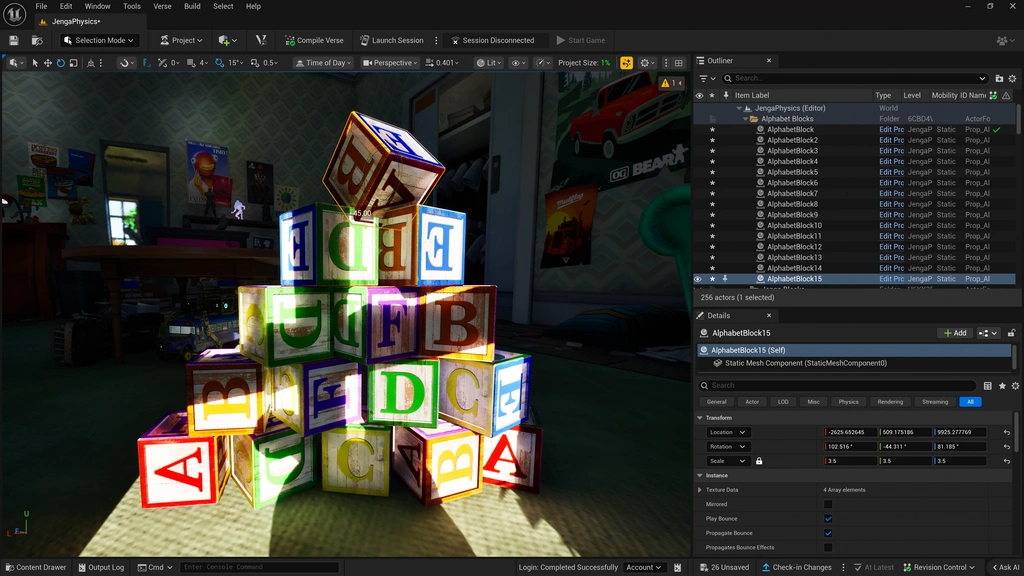
UEFN Progression API custom quests are made with UEFN and Verse. This editor screenshot shows the workspace, not the quest API itself.
The key v43.00 change is the removal of the Experimental restriction on Progression API publishing. Islands using it can now be submitted through Creator Portal. Normal moderation still applies, and a separate experimental feature could still stop an island from being published.
UEFN Progression API custom quests describe missions written by an island creator, not Fortnite Battle Royale’s weekly or story quests. Creators choose the objectives, who can participate and which rewards are delivered on successful completion.
How to make UEFN Progression API custom quests
Epic’s Questing System Overview explains the moving parts: objectives count progress, quests handle completion and rewards, and collections manage participation. Its Short Coin Quest tutorial shows those parts working together in Verse.
Start with one clear goal, such as collecting coins. Set a target for the objective, connect it to a quest and listen for the gameplay events that should count. When the target is met, let the quest’s completion logic handle the result.
Use membership permissions to decide who can contribute, observe progress and receive rewards. Those are separate permissions: someone might be allowed to view an objective without qualifying for a payout.
Build and test one objective first, including what happens if somebody leaves or abandons it. Then expand the system into a longer quest line once the completion and reward rules work.
Can an entire team share a quest?
Yes. Epic documents personal, assisted, shared and co-op progression models. Personal quests track a separate objective for each player, while a shared group quest uses one instance and one progress value for the players involved.
In Epic’s shared coin example, coins collected before a player abandons still count towards the team’s total, but that player is removed from the reward recipients. It’s a useful distinction when designing co-op quests.
Choose a progression model before building UEFN Progression API custom quests for a co-op island. A team-wide session objective isn’t automatically a persistent per-player quest that resumes in a later match.
UEFN Progression API custom quests: the Short Coin Quest example
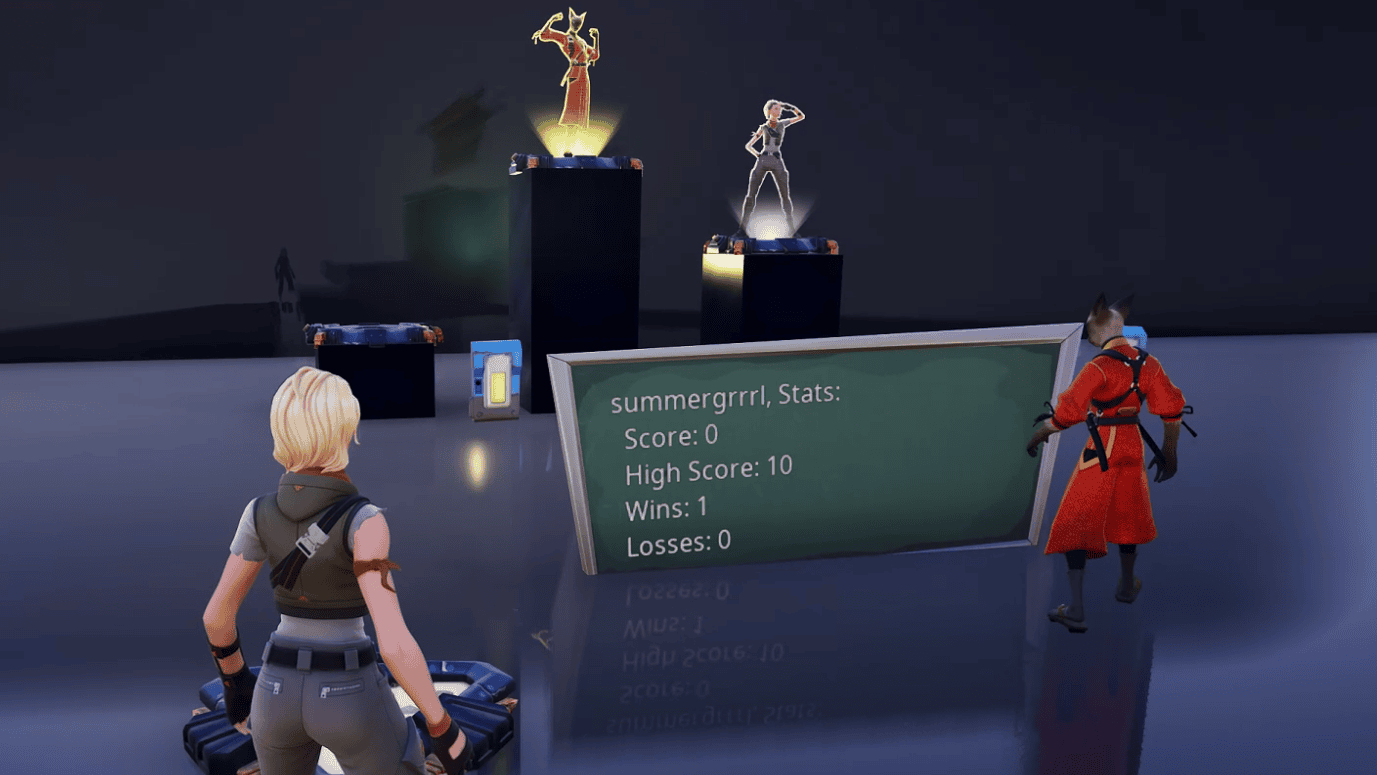
Epic Games’ example of player statistics displayed in Fortnite. It illustrates a progress interface, not the new Short Coin Quest.
Epic’s sample uses collectible silver and gold coins, a Button device for abandoning the quest, a Score Manager and an Item Granter. The weighted coin values contribute to a shared goal of 10,000.
When the group reaches the target, eligible players receive a 10,000-point score reward, and the example also demonstrates a keycard reward. The sample tracks each participant’s contribution and excludes players who abandoned the quest before completion.
The tutorial uses two Verse files: coin_quest_device.verse for the quest and coin_quest_ui.verse for the counter shown to each player. The counter displays individual gold and silver totals, even though the team’s objective is shared.
Showing UEFN Progression API custom quests in the UI
Progression uses modules under Verse.org, UnrealEngine.com and Fortnite.com. The Fortnite layer supplies the connection with the Fortnite quest UI, while a separate HUD can show details such as collected coins or player-specific counters.
Test the HUD when someone joins late or abandons the quest. The sample leaves an abandoned player’s counter visible but stops updating it, and their later pickups no longer count. Decide whether that behaviour suits your island.
Persistence and publishing checks
Publishing doesn’t automatically save the state of quests between sessions. Quest instances, objective objects and memberships aren’t persistable. If returning players must continue a mission, build a save system using per-player data and a stable quest ID.
For returning players, save whether the quest succeeded or was abandoned, not just its progress total. Rebuilding a successful quest as unfinished can grant its reward again.
Before submission, test the full quest from entry to reward, including abandoned players and return visits. You can publish UEFN Progression API custom quests now, but you still need an island that behaves correctly.
Related Guides
Official source: Epic Games’ v43.00 release notes.