Find The Needle automation is the main way to turn a warehouse full of hay into a needle-finding factory. You begin using hand tools, but later place powered machines, connect conveyor belts and build systems that process the pile while you concentrate on the search.
The Early Access build has five production stages and more than 300 upgrades. What it doesn’t have in the published documentation is a complete recipe or price chart, so the useful starting point is understanding which machines handle each part of the job.
Find The Needle automation: Find The Needle automation: Where do you start?
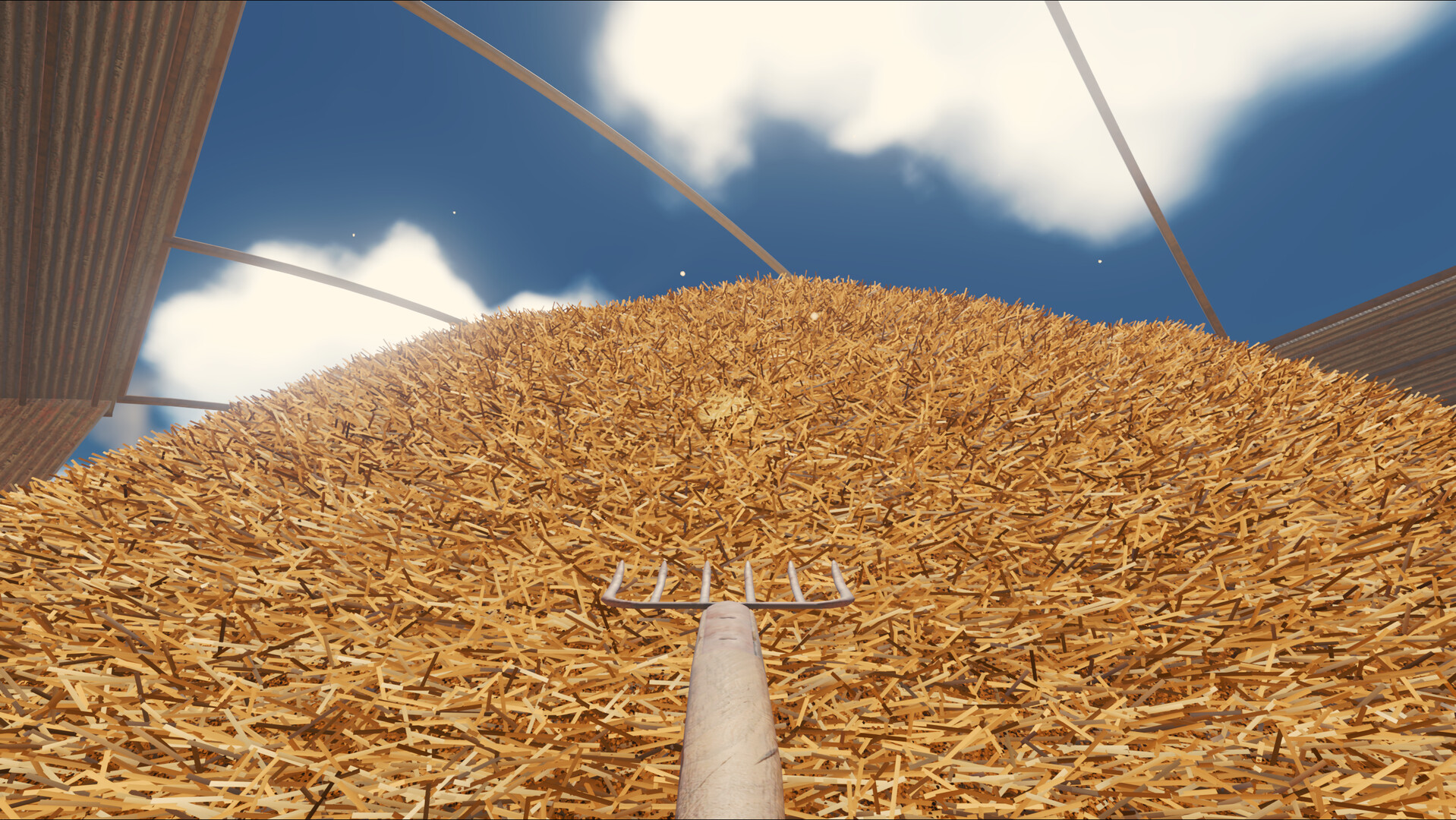
Early on, you’re doing the digging. Shovels, buckets, wheelbarrows and pitchforks help shift the hay, and a metal detector helps with the search. Later, scanners and factory equipment take over more of the repetitive work.
Sell the hay you clear and put that money back into your first machines. You don’t need a giant production line from the beginning; getting material from the pile into storage and processing is the first useful improvement.
Which machines can you use in Find The Needle?
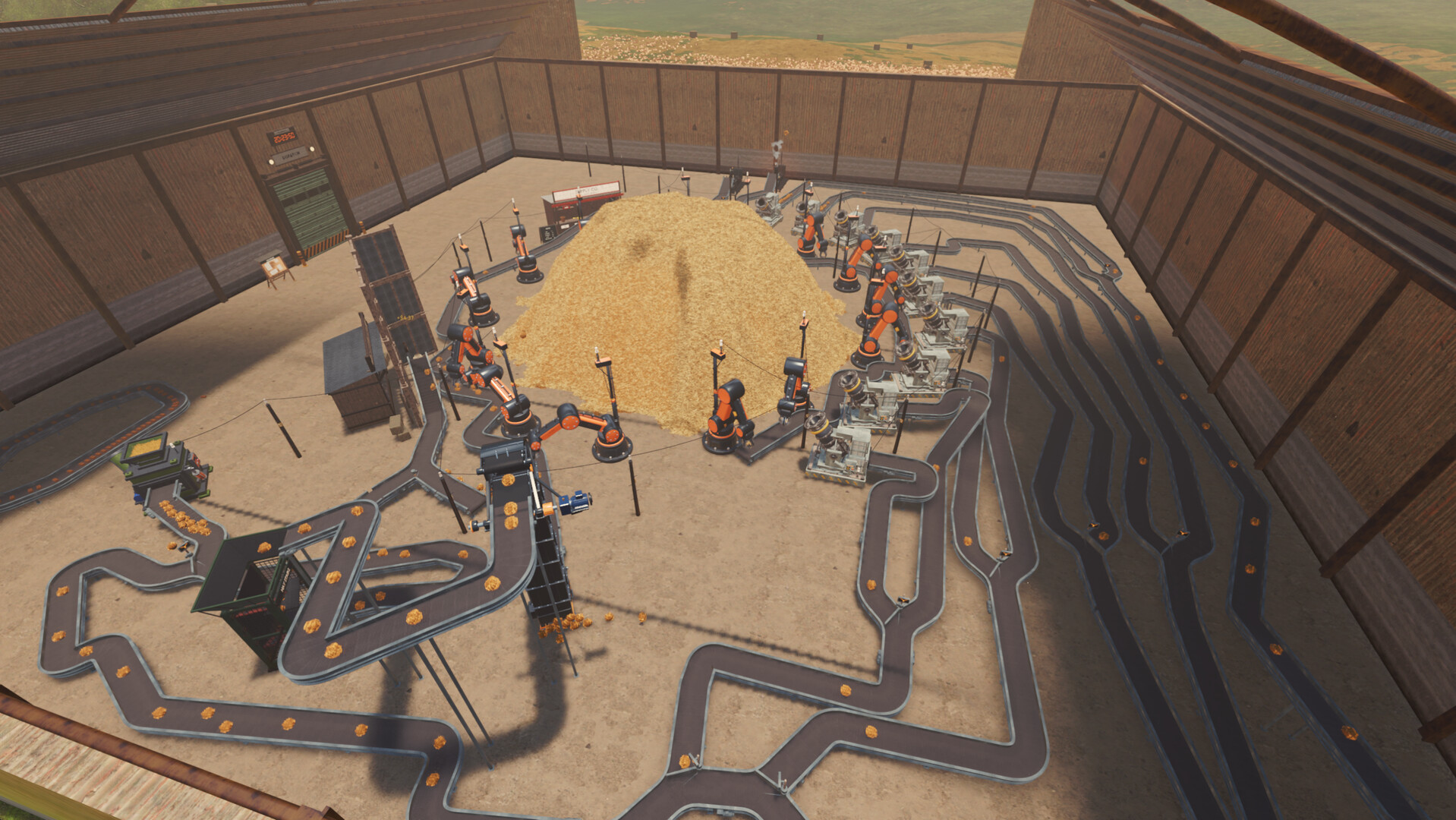
The developer names vacuums, balers, wrappers, sorting machines, conveyors, robotic arms, drones and scanners among its equipment. These serve different jobs: moving material, processing it into products and helping locate needles. The Find The Needle automation system also uses electrical power and connected belt lines.
You place machines inside the warehouse and connect them rather than simply buying an abstract upgrade that works everywhere. The studio’s description specifically mentions physical conveyor routing and wiring power, so the arrangement of equipment matters. Exact build-button steps and optimal layouts still need in-game testing.
The five Find The Needle automation production stages
Early Access contains five broad stages spanning hay bales and eco bricks through paper, bioplastic and carbon fibre. Other named products include hay pulp and pellets. The publisher presents this as a growing industrial chain, not a fixed sequence of identical machines with only larger numbers.
A useful way to think about the progression is material handling first, then more sophisticated processing. Hay is collected from the pile, transported, turned into saleable products and used to finance further equipment. The Find The Needle automation technology tree adds the capacity and machines needed to expand that loop.
The developer hasn’t published exact production ratios or a tested profit ranking. Use the recipes shown in your current build before committing all your money to a production line.
How do scanners help find needles?
Needle detection is part of the game’s industrial progression. Manual searching eventually gives way to scanners and robotic equipment, which the developer explicitly describes as doing the looking for you. A scanner is therefore relevant to the original 24-needle objective, not just another way to sell hay.
The Find The Needle automation announcement does not establish a guaranteed scanner location, scan radius, failure rate or recipe for every model. Look at the actual machine description and available blueprints once unlocked before copying a layout from footage of the demo.
More than 300 upgrades explained
The technology tree advertises over 300 upgrades. Their purposes include unlocking machines, improving production speed and efficiency, and expanding the factory. That doesn’t mean there are 300 unique conveyor models or that every upgrade is required for all 24 needles.
For practical progress, work from the equipment you already have towards the next bottleneck. If manual movement is taking most of your time, a transport upgrade is worth looking at; if a processing station is holding up the line, inspect its speed and efficiency options. That’s general factory advice rather than a claim about an undisclosed ideal build.
Does the demo have all the machinery?
No such promise has been made. The full Early Access version contains five production stages and an ending involving 24 needles; the separately listed demo is an introduction. Consult our Early Access release guide for what the developer includes, or the PC requirements guide for hardware support.
Large Find The Needle automation factories put more strain on the CPU. Steam recommends a faster processor for late-game frame rates, so performance is worth watching as your production lines expand.
Official source: Needless Games on Steam.