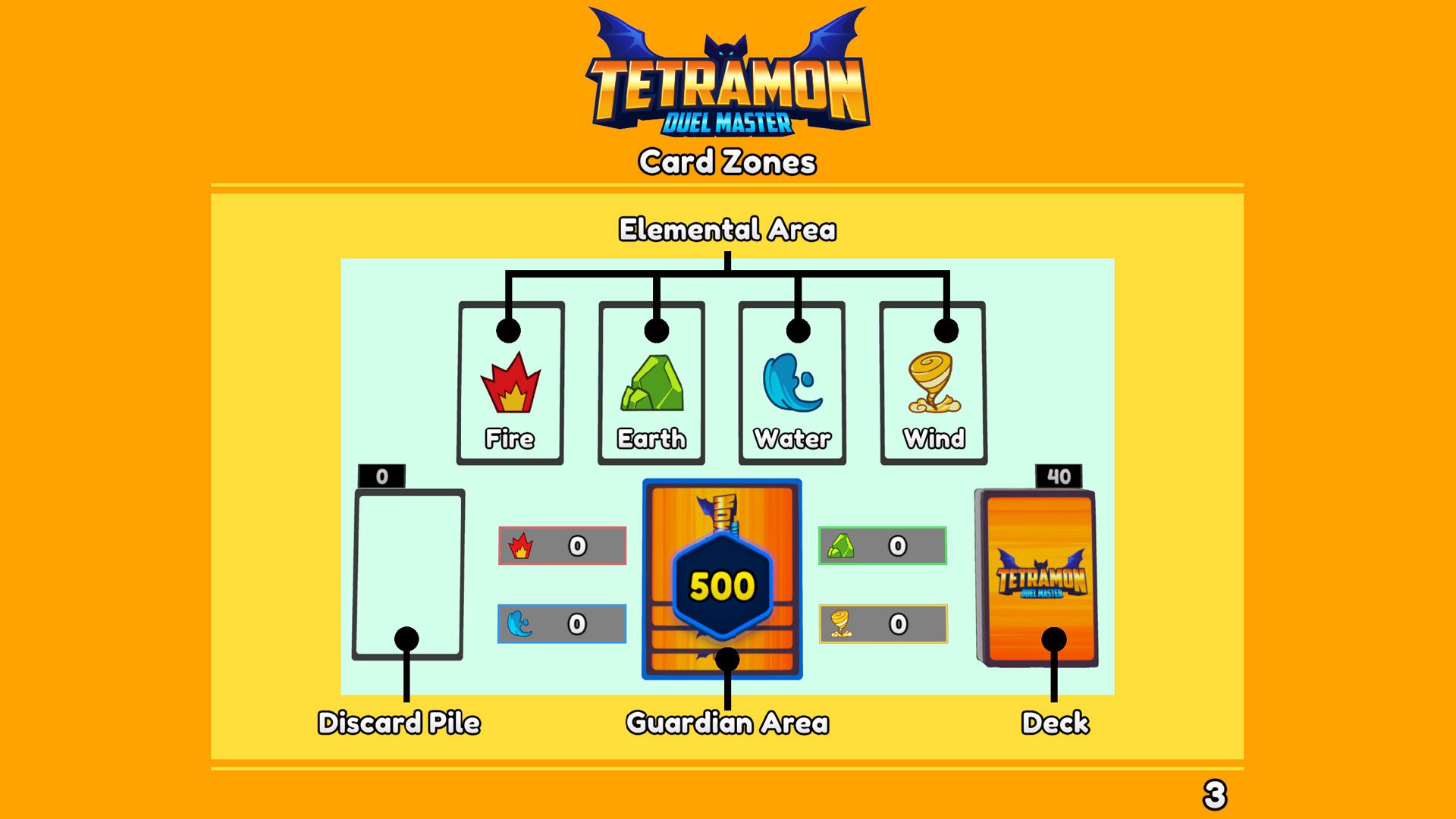
TCG Card Shop Simulator Elemental Areas Explained covers the four combat spaces at the centre of every Tetramon table: Fire, Earth, Water and Wind, each of which contributes directly to the strength of the card fighting there.
TCG Card Shop Simulator Elemental Areas Explained is being expanded from the official version 1.0 rules rather than from an invented launch-day meta. OPNeon confirms the 50-card deck, four-copy limit, five-card opening hand, one mulligan, four Guardian cards, 500 starting Tamer Points, four Elemental Areas and the evolution timing that governs every match. That gives us enough firm structure to make practical decisions while still being clear where live 1.0 testing is ongoing.
TCG Card Shop Simulator Elemental Areas Explained: what matters first
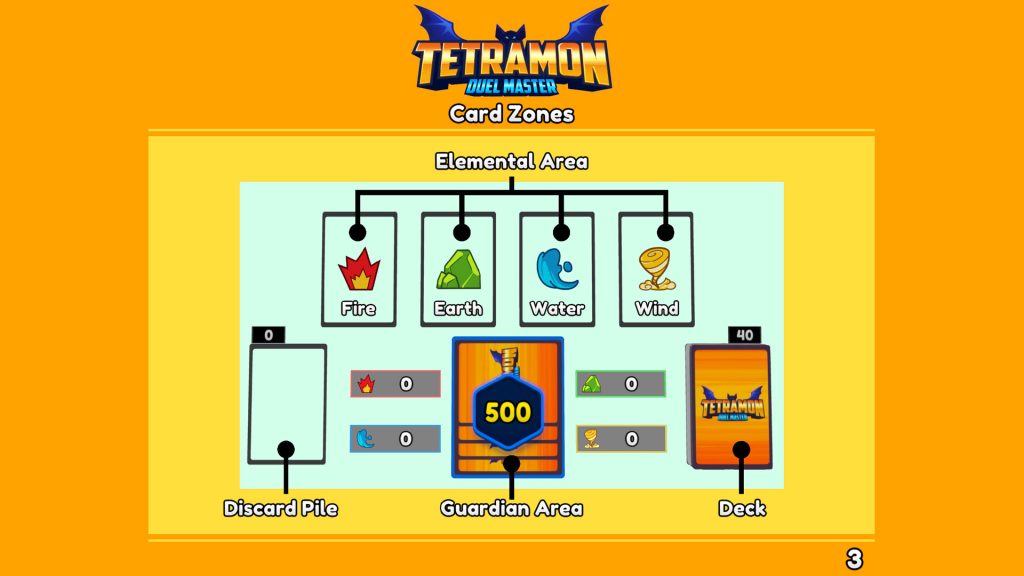
Every Tetramon board has a Fire, Earth, Water and Wind area. These are the places where Tetramon enter play and fight. The remaining table zones are the Deck, Discard Pile and Guardian Area, but the four elemental spaces are where most positional decisions happen. Learning to read them quickly makes the match much less visually overwhelming. That is the first thing to get right when using TCG Card Shop Simulator Elemental Areas Explained.
Placement changes Attack Power
The official rules explain that a Tetramon’s Attack Power is calculated by combining its own Elemental Power with the power of the Elemental Area it occupies. Cards print values across the four elements, so the same Tetramon can be noticeably better in one area than another. Before committing a card, compare the relevant printed value rather than assuming its named type tells the whole story. In practice, TCG Card Shop Simulator Elemental Areas Explained works better when that rule is treated as part of the whole deck or board plan rather than an isolated trick.
A new Basic can clear an occupied area
Each Elemental Area accepts only one newly played Basic Tetramon per turn. More importantly, playing a new Basic into an occupied area clears what was already there. That can erase an established evolution stack, so replacing a card should be a deliberate decision. An apparently stronger Basic can be a downgrade if the old card was ready to evolve next turn. In practice, TCG Card Shop Simulator Elemental Areas Explained works better when that rule is treated as part of the whole deck or board plan rather than an isolated trick.
Evolution makes areas worth protecting
Because a Basic has to survive a turn before it can evolve, holding an Elemental Area creates future value. Once the card is ready, several evolution stages can be stacked in the same turn if you have the pieces. A lane containing an eligible Basic is therefore not merely its current Attack Power; it is also a platform for whatever the hand can build on top of it. In practice, TCG Card Shop Simulator Elemental Areas Explained works better when that rule is treated as part of the whole deck or board plan rather than an isolated trick.
Use flexible values while learning
A beginner does not need a complicated theory for every lane. Start by placing each card where its printed power is strong without ruining an evolution plan, then notice which areas your deck naturally contests well. Cards with usable values across several elements can be forgiving because they let you react to the board rather than waiting for one perfect space. In practice, TCG Card Shop Simulator Elemental Areas Explained works better when that rule is treated as part of the whole deck or board plan rather than an isolated trick.
TCG Card Shop Simulator Elemental Areas Explained: what to check after a few matches
The useful test for TCG Card Shop Simulator Elemental Areas Explained is repeatability. Play several customer matches rather than judging one perfect draw, and watch the same pressure points each time: whether the opening five can establish a Basic, whether the mulligan fixes genuinely bad hands, whether evolution cards have the earlier stage they need, and whether Elemental Area placement is improving attacks. Guardian draws at 400, 300, 200 and 100 Tamer Points can swing individual games, so repeated results tell you far more than one dramatic finish.
For TCG Card Shop Simulator Elemental Areas Explained, the most useful first-party reference is the official Tetramon Duel Master guide on Xbox Wire. OPNeon founder Ding Shen Sia sets out the deck size, Guardians, Elemental Areas, evolution timing and 500-point win condition that this page builds on.