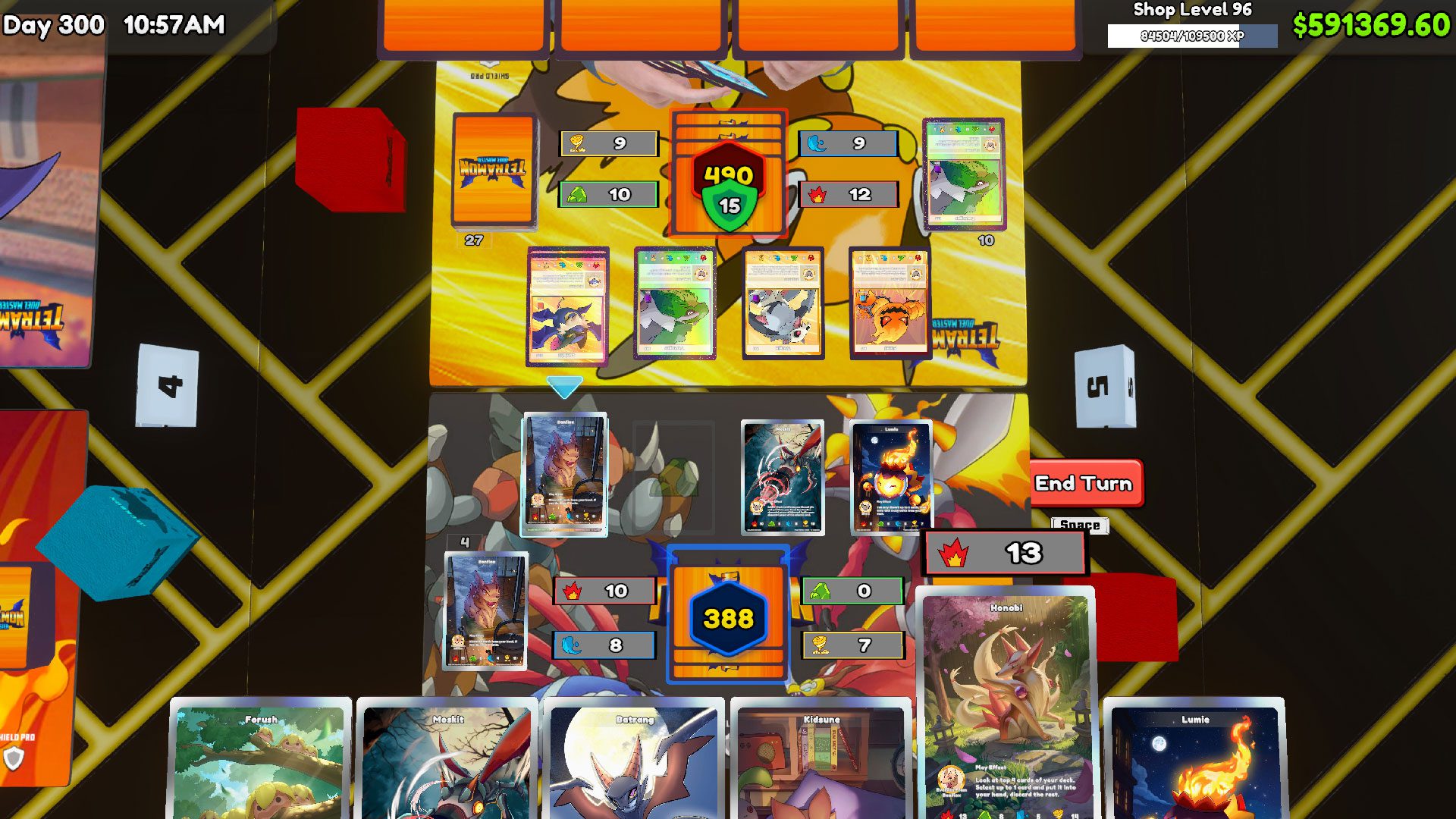
How to Win Tetramon Battles comes down to reducing the opponent’s 500 Tamer Points to zero while keeping a board that can survive long enough to keep attacking.
How to Win Tetramon Battles is being expanded from the official version 1.0 rules rather than from an invented launch-day meta. OPNeon confirms the 50-card deck, four-copy limit, five-card opening hand, one mulligan, four Guardian cards, 500 starting Tamer Points, four Elemental Areas and the evolution timing that governs every match. That gives us enough firm structure to make practical decisions while still being clear where live 1.0 testing is ongoing.

How to Win Tetramon Battles: what matters first
Every duel begins with five cards and one full-hand mulligan. Use it when the hand cannot establish a sensible Basic or is overloaded with evolutions that have no prerequisite. Keeping an impressive-looking but unusable opening is one of the easiest ways to fall behind before either player has attacked. That is the first thing to get right when using How to Win Tetramon Battles.
Establish Basics before dreaming about the finish
Evolution Cards require the correct earlier Tetramon on the board, and a newly played Basic must wait a turn before evolving. That means the first useful objective is creating stable areas that can survive into the next turn. Once a Basic is eligible, multiple evolution stages can be chained in one turn if the cards line up, turning patient setup into a much stronger swing. In practice, How to Win Tetramon Battles works better when that rule is treated as part of the whole deck or board plan rather than an isolated trick.
Place Tetramon where their power matters
Attack Power uses both the Tetramon’s printed Elemental Power and the Elemental Area beneath it. Check Fire, Earth, Water and Wind values before playing. The strongest card in the wrong lane can waste damage, while a more modest card placed well can create the pressure needed to reach the next Guardian threshold or finish the match. In practice, How to Win Tetramon Battles works better when that rule is treated as part of the whole deck or board plan rather than an isolated trick.
Expect the opponent to draw Guardians
At 400, 300, 200 and 100 Tamer Points, the defending player immediately draws the next card from the Guardian Area. Push damage, but do not mentally end the game just because you have created an early lead. Those extra cards are designed to create comeback turns. Keep enough board strength or hand resources to answer what appears after the threshold. In practice, How to Win Tetramon Battles works better when that rule is treated as part of the whole deck or board plan rather than an isolated trick.
Improve the deck from repeated losses
If the same failure appears across several customer matches, treat it as deck information. Too many dead evolutions means the line is top-heavy. Constant mulligans mean the early cards are inconsistent. Strong openings followed by weak finishes suggest the list needs better payoff. Adjust a few cards at a time so you can tell whether the change actually helped. In practice, How to Win Tetramon Battles works better when that rule is treated as part of the whole deck or board plan rather than an isolated trick.
How to Win Tetramon Battles: what to check after a few matches
The useful test for How to Win Tetramon Battles is repeatability. Play several customer matches rather than judging one perfect draw, and watch the same pressure points each time: whether the opening five can establish a Basic, whether the mulligan fixes genuinely bad hands, whether evolution cards have the earlier stage they need, and whether Elemental Area placement is improving attacks. Guardian draws at 400, 300, 200 and 100 Tamer Points can swing individual games, so repeated results tell you far more than one dramatic finish.
For How to Win Tetramon Battles, the most useful first-party reference is the official Tetramon Duel Master guide on Xbox Wire. OPNeon founder Ding Shen Sia sets out the deck size, Guardians, Elemental Areas, evolution timing and 500-point win condition that this page builds on.