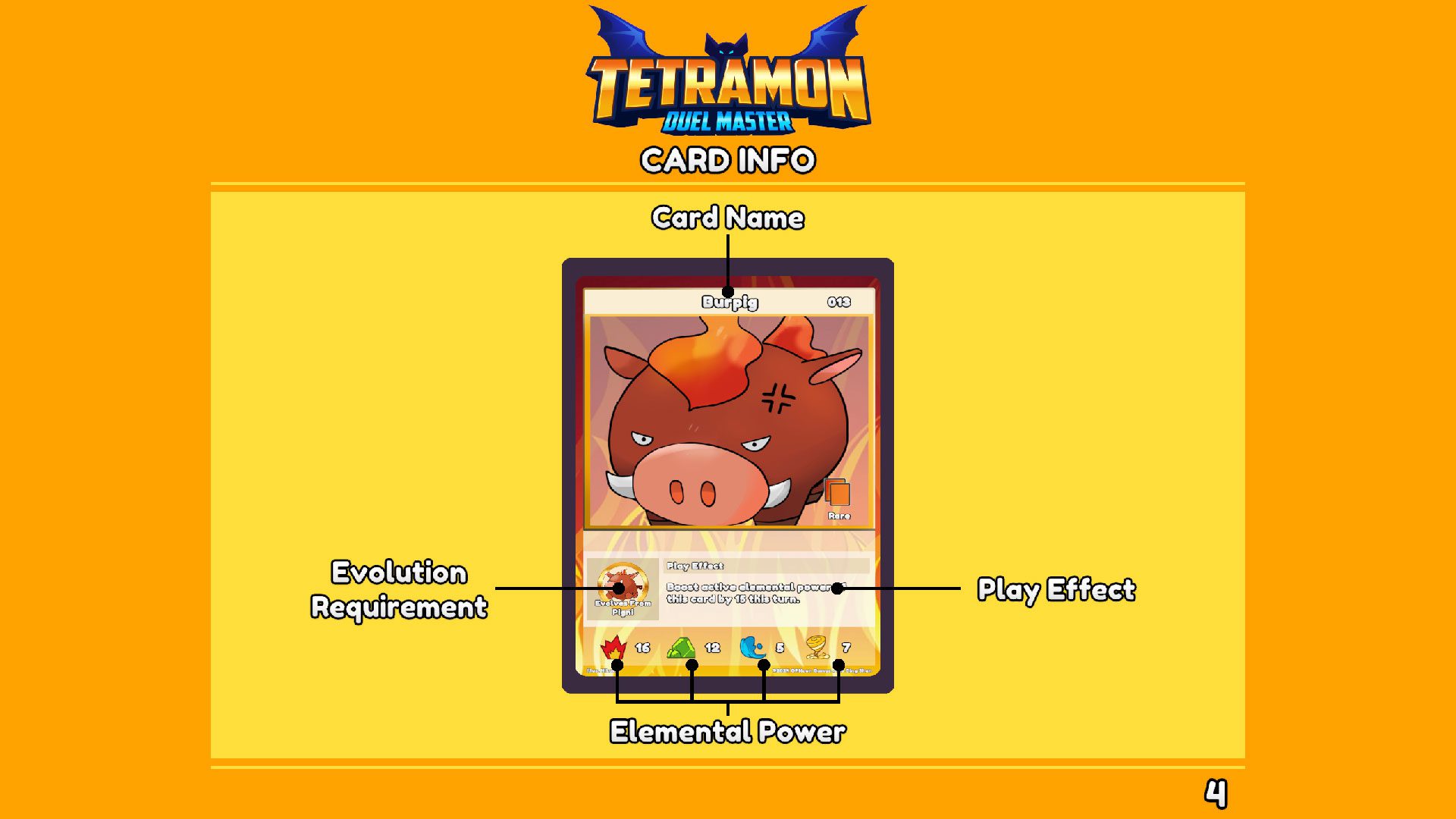
How Evolution Works in Tetramon uses physical stacking: an Evolution Card can only be played directly on the Tetramon it evolves from, turning complete card families into one of the most important deck-building systems in version 1.0.
How Evolution Works in Tetramon is being expanded from the official version 1.0 rules rather than from an invented launch-day meta. OPNeon confirms the 50-card deck, four-copy limit, five-card opening hand, one mulligan, four Guardian cards, 500 starting Tamer Points, four Elemental Areas and the evolution timing that governs every match. That gives us enough firm structure to make practical decisions while still being clear where live 1.0 testing is ongoing.
How Evolution Works in Tetramon: what matters first
An evolution card cannot simply enter an empty Elemental Area because you happen to have it in hand. Its required earlier form must already be on the table. That makes the Basic the foundation of the whole chain. When building a deck, count from the bottom upward and avoid stuffing the list with more late evolutions than the earlier stages can realistically support. That is the first thing to get right when using How Evolution Works in Tetramon.
A newly played Basic must wait a turn
OPNeon’s official rules state that a freshly played Basic Tetramon is not ready to evolve immediately. It needs a turn to settle in first. That creates a vulnerable setup window in which the opponent can pressure or disrupt the card before the stronger stages arrive. Protecting a promising Basic for that one turn can be more important than squeezing a little extra damage from another area. In practice, How Evolution Works in Tetramon works better when that rule is treated as part of the whole deck or board plan rather than an isolated trick.
You can chain evolutions after the wait
Once the Basic has become eligible, there is no general one-evolution-per-turn limit. If the correct cards are in hand, you can stack several stages during the same turn. That is why draw effects become so valuable in evolution-heavy decks: the faster you assemble the connected pieces, the more explosive the later turn can become. In practice, How Evolution Works in Tetramon works better when that rule is treated as part of the whole deck or board plan rather than an isolated trick.
Replacing a Basic can destroy your setup
Each Elemental Area accepts only one newly played Basic Tetramon per turn, and playing a new Basic clears what was already sitting there. That rule makes careless replacement expensive. Do not overwrite a card you were preparing to evolve simply because another Basic has a slightly better number. Check the hand and the evolution route before clearing an occupied area. In practice, How Evolution Works in Tetramon works better when that rule is treated as part of the whole deck or board plan rather than an isolated trick.
Build complete lines before chasing rarity
Useful launch-day examples on The Click include Kidsune through Kyuenbi for Fire pressure plus draw, Nanomite through Giganite for shields, Minstar through Kingstar for increasing draw, Wurmgle through Royalama for disruption and Pigni through Blazoar for straightforward Fire power. The exact meta can change, but the structural lesson is already firm: a complete line that reaches the table consistently is more useful than an isolated rare evolution that never finds its prerequisite. In practice, How Evolution Works in Tetramon works better when that rule is treated as part of the whole deck or board plan rather than an isolated trick.
How Evolution Works in Tetramon: what to check after a few matches
The useful test for How Evolution Works in Tetramon is repeatability. Play several customer matches rather than judging one perfect draw, and watch the same pressure points each time: whether the opening five can establish a Basic, whether the mulligan fixes genuinely bad hands, whether evolution cards have the earlier stage they need, and whether Elemental Area placement is improving attacks. Guardian draws at 400, 300, 200 and 100 Tamer Points can swing individual games, so repeated results tell you far more than one dramatic finish.
For How Evolution Works in Tetramon, the most useful first-party reference is the official Tetramon Duel Master guide on Xbox Wire. OPNeon founder Ding Shen Sia sets out the deck size, Guardians, Elemental Areas, evolution timing and 500-point win condition that this page builds on.