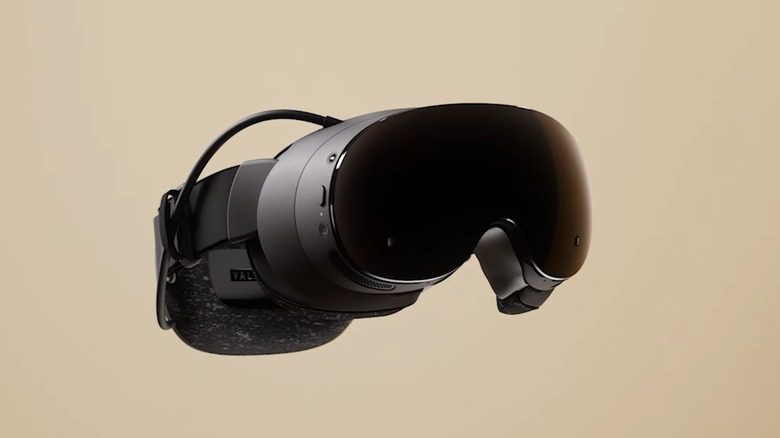
Steam Frame 256GB vs 1TB comes down almost entirely to storage and price. Valve’s two Steam Frame kits use the same core headset hardware, controllers and wireless dongle, with the 256GB model costing $1,059 / £889 and the 1TB model costing $1,299 / £1,089. That means the larger model charges $240 / £200 more for four times the built-in storage.
Steam Frame 256GB vs 1TB: the differences
The cleanest way to compare Steam Frame 256GB vs 1TB is to ignore assumptions borrowed from phones and laptops. Valve has not created a “Pro” 1TB headset with extra RAM, a faster processor or higher-resolution panels. Both versions use the same Steam Frame platform and both can run standalone-compatible games or stream from a PC.
The 1TB version is therefore a capacity upgrade. If a game runs on the 256GB unit, the same game should not suddenly run faster because you bought 1TB. What changes is how many locally installed titles you can keep available before moving or deleting something.
| Feature | 256GB | 1TB |
|---|---|---|
| US price | $1,059 | $1,299 |
| UK price | £889 | £1,089 |
| Built-in storage | 256GB | 1TB |
| microSD slot | Yes | Yes |
| Controllers + wireless dongle | Included | Included |
| Half-Life: Alyx | Included | Included |
Why the microSD slot matters
Steam Frame 256GB vs 1TB is a less painful choice because Valve includes expandable microSD storage on both models. That makes 256GB more practical for people who are happy to put less demanding local games or media on removable storage while keeping the fastest internal space for the titles they use most.
It also means you are not locked into the day-one capacity forever. MicroSD is not identical to internal UFS storage for every workload, but it gives the cheaper headset room to grow without paying Valve’s entire storage premium up front.
Who should buy 256GB?
The 256GB side of Steam Frame 256GB vs 1TB is the better value if your main plan is PC streaming. When the demanding game actually lives on your desktop, local headset storage matters much less. You still have enough internal space for SteamOS, standalone apps and selected native games, then microSD for expansion.
It is also the sensible model if you are unsure how much standalone gaming you will really do. Saving $240 / £200 can pay for the ergonomic kit, a charger, storage expansion and still leave money over rather than buying capacity you may never fill.
Who should buy 1TB?
The 1TB side of Steam Frame 256GB vs 1TB makes sense for buyers treating Steam Frame as a genuinely standalone library machine. Four times the built-in capacity is useful if you want several large games installed simultaneously, dislike shuffling files and expect native VR releases to grow in size.
The 1TB model also reduces dependence on removable cards and storage management. That convenience is real, but it is still convenience rather than extra rendering power, so it only earns the premium if you value the bigger local library.
Half-Life: Alyx does not change the choice
Both sides of Steam Frame 256GB vs 1TB include Half-Life: Alyx, including the new native ARM64 build Valve created for the headset. You do not need the 1TB model to get Alyx or to unlock the standalone version.
Alyx is a good demonstration of why local storage matters, but it is not a reason by itself to jump to 1TB. The better question is how many other native games you want sitting beside it at the same time.
For most streaming-first buyers, Steam Frame 256GB vs 1TB points to 256GB as the better-value model because the hardware is otherwise the same and microSD expansion exists. The 1TB version is the comfort pick for people who already know they want Steam Frame to behave like a self-contained gaming library rather than mainly a wireless extension of a PC.
Valve lists both configurations on the official Steam Frame hardware page.
More Steam Frame on The Click
Steam Frame 256GB vs 1TB is ultimately a convenience calculation, not a performance benchmark. If you are comfortable moving games, using microSD storage and streaming from a PC, the smaller model removes little from the experience. If you hate storage housekeeping and want the headset to feel self-contained, the larger model buys exactly that simplicity.