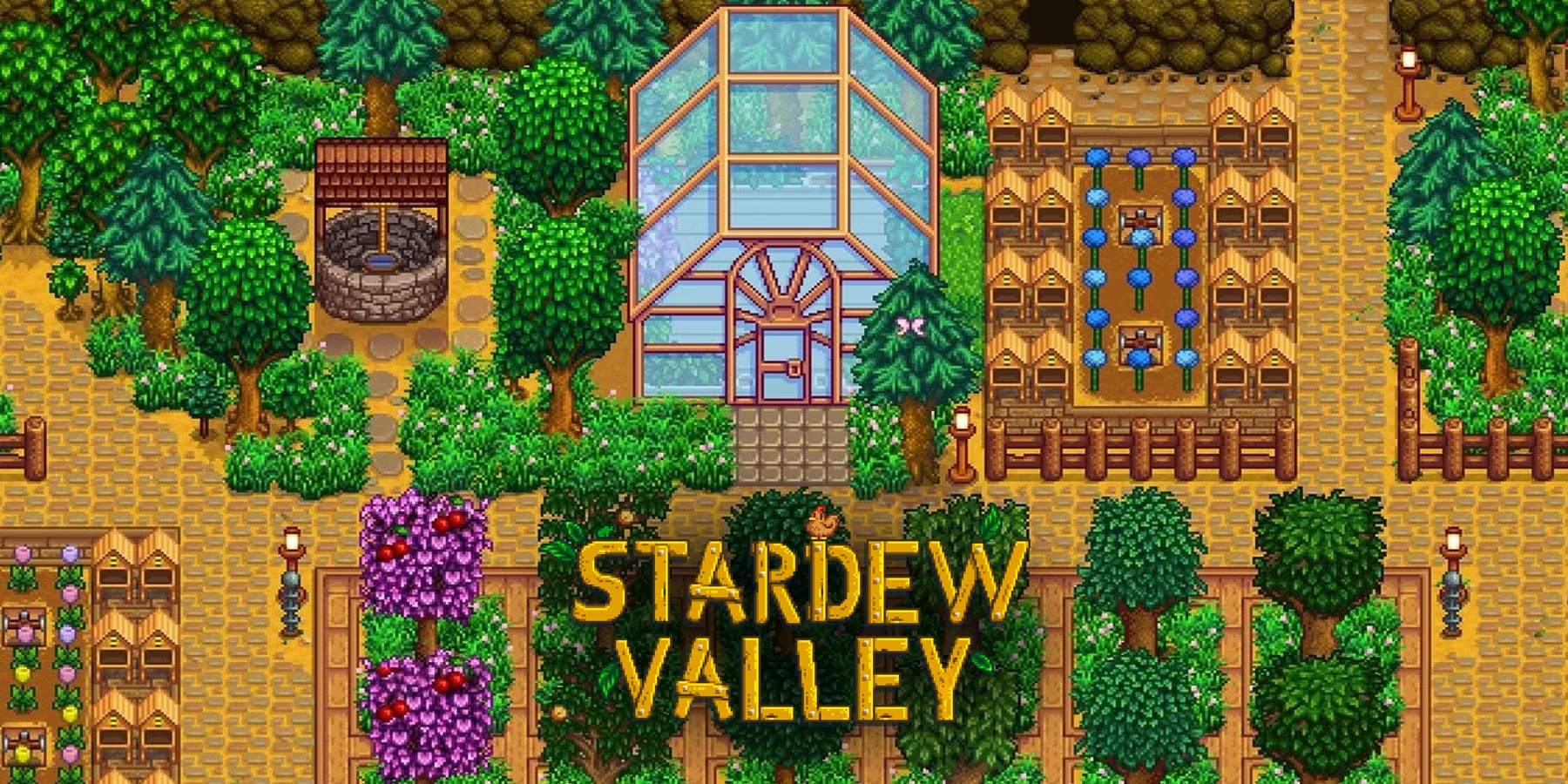
The Stardew Valley Greenhouse lets you grow crops from every season throughout the year, even when winter has stopped production in your outdoor fields. Repairing it takes either a completed Community Center Pantry or a payment through JojaMart, but the reward is the same: a permanent growing space that can become one of your farm’s most dependable sources of income.
There’s more to getting the most from it than filling the floor with expensive seeds. Your watering layout, fruit tree placement and choice between Ancient Fruit and Starfruit all affect how profitable the building becomes. Here’s how to unlock it, plan your space and avoid wasting valuable planting tiles.
How to unlock the Stardew Valley Greenhouse
You have two options. Complete all six Pantry bundles in the Community Center, or buy the Greenhouse development for 35,000g after joining JojaMart. Either route repairs the same building overnight, so it will be ready the following morning.
Community Center: all standard Pantry bundles
The Pantry appears after you complete your first Community Center bundle. On a standard, non-remixed bundle setup, you must finish all six of the following:
| Bundle | What to donate |
|---|---|
| Spring Crops | Parsnip, Green Bean, Cauliflower and Potato |
| Summer Crops | Tomato, Hot Pepper, Blueberry and Melon |
| Fall Crops | Corn, Eggplant, Pumpkin and Yam |
| Quality Crops | Five gold-quality crops from each of three types among Parsnip, Melon, Pumpkin and Corn |
| Animal | Five of six options: Large Milk, Large Egg (brown), Large Egg (white), Large Goat Milk, Wool and Duck Egg |
| Artisan | Six of twelve options: Truffle Oil, Cloth, Goat Cheese, Cheese, Honey, Jelly, Apple, Apricot, Orange, Peach, Pomegranate and Cherry |
Save one of each seasonal crop as you harvest, rather than selling everything. For the Quality Crops bundle, use fertiliser and plant extra seeds: you need five gold-quality items of each of three qualifying crop types, not five in total. Animal and Artisan items can take longer to acquire, although the Travelling Cart sometimes sells useful bundle items. Remixed bundles, if enabled when starting your save, change the requirements; always check the Pantry screen in your own game.
JojaMart: pay for the repair
Buy the Joja membership for 5,000g, then speak to Morris and purchase the Greenhouse project from the Joja Community Development Form for 35,000g. This bypasses Pantry item collection, although the membership itself adds to your total cost. Completing some Pantry bundles before switching to Joja doesn’t reduce the Greenhouse project price.
How the Stardew Valley Greenhouse works
Inside the Stardew Valley Greenhouse is a 12-by-10 soil plot with 120 plantable tiles. Any seasonal crop can grow here at any time of year. Multi-harvest plants continue producing after the outdoor season changes, and fruit trees grown indoors bear fruit regardless of season.
However, rain doesn’t water the indoor soil: use your watering can, sprinklers or Deluxe Retaining Soil. You can refill the watering can at the trough on the north wall. Crows and lightning won’t damage indoor crops, so scarecrows and lightning rods aren’t needed for protection. Giant crops cannot form inside, and Bee Houses placed here won’t produce honey.
You can also move the repaired Greenhouse by visiting Robin’s Carpenter’s Shop. Think carefully before relocating it on the Standard Farm map, as moving it removes the decorative grass underneath permanently.
Best Stardew Valley Greenhouse sprinkler layout
For the Stardew Valley Greenhouse, the standard, efficient solution is six Iridium Sprinklers. Place four on crop soil and two on the surrounding wooden border in the arrangement shown in the Stardew Valley Wiki’s Greenhouse diagrams. All soil tiles receive water, leaving 116 tiles for crops. Don’t simply put six sprinklers anywhere: their exact positions determine whether the corners and edges are covered.
| Watering setup | Sprinklers | Crop spaces remaining |
|---|---|---|
| Basic Sprinklers | 33 | 96 |
| Quality Sprinklers | 16 | 108 |
| Iridium Sprinklers | 6 | 116 |
| Iridium with Pressure Nozzles | 4 | 118 |
| Iridium with Pressure Nozzles | 5 | 119 |
| Deluxe Retaining Soil, no sprinklers | 0 | 120 |
If you’re still early in the game, don’t wait for Iridium Sprinklers before using the building. Quality Sprinklers are a worthwhile intermediate setup. For a permanent crop bed, Deluxe Retaining Soil keeps watered tiles wet overnight and frees the full 120 spaces, although you’ll need to water the soil initially.
Best crops to grow in the Stardew Valley Greenhouse
Ancient Fruit is a superb long-term choice. It takes 28 days to reach its first harvest, then produces another fruit every seven days without replanting. That makes it particularly convenient for a weekly harvest-and-Keg routine. Expand your planting gradually with the Seed Maker if you don’t have enough Ancient Seeds to fill the room.
Starfruit is the alternative for players who want valuable individual harvests. Seeds cost 400g from Sandy at the Oasis, and each crop normally takes 13 days to mature. Starfruit doesn’t regrow, so you must buy or produce fresh seeds and replant after each harvest. Its high-value wine makes it attractive when you have enough Kegs, money and time to keep the cycle running.
Strawberries are a strong early option if you’ve saved Egg Festival seeds: after eight days of growth, they produce another harvest every four days. Blueberries are another accessible choice, yielding multiple berries at each harvest after their initial growth period. Cranberries also offer repeat harvests. You can start with any of these and replace them gradually with Ancient Fruit as your seed supply grows.
Ancient Fruit vs Starfruit: which makes more money?
In the Stardew Valley Greenhouse, Starfruit has a higher base selling price per fruit, but Ancient Fruit wins on convenience because it regrows every week without another seed purchase. The best financial choice depends on how many Kegs you own, whether you’re using growth fertiliser and how much time you’re willing to spend replanting. For most players building a low-maintenance, permanent Greenhouse, Ancient Fruit is the easier recommendation. Starfruit is excellent for profitable batches while you’re still building up Ancient Seeds.
How to grow 18 fruit trees inside the Stardew Valley Greenhouse
The Stardew Valley Greenhouse can accommodate up to 18 fruit trees around the perimeter, outside the 120-tile soil bed. This lets you keep the central area for crops while collecting fruit throughout the year. The exact perimeter arrangement is shown in the Greenhouse layout reference; fruit trees cannot be planted in the interior corners.
Leave the eight surrounding spaces clear of placed objects while each sapling grows. Walls and the wooden crop border don’t count as obstructions, but sprinklers and decorations placed too close can delay growth. Plant the trees first, let them mature, then finish decorating. Mature fruit trees can produce one fruit each day, holding up to three fruit if you don’t collect them immediately.
What to do after unlocking the Stardew Valley Greenhouse
- Clear the planting area and decide how you’ll water it before placing expensive seeds.
- Set up the best sprinklers you can afford, checking the coverage rather than guessing.
- Plant any fruit tree saplings you want around the edge, leaving their growing spaces unobstructed.
- Use repeat-harvest crops for early income, then work towards Ancient Fruit or Starfruit.
- Build Kegs or Preserves Jars as your harvest grows; processing high-value fruit can be much more profitable than selling it raw.
There’s no need to fill all 120 spaces in the Stardew Valley Greenhouse on day one. A smaller, fully watered patch is more useful than a crowded room where expensive plants go unwatered.
Stardew Valley Greenhouse FAQ
Can crops die when seasons change?
No. Crops planted inside the Greenhouse ignore outdoor seasonal restrictions, and repeating crops continue producing as long as they’re maintained.
Do sprinklers work inside the Greenhouse?
Yes. They work normally, although the wooden border and the rectangular shape of the plot mean you need a deliberate layout to cover every tile.
Can you plant Ancient Fruit in the Greenhouse?
Yes. Ancient Fruit is especially well suited to the Greenhouse because it keeps producing every seven days after its first harvest.
Can you move the Greenhouse?
Yes, once repaired, through Robin’s building-move service.
Do fruit trees need watering?
No. Fruit trees don’t need watering, but saplings must have enough clear space around them to grow.
Related Stardew Valley guides
Looking for more ways to develop your farm and unlock late-game upgrades? Read our guides to the Mastery Cave, Iridium Scythe, Statue of Blessings, Golden Mystery Boxes, Trinkets and Mystic Syrup.
The Stardew Valley Greenhouse is worth repairing as early as you reasonably can. Start with reliable watering and whichever seeds you already own, then turn the space into a year-round Ancient Fruit farm, a Starfruit wine operation or a flexible mix that suits your goals. For detailed diagrams and game mechanics, consult the Stardew Valley Wiki’s Greenhouse reference and its Community Center bundle list.
Related Guides
- Stardew Valley Prismatic Shard: How to Get One Fast and Best Uses
- Stardew Valley Mastery Cave: How to Unlock Every Mastery
- Stardew Valley Iridium Scythe: How to Unlock It
- Stardew Valley Statue of Blessings: Recipe and Daily Buffs
- Stardew Valley Golden Mystery Boxes: How to Get Them
- Stardew Valley Trinkets: How to Get and Reforge Them
- Stardew Valley Mystic Syrup: How to Make It