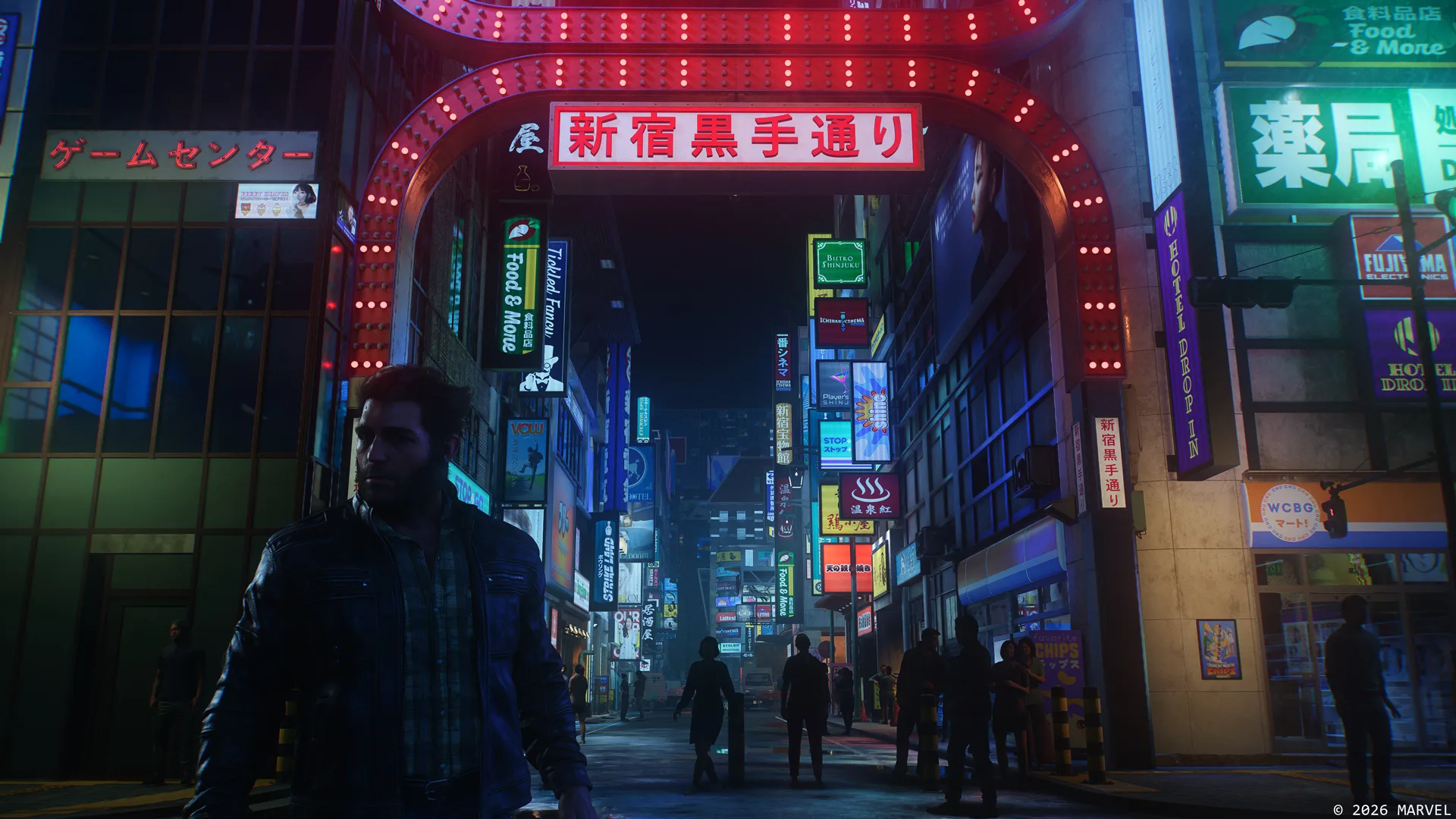
PS5 QSSR is Sony’s new Quick Spectral Super Resolution technology, a lighter AI-upscaling system designed for the standard PlayStation 5. Sony announced it on October 1, 2026 as part of Project Amethyst, its graphics collaboration with AMD.
The important difference is hardware target. PSSR was built for PS5 Pro, while QSSR is intended to bring similar AI reconstruction ideas to the base PS5 without requiring Pro-level compute resources.
Image credit: Official publisher/developer source
What QSSR does
QSSR reconstructs a lower-resolution image into a higher-resolution output using AI-based techniques rather than relying only on conventional spatial or temporal upscaling. Sony says the goal is improved detail and stability while keeping the performance cost low enough for the standard PS5.
The system is not simply PSSR renamed for another console. Sony describes QSSR as a new performance tier built around two innovations from its Project Amethyst work with AMD.
Which games support PS5 QSSR?
Marvel’s Wolverine and Ghost of Yōtei are the first two games Sony has named for QSSR. They serve as the launch titles for the new library, giving players the first real examples of how the technology looks on standard PS5 hardware.
Support is game-specific. There is no universal system switch that automatically enables QSSR in every PS5 title, so developers need to implement the library in their games.
Is QSSR the same as PSSR?
No. Both technologies are AI-based reconstruction systems, but Sony positions PSSR as the PS5 Pro solution and QSSR as the faster, lighter option for the base PS5.
That also means comparisons need to be made carefully. A game using QSSR on standard PS5 is not necessarily running the same internal resolution, quality mode or performance target as its PS5 Pro PSSR version.
Can every PS5 game use it?
Sony says QSSR is a library for developers rather than an automatic firmware upgrade for every existing game. A title has to add support, which is why the initial rollout is limited to named games rather than the entire PS5 catalogue.
More games may adopt it over time, but a current support list should be based on developer or PlayStation announcements rather than assuming that every patched title now has QSSR.
Why QSSR matters
The base PS5 has a much larger installed audience than PS5 Pro, so bringing AI reconstruction to the standard console gives developers another way to balance image quality and performance without changing the hardware itself.
For players, the practical benefit will depend on each implementation. The technology creates the opportunity for sharper reconstructed images and steadier detail, but the final result still depends on how a game chooses its internal resolution, graphics mode and frame-rate target.
Why Sony made a second upscaler
PS5 QSSR exists because the standard PS5 does not have the same graphics hardware budget as PS5 Pro. Sony’s Project Amethyst work with AMD is aimed at bringing a lighter AI reconstruction path to the base console without simply copying PSSR requirements.
That makes PS5 QSSR more interesting than a menu label. Developers can use the technology to rebuild a higher-resolution image from a lower internal resolution, potentially giving them more performance headroom while preserving detail.
The final result will still vary by game. PS5 QSSR does not dictate one frame rate, one resolution or one quality mode, so support should be judged title by title rather than assuming every implementation looks identical.
How to know a game supports it
Look for a developer or PlayStation announcement that names the game directly. PS5 QSSR is not a universal toggle that appears across the entire library after a system update.
Marvel’s Wolverine and Ghost of Yōtei were the first titles Sony identified for PS5 QSSR, giving the technology a real launch point rather than leaving it as a future-facing technical demo.
If a game has not announced PS5 QSSR support, do not assume a normal performance patch secretly includes it. The library has to be integrated by developers, so an official support list matters more than visual guesswork.
More PlayStation guides
Official source: https://blog.playstation.com/?p=424016