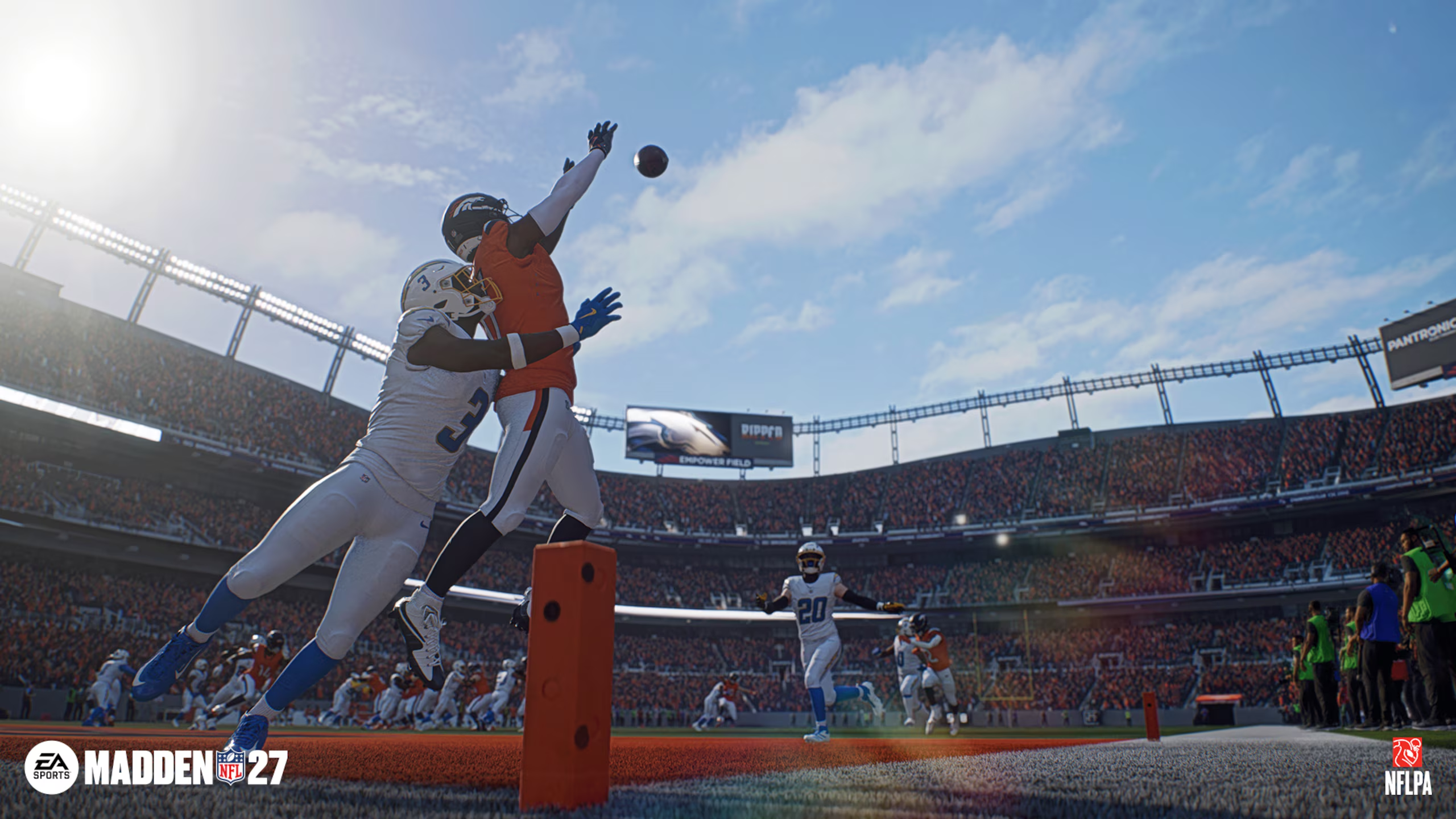
Madden NFL 27 Dynamic Salary Cap Changes are designed to make long-term Franchise finances scale more realistically as player salaries and contracts increase. The September 30 update adjusts how the league salary cap grows across future seasons so teams are not trying to manage a rising contract market against a cap that fails to keep pace.
Madden NFL 27 Dynamic Salary Cap Changes do not erase every financial problem in Franchise Mode. EA has been tuning CPU contract logic, restructuring, free agency and cap recovery throughout September, so this update is best understood as another piece of that wider long-save repair work.
Madden NFL 27 Dynamic Salary Cap Changes explained
Madden NFL 27 Dynamic Salary Cap Changes Image EA Sports.
The central change is that the league cap can rise as a Franchise progresses, alongside the financial demands of players. That matters because year five of a save can have a very different contract market from year one.
If salaries climb faster than the cap, too many teams can become trapped. If the cap grows too quickly, difficult roster decisions lose their importance. The new system is intended to keep those pressures closer together.
CPU spending now uses cap space and fair market value
CPU-controlled teams now compare a player’s fair market value with the cap room they actually have before signing him. Spending limits can also change according to whether the club is contending or in another roster-building phase.
Those limits apply to in-season free agents too, so Madden NFL 27 Dynamic Salary Cap Changes work alongside stronger rules for everyday CPU spending.
Dynamic Salary Cap is not the same as cap recovery
The Dynamic Salary Cap changes the league-wide financial ceiling. CPU cap recovery is the separate question of whether an AI team can escape bad contracts, restructures and dead money after poor decisions.
That distinction matters because an old Franchise can still contain teams with damaged finances even when the wider cap begins scaling correctly after September 30.
How this affects free agency and trades
A healthier cap gives CPU teams more realistic room to sign players, while the new spending rules are intended to stop clubs from overcommitting. Trade logic now adds another safeguard by rejecting deals that create excessive cap penalties.
Madden NFL 27 Dynamic Salary Cap Changes therefore sit at the centre of several other September 30 fixes instead of operating as an isolated number.
Do existing saves instantly recover?
EA has not said that old contracts and dead money will simply be rewritten. Preventing future imbalance is different from deleting financial problems already stored in a league.
Keep a manual backup before advancing a long Franchise after the update, then compare CPU cap space and free-agent activity across several seasons.
What to watch in a long save
The best test is whether the league stays financially usable. Watch how many CPU teams retain enough room to fill roster needs, whether useful free agents continue to sign and whether star contracts rise without making half the league insolvent.
Madden NFL 27 Dynamic Salary Cap Changes will be much easier to judge after several offseasons than after one week of play.
Why one season is not enough to judge the change
Madden NFL 27 Dynamic Salary Cap Changes are built for a system that evolves over years, so the first post-patch offseason may look very similar to what you already had. The value appears when salaries, extensions and free-agent demands continue rising across later seasons.
Track the league cap at the start of each offseason and compare it with the top contracts being signed. Madden NFL 27 Dynamic Salary Cap Changes should keep those two trends from drifting too far apart as the Franchise matures.
Madden NFL 27 Dynamic Salary Cap Changes are therefore best treated as a long-term league-health adjustment rather than a one-screen feature. The important question is whether the cap, salaries and CPU spending continue to move together several seasons from now.
More Madden NFL 27 guides
For official Madden developer information, see EA Sports Madden NFL.