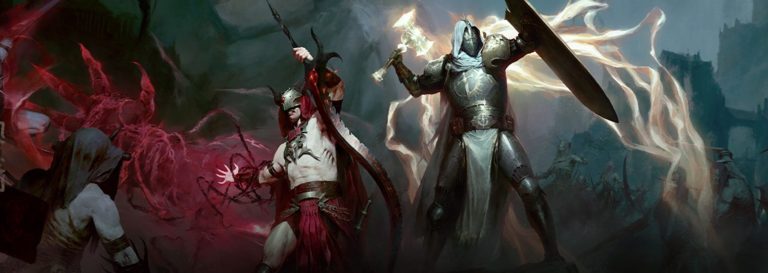
Diablo 4 Paladin Class Mechanic is the Oath system. The class does not have one single passive mechanic that every build uses in the same way. Instead, Zealot, Juggernaut, Judicator and Disciple each create a different combat loop around Fervor, Resolve, Judgement or Arbiter form, which is why choosing an Oath is one of the most important build decisions.
Understanding Diablo 4 Paladin Class Mechanic also explains Blizzard’s class archetype names. The marketed Arbiter fantasy is mechanically delivered through the Disciple Oath and Arbiter transformation. Zealot is the Fervor route, Judicator is the Judgement route and Juggernaut is the Resolve route. You should therefore read a build’s Oath line before copying its skill bar.
Diablo 4 Paladin Class Mechanic: all four Oaths
The table below is the short version of Diablo 4 Paladin Class Mechanic. Each row tells you what the Oath generates or changes, which gives you the quickest way to tell whether a proposed skill or Unique actually belongs in the same setup.

| Oath | Mechanic |
|---|---|
| Zealot | Zealot skills build Fervor. Critical Strikes echo extra damage based on Fervor, while reaching maximum Fervor also Fortifies the Paladin. |
| Juggernaut | Juggernaut skills spend Resolve to increase their damage and size, turning defensive resource management into direct offensive scaling. |
| Judicator | Basic skills apply Judgement and compatible Core Judicator skills detonate it. Repeated Judging increases the damage the target takes. |
| Disciple | Casting a cooldown based Disciple skill grants a short Arbiter transformation. Wing Strikes gain Disciple benefits, and Disciple skills become stronger while Arbiter is active. |
Zealot and Fervor
Under Diablo 4 Paladin Class Mechanic, Zealot skills generate Fervor and Critical Strikes echo additional damage based on the Fervor state. Reaching the maximum also Fortifies the Paladin. That makes attack speed and Critical Strike consistency meaningful because the Oath rewards repeated pressure rather than one isolated hit. Red Sermon is a natural Unique partner because it directly amplifies Zeal.
Juggernaut and Resolve
Juggernaut turns Diablo 4 Paladin Class Mechanic into a spendable Resolve loop. Juggernaut skills consume Resolve to increase damage and size, so Resolve that sits capped is wasted potential. Shield based builds naturally fit this identity because the class already has Blessed Shield, Shield Bash, Shield Charge and several shield Uniques, but the key test is still whether the selected skill actually participates in the Juggernaut mechanic.
Judicator and Judgement
Judicator uses Diablo 4 Paladin Class Mechanic as a mark and detonation system. Basic skills can apply Judgement and compatible Core Judicator skills detonate it, while repeated Judging makes the target take more damage. This is why Judicator setups care about application rate and detonations rather than simply asking which single tooltip number is highest.
Disciple and Arbiter form
Disciple is the transformation side of Diablo 4 Paladin Class Mechanic. Casting a cooldown based Disciple skill grants a short Arbiter window, and Disciple skills gain extra value while Arbiter is active. Current Arbiter themed builds commonly use Falling Star to trigger or support that loop, then pair it with Arbiter of Justice, auras and either Blessed Hammer or Wing Strike focused damage.
How Oaths affect gear choices
Once you understand Diablo 4 Paladin Class Mechanic, gear choices become much easier. Sanctis of Kethamar belongs with Arbiter form, Red Sermon belongs with Zeal, Ward of the White Dove belongs with Blessed Shield and Herald’s Morningstar belongs with Blessed Hammer. The Oath is not the only thing that determines gear, but it stops you from equipping class items whose special effect never interacts with the build you are actually playing.
Examples of Oath and skill matching
The easiest way to learn Diablo 4 Paladin Class Mechanic is through concrete pairs. A Disciple Hammerdin can use Falling Star to help create Arbiter windows, then keep Blessed Hammer active while the transformation and auras add pressure. A Zealot setup repeatedly attacks with Zeal to build Fervor and benefits from Critical Strike investment. A Judicator setup deliberately applies Judgement and uses compatible Core actions to detonate it, while a Juggernaut setup watches Resolve and spends it through its own tagged skills.
Those examples are also a troubleshooting checklist for Diablo 4 Paladin Class Mechanic. If an Arbiter build rarely transforms, inspect the Disciple trigger and cooldowns. If Zeal feels flat, check Fervor generation, Critical Strike consistency and whether Red Sermon is equipped when the build expects it. If Judicator damage comes in weak bursts, confirm that Judgement is being applied before the detonation. If Juggernaut never spends Resolve, the selected skills may not actually be using the Oath engine.
Oaths are build identities, not passive bonuses
Because Diablo 4 Paladin Class Mechanic changes the combat loop, swapping Oaths should be treated like changing the build rather than toggling a small passive. A Zealot character moving to Disciple needs a reliable cooldown based Disciple trigger and a plan for Arbiter uptime. A Disciple character moving to Judicator needs Judgement application and detonation. Respec the supporting skills and gear at the same time, otherwise the new Oath can look weak simply because the old build is still equipped around it.
Diablo 4 Paladin Class Mechanic is best thought of as four distinct engines inside one class. Identify whether your build wants Fervor, Resolve, Judgement or Arbiter form, then make every major skill and gear decision support that engine instead of mixing mechanics that never meet.
For first-party information and future changes, see Blizzard Entertainment’s official Diablo IV coverage.