ESO Whispers, Plots and Conspiracies Explained separates Update 51’s clue-driven quests into three difficulty tiers, with Whispers designed as the most approachable investigations, Plots demanding more logic and Conspiracies asking you to connect the hardest chains of evidence. The labels tell you how much deduction the Rumor expects, not how strong the enemies will be.
The useful part of ESO Whispers, Plots and Conspiracies Explained is choosing the right tier for the mood you are in. A Whisper is ideal when you want a short detective-style diversion, while a Conspiracy is better when you are happy to read several clues, revisit assumptions and solve something without the normal ESO map-marker safety net.
ESO Whispers Plots and Conspiracies Explained
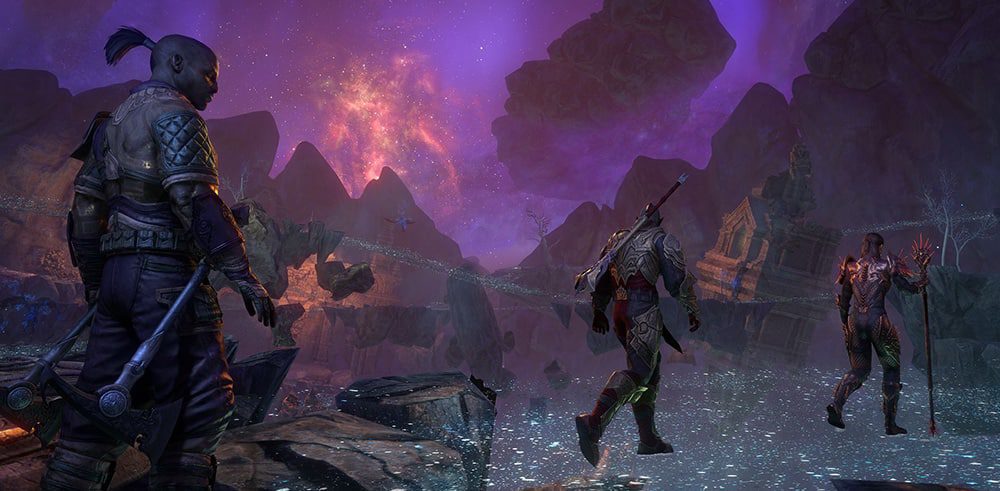
Image credit: ZeniMax Online Studios
ESO Whispers, Plots and Conspiracies Explained begins with Whispers, which ZeniMax describes as the easiest and most straightforward Rumor type when the player pays attention. They still remove the usual trail of quest markers, but the clue itself should point more directly toward the person, place or object you need to investigate.
Plots sit in the middle of ESO Whispers, Plots and Conspiracies Explained and require more interpretation between steps. Conspiracies are the top difficulty, where multiple clues may need to be connected before the answer becomes clear, so the challenge comes from deduction rather than a higher health bar.
Whispers explained
In ESO Whispers, Plots and Conspiracies Explained, Whispers are the teaching tier. They are a good way to learn where Rumors appear in the Quest Journal, how a hint is worded and what the game considers a valid clue interaction before you take on investigations with more moving parts.
A Whisper can still send you searching if you skim the text, so do not confuse ‘easiest’ with ‘automatic’. The ESO Rumors System: How to Find and Complete Rumors guide explains the basic investigation routine that applies to all three categories, including how to work from the latest journal hint without a normal waypoint.
Plots explained
Plots are the middle tier in ESO Whispers, Plots and Conspiracies Explained, and the main difference is the amount of logic expected between one clue and the next. A clue may tell you enough to identify a region or subject without spelling out the precise object you should click, so you need to combine the written lead with what is actually present in the environment.
That makes Plots a useful step up once Whispers feel obvious. They preserve the same marker-light philosophy as the rest of ESO Whispers, Plots and Conspiracies Explained, but they ask you to infer more rather than simply recognise a location named almost directly in the text.
Conspiracies explained
Conspiracies are the hardest part of ESO Whispers, Plots and Conspiracies Explained because they can require several clues to be connected before the solution makes sense. Instead of expecting one hint to name the next destination cleanly, keep track of repeated names, motives, landmarks and relationships that appear across the investigation.
A Conspiracy is the wrong place to rush if you dislike reading quest text, because the missing markers are not an omission waiting to be patched out. ZeniMax designed ESO Whispers, Plots and Conspiracies Explained so the hardest Rumors reward players who actually interpret evidence, which is much closer to an old-school scavenger hunt than a modern guided quest chain.
Do harder Rumors give different rewards
ZeniMax has confirmed the broader reward categories for Rumors, but ESO Whispers, Plots and Conspiracies Explained should not be turned into a fake fixed loot table without verified per-Rumor data. Consumables, set items and gold can appear as rewards, and Rumor progression also connects to an upgrade item for the Prowler’s Amulet Mythic.
Treat the difficulty labels in ESO Whispers, Plots and Conspiracies Explained primarily as an information about puzzle complexity rather than a guaranteed rarity multiplier. If ZeniMax publishes a deterministic tier-by-tier reward table later, that deserves an update, but the launch guide should not invent one.
Which Rumor type should you start with
For a first session, start ESO Whispers, Plots and Conspiracies Explained with a Whisper and complete enough steps to understand how the journal and environmental interactions communicate progress. Move to a Plot once you are comfortable being in the correct zone without an arrow telling you which doorway to use.
Save Conspiracies for the point where you actively want a longer deduction challenge. The same philosophy appears in ESO Nowhere Vault Lunar Path Puzzle and ESO Nowhere Vault Cursed Castle Puzzle, where Update 51’s Vault secrets also reward remembering information from earlier rooms and even other wings.
Why the three-tier structure matters
The best thing about ESO Whispers, Plots and Conspiracies Explained is that Rumors can serve different types of session without changing the core idea. Whispers make the system approachable, Plots create a middle ground and Conspiracies give experienced explorers something that cannot be solved by simply following the compass.
That structure also helps troubleshooting because a difficult clue is not automatically evidence of a bug. When ESO Whispers, Plots and Conspiracies Explained labels an investigation as a Conspiracy, the game is explicitly warning you that connecting several clues is part of the intended challenge.
More ESO Update 51 guides
- ESO Update 51: Everything New on September 28
- ESO Nowhere Vault: How to Unlock and Start a Run
- How to Get Wondrous Nowhere Keys in ESO
- ESO Nowhere Vault Rewards
- ESO Rumors System: How to Find and Complete Rumors
- ESO Nowhere Vault Lunar Path Puzzle
- ESO Nowhere Vault Cursed Castle Puzzle
- ESO Nowhere Vault Gryphon Seal
ESO Whispers, Plots and Conspiracies Explained is based on the current Update 51 information published by ZeniMax Online Studios. For the first-party reference and any launch-day changes, check the official ESO Rumors feature page before relying on an older route or reward list.