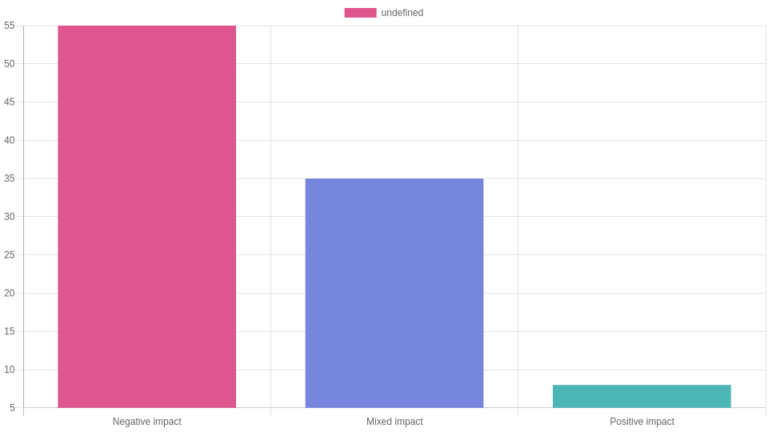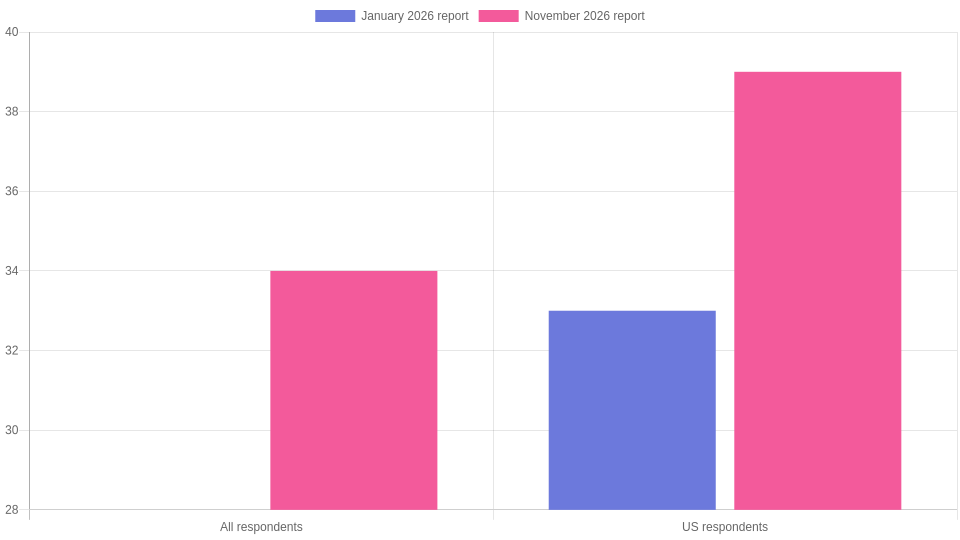
GDC 2026 layoffs figures reveal something more troubling than the job cuts themselves: how difficult it has become to find work afterwards. In the latest industry survey, 34% of respondents said they’d been laid off in the past two years. Of those who’d lost a job, 54% said they were still unemployed.
The report, published on 12 November, is based on more than 2,600 game-industry respondents. It isn’t a headcount of every developer, and GDC warns that people who have experienced layoffs may be more likely to answer the survey. Even with that caveat, the responses describe a job market where experience doesn’t guarantee a quick return to work.
GDC 2026 layoffs: what the survey tells us
Among all respondents, 34% reported a layoff in the past 24 months, rising to 39% in the United States. The January 2026 report had put those figures at 28% and 33% respectively. That’s a six-percentage-point increase in each group, although the people responding to the two surveys weren’t necessarily the same.
Don’t mistake that 34% for the share of the entire industry that’s been made redundant. GDC explicitly says its respondent pool appears to include more people affected by layoffs than broader industry estimates. The figure tells us what happened to people who answered this survey; it cannot establish the precise number of jobs lost across gaming.
Still, the GDC 2026 layoffs results deserve attention because the report doesn’t stop at how many people lost jobs. It also asks what happened next.
Finding another job has become an ordeal
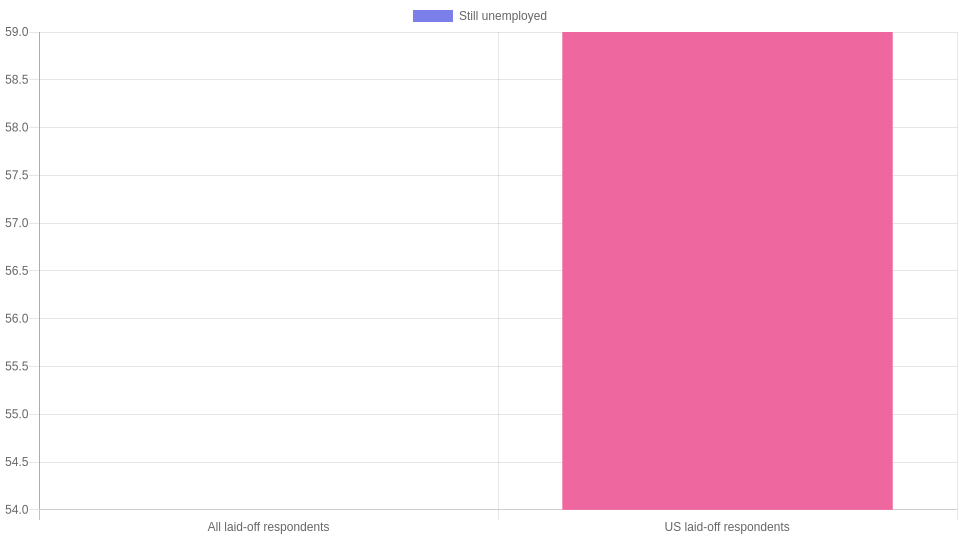
Among laid-off respondents, 54% were still unemployed, rising to 59% in the US. More than a quarter, 27%, said they’d applied for at least 100 jobs. These aren’t figures for all survey participants: they describe people who had already been laid off. And they capture why the GDC 2026 layoffs story isn’t just about the day someone gets bad news.
Sending 100 applications is exhausting in any profession. For someone who built a career around specialised art, engineering or design skills, finding the next role may mean competing for a smaller pool of suitable jobs. The survey doesn’t tell us exactly how long each person has been looking, but it does show how far some have had to cast their net.
The survey also reports that 68% of AAA studio respondents said their workplaces had been affected by layoffs in the past year. That is not the same as saying 68% of AAA workers were personally laid off. Work can be disrupted long after a round of redundancies ends. GDC’s separate findings on workplace AI concerns are covered in our GDC 2026 AI survey analysis, but the report does not establish AI as the cause of these job cuts.
Why GDC 2026 layoffs can’t be blamed on one decision
One publisher cancels a project; another reorganises its teams or runs into financial trouble. Treating every redundancy as the result of one industry-wide decision ignores those differences. The Click has covered some of those specific cases, including DON’T NOD’s financial crisis, Epic Games’ Fortnite job cuts and the Dark Outlaw Games shutdown.
That doesn’t mean the whole industry has stopped making successful games. A studio can release something popular and still reduce headcount. Commercial success, sensible staffing and job security don’t always move together.
There’s a particularly uncomfortable contrast elsewhere in the survey: 86% of game workers said working in games gives them more fulfilment than another industry would, while 65% reported that their work had harmed their mental health in the past year. These are respondents’ own assessments, not clinical findings. They do, however, challenge the idea that loving games is enough to make an insecure job sustainable.
What would make the next GDC 2026 layoffs report better?
The GDC 2026 layoffs survey can’t force studios to hire. What it can do is make it harder to ignore the people behind closure announcements. It matters whether developers who lose work can find another job in the same field, and whether studios are being realistic about the teams they need to finish a project.
Better planning won’t prevent every business failure. But clearer project decisions, honest communication and support for people being made redundant would be a more serious response than treating each set of cuts as an isolated headline. Those are questions raised by the data, not commitments GDC says companies have made.
A game can look impressive on stage while the people who made it are worrying about their next payslip. Players don’t have to stop enjoying releases to recognise that gap.
The GDC 2026 layoffs figures aren’t proof that one in three people across gaming lost their jobs. What they do provide is direct testimony, on a large scale, that the damage often continues well after the redundancy email. That deserves more attention than another round of arguments over whose studio had the biggest budget.
Official research source: GDC Festival of Gaming, State of the Game Industry: November 2026.