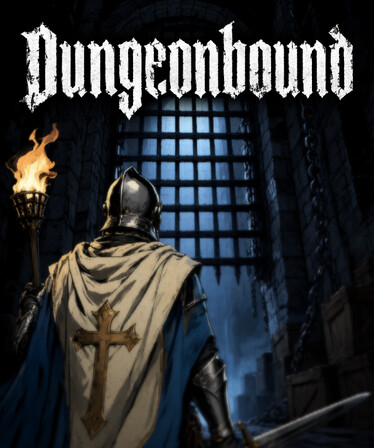
Dungeonbound co-op lets two to four people take on The Climb together, with a shared pool of five hearts. A party can include you and up to three friends, but adding more people does not increase the team’s heart total.
Everyone is in the same run, but not the same wallet. You buy from your own shop, choose your own relics and build your own board. If one person makes a bad call, though, the whole team feels it because those five hearts belong to everyone.
How many players can join Dungeonbound co-op?
Dungeonbound co-op is for two to four players. A full party is you and three friends, not five or six people. Teams of two, three and four also have separate leaderboards. The Steam listing confirms online co-op on PC, but doesn’t advertise split-screen or cross-platform play. The opponents you encounter in the regular Climb are another story: those are saved player builds, not people taking part in a live match.

What happens when the team loses a heart?
Everyone shares the same five-heart limit. When the group loses a heart, that failure reduces the team resource instead of only punishing the person whose hero was fighting. It is therefore worth thinking about whether a risky piece of gear genuinely helps the group before betting a run on it. The game follows its usual auto-battler approach: combat happens as a sequence of fights and players watch a teammate’s encounter unfold rather than joining an action-combat scrum. You can still work together by discussing items, helping somebody assemble a stronger board and keeping an eye on the remaining hearts.
How do shops and gold work in Dungeonbound co-op?
Money and shops are personal, not pooled. Each player manages their own purchases and set of relics, which prevents the group from simply having one enormous shared inventory. There is an important exception: you can hand an item to a teammate by dropping equipment onto their board. That gives a group some flexibility when a particular object works much better with someone else’s hero or inventory layout. The developer also lists special gifting items that exist in co-op. A useful habit is to decide who benefits from an item before moving it, especially if the piece interacts with a character’s passive or their neighbouring gear.

How does the loot dice roll work?
Some loot decisions can become a dispute when more than one teammate wants the same prize. Dungeonbound handles those disagreements with a dice roll. That is not the same as every item automatically being shared or every shop purchase becoming a group decision. Your own gold and shop still belong to you; the roll is a way of settling contested rewards. The feature gives multiplayer a social twist, but it also encourages people to talk about what actually fits their builds. Taking a flashy item that cannot fit your board may be worse than letting somebody else make good use of it.
Can a co-op climb be saved or rejoined?
The 3 November demo patch added a saved climb for each team and allows a bot to step in when somebody leaves. It also fixed issues with reconnecting and getting stuck at gates. For finding a party, the earlier Halloween update introduced Open lobbies and Find Lobby, while the 8 November v0.1.51 patch added Quick Join. That gives you three confirmed options for finding teammates: hosting an Open lobby, browsing through Find Lobby, or using Quick Join in the current demo.
Is Dungeonbound co-op the same as PvP?
No. Your friends are playing with you in real time during a Dungeonbound co-op session. The enemy teams you meet in the ranked Climb are snapshots of someone else’s earlier run. You can face another player’s ideas without that person being online. The important co-op rules are still the same: four players maximum, five shared hearts, personal shops and a dice roll when teammates want the same loot.
Official source: Dungeonbound on Steam (louidev).