Clash Royale Spooky Chess returns as Shocktober’s competitive league with a battlefield structure that changes how players approach both offence and defence. It is recognisably Clash Royale, but the event is not simply another normal ladder queue with a Halloween label. Progression and leaderboard performance both matter during the limited window, so players need to understand the mode structure before deciding whether their goal is steady completion, a ranking push, or both.
Supercell has confirmed the event window, the core objective and both badge conditions, but its Shocktober announcement does not publish a complete numerical scoring formula or a full item-by-item League Road reward table. A useful Clash Royale Spooky Chess guide therefore needs to be precise about what is known and equally precise about what is not. The focus here is the live structure players can act on now, without inventing ranking points, banned-card rules or a supposed best deck from an incomplete data sample.
Clash Royale Spooky Chess dates and how to access it

Image credit: Supercell
Clash Royale Spooky Chess runs from October 5 to October 19, 2026 as the season’s competitive league. The mode is part of the live Shocktober schedule, so it starts before the Album Event that opens on October 6. Players should look for the competitive league entry in Clash Royale during that window rather than expecting Spooky Chess to be part of the Album interface.
Supercell describes the objective directly: defeat the opponent’s wall of troops and towers, then take down the King while defending your own side. That wall is the defining rule of Clash Royale Spooky Chess and changes how quickly a player can reach the main target compared with a standard arena battle.
How the League Road works
The published reward structure for Clash Royale Spooky Chess includes a badge for completing the League Road. That makes League Road completion the accessible progression target even for players who are not chasing a top leaderboard finish. Supercell’s season announcement does not list every step, chest or point threshold on the road, so those values should be read from the live event interface rather than copied from an unverified preview.
The important distinction is that League Road and leaderboard placement are separate goals. Finishing the road earns one badge. It does not, by itself, grant the second badge. Players who only want the completion badge can focus on steady progression across the event window instead of treating every match as a race for a global rank.
All confirmed Clash Royale Spooky Chess badges
There are up to two confirmed badges in Clash Royale Spooky Chess. One is awarded for completing the League Road. The other is a leaderboard badge for placing in the top 10,000. Supercell explicitly states the top 10,000 requirement, so a finish outside that cutoff should not be described as enough for the leaderboard badge.
The Clash Royale Spooky Chess two-badge structure gives players a clear choice of ambition. League Road completion is based on reaching the end of the event progression path, while the top 10,000 badge depends on comparative leaderboard placement. Because leaderboard rank is relative to other players, a position that looks comfortable early in the event can move before October 19.
How scoring and ranking are documented
Supercell’s Shocktober article does not publish a numerical Clash Royale Spooky Chess scoring formula. It confirms the leaderboard, the top 10,000 badge and the mode objective, but it does not state in that announcement exactly how many leaderboard points a win gives, how losses affect the total, or whether any tie-break rule is used.
That means the live in-game League screen should be treated as the source for your current score and rank. Avoid relying on a fixed point number copied from an earlier version of Spooky Chess unless the 2026 interface shows the same rule. The mode is live, so there is no need to manufacture a formula when the player-facing ranking screen can show the current system directly.
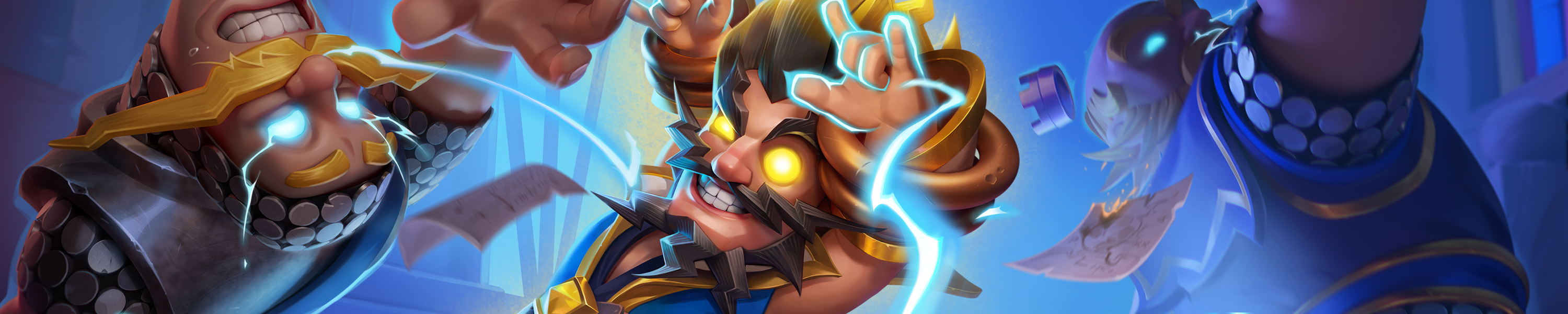
Image credit: Supercell
Practical strategy for the wall-and-King objective
The unusual structure of Clash Royale Spooky Chess rewards players who think in stages. The first task is clearing enough of the opposing wall to create a route toward the King, while the second is preventing the opponent from doing the same to you. Damage that looks impressive but does not help remove the blocking formation can be less valuable than control that creates a clean opening.
Area damage and well-timed spells can be useful when several defensive pieces are grouped, but that is a tactical principle rather than proof that one specific deck is the best. Keep enough Elixir to answer pressure on your own wall, and avoid sending every resource forward simply because the enemy King becomes visible. Clash Royale Spooky Chess still punishes an undefended counterattack, especially when your opponent has already opened a lane through the structure.
Mistakes to avoid while chasing the badges
A common Clash Royale Spooky Chess mistake is treating the top 10,000 badge like a fixed League Road milestone. It is not. The leaderboard badge depends on your final comparative placement, while the road badge comes from completing the progression path. Check the live ranking close to the end of the event if the leaderboard reward is your target.
Another Clash Royale Spooky Chess mistake is copying a highly specific deck recommendation without enough live evidence. Early event data can change rapidly as players discover counters and Supercell’s October balance changes settle. Build around the actual mode objective, use the cards you can execute well, and judge performance from your results. Supercell has confirmed the structure and badge requirements, but it has not declared an official Spooky Chess meta deck.
Related Guides
Official source: Supercell Shocktober season notes