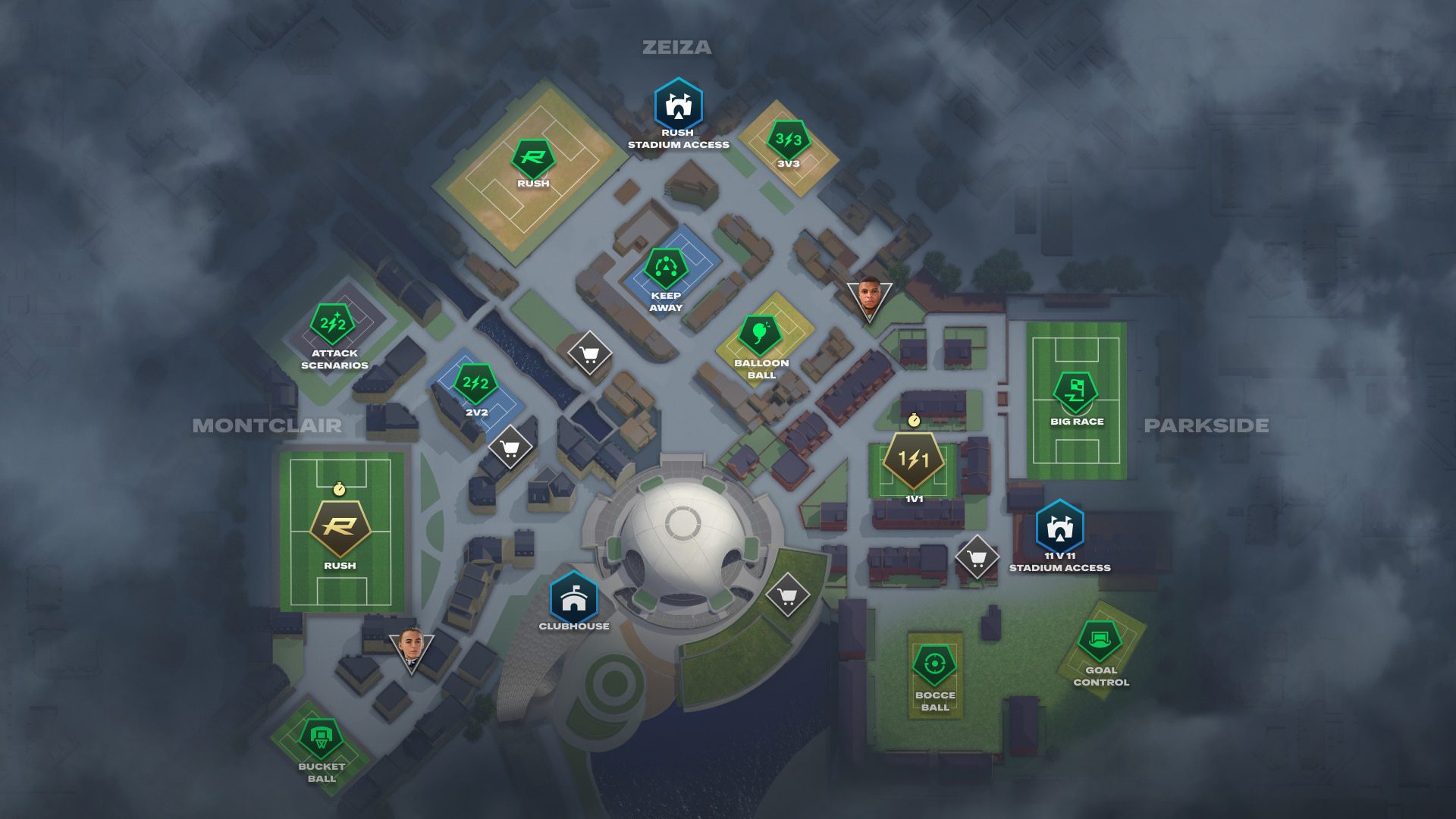
EA FC 27 The Grounds Explained is the clearest way to understand the new social football space that now sits around Clubs in FC 27.
Rather than being a single match mode, The Grounds is a shared football world built around a central Terrace, three districts, Clubs access, small-sided football, kickabouts, tournaments and player progression.
What The Grounds actually is
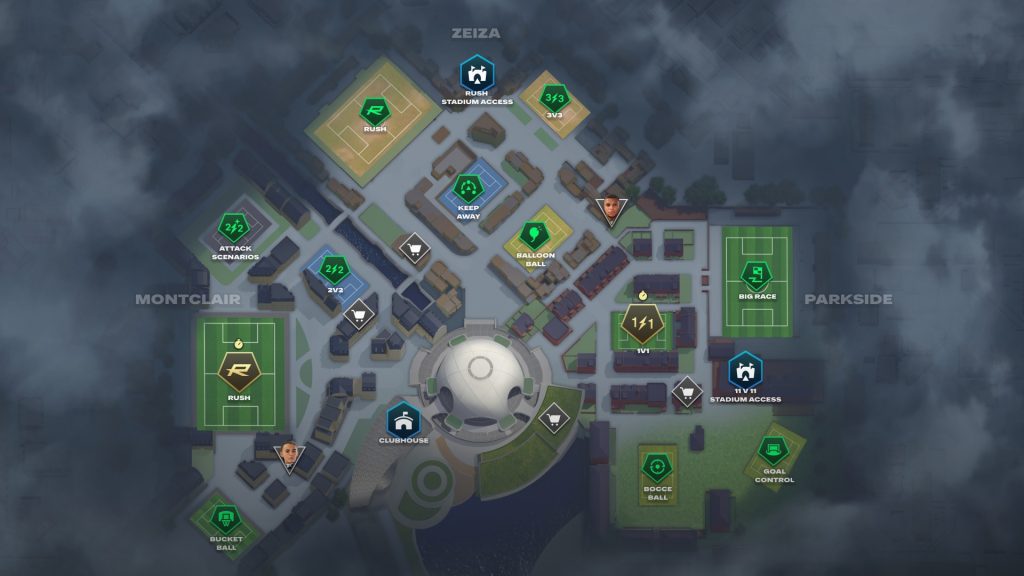
The Grounds can host up to 100 people in the same shared football space, with the Terrace connecting the main areas and giving players access to the Clubhouse, information points and The Grounds Store.
Clubs remains central to the experience rather than being replaced. League and Playoff matches return, Rush remains part of the ecosystem and new activities sit around those familiar competitive modes.
The three districts and the Clubhouse
Montclair is inspired by French street football, Zeiza draws on Argentine potrero culture and Parkside reflects British working-class football heritage. Each district is designed with a different visual identity and set of activities.
The Clubhouse acts as the home of Clubs inside the world, while stadium access points lead into 11v11 and Rush matchmaking. The space is meant to connect casual social play with organised Club competition.
What you can play
Players can enter 1v1, 2v2, 3v3 and Rush matches inside the world, while stadium drop-ins lead to 11v11, stadium Rush and live tournaments. Small-sided matches last three minutes and use their own rules depending on team size.
Kickabout activities add football-themed minigames including Bocce, Team Keepaway, The Big Race, Attacking Scenarios, Hoops, Balloons, Goal Control and kick targets spread around the world.
How progression works
Time spent in The Grounds develops your Pro through AXP and other progression systems. Archetypes remain central, AMPs can temporarily modify an active Archetype and long-term Mastery rewards can create permanent Attribute bonuses across builds.
The world is designed to change across Seasons, campaigns and live updates. New activities, rewards, store content and event chains can therefore appear without The Grounds needing to become an entirely different mode.
Across the mode, EA FC 27 The Grounds Explained comes down to one idea: Clubs now lives inside a much broader social and progression space. Competitive matches are still there, but they are surrounded by districts, mentors, casual games, rewards and systems that give your Pro more to do between stadium fixtures.
In practice, EA FC 27 The Grounds Explained is less about replacing Clubs and more about wrapping Clubs in a world where casual play, social spaces and progression all connect to the same Pro.
For returning Clubs players, EA FC 27 The Grounds Explained also clarifies that leagues, playoffs and Rush still exist; the difference is that they now sit beside districts, mentors, tournaments and smaller football activities.
Another useful part of EA FC 27 The Grounds Explained is the distinction between open-world activities and stadium matchmaking, because some games happen directly in the shared space while others move into the familiar competitive interface.
From a progression angle, EA FC 27 The Grounds Explained needs AXP, Mastery and AMPs in the same picture, since those systems are how time spent around the world feeds back into the Pro used in Clubs.
For social play, EA FC 27 The Grounds Explained matters because the 100-player capacity applies to the shared world rather than one giant match, with individual activities still using their own team sizes.
Across the full season, EA FC 27 The Grounds Explained should also be read as a live-service framework, because EA plans campaigns and updates that can alter activities, atmosphere, rewards and store content.
EA details the feature in its official EA SPORTS FC 27 information.