Roblox Studio New Terrain Tools include Object Scattering, Path Splines, Projected Decals, Virtual Texturing and Signed Distance Fields, covering both authoring workflows and terrain technology.
Roblox presented the new terrain stack in September 2026 as a staged Early Access overhaul rather than a single finished Studio update landing all at once.
Roblox Studio New Terrain Tools: Object Scattering
This is the repeated-asset system, built to distribute creator-selected trees, rocks, foliage and custom grass with density and rule controls.
Roblox Studio New Terrain Tools: Path Splines
This is the route-building system, using editable 3D control points while terrain and foliage can respond to changes.
Roblox Studio New Terrain Tools: Projected Decals
This system adds localized PBR detail that conforms to terrain curvature, filling the gap between broad materials and manually placed geometry.
Roblox Studio New Terrain Tools: Virtual Texturing
This technology divides terrain texture data into tiles and focuses rendering work on the visible material information the camera needs.
Roblox Studio New Terrain Tools: Signed Distance Fields
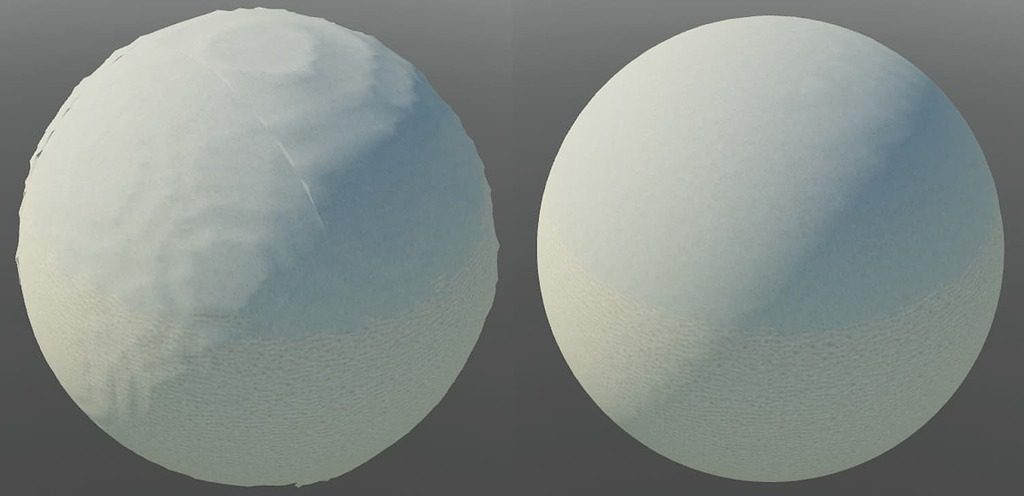
SDF stores terrain boundaries more precisely inside each voxel, which Roblox says reduces visible stair-step edges and improves terrain smoothness.
Roblox Studio New Terrain Tools: how the systems fit together
One tool places assets, one defines routes, one adds surface detail, one handles texture rendering and one improves the terrain form underneath everything.
Roblox Studio New Terrain Tools: when the tools arrive
Roblox plans to roll the systems into Terrain Early Access through late fall and winter 2026, with DevForum and email updates as features become available.
The important part of the overhaul is that Roblox is changing both the visible editor tools and the terrain technology beneath them, rather than simply adding a handful of new buttons.
Large environments are difficult because every extra detail can increase authoring time or runtime cost. The new terrain stack is interesting because it is trying to reduce both pressures at once.
The staged Early Access rollout also means documentation will evolve. A tool can be confirmed at the workflow level while its final performance guidance and production limits are still being tested.
Roblox Studio New Terrain Tools are notable because the update changes both creator-facing workflows and the underlying systems that render and shape terrain.
The overhaul is easiest to understand as a stack. Signed Distance Fields improve the terrain form, Virtual Texturing handles how materials are rendered, and the creator-facing tools sit on top of those systems to make decoration and editing faster.
That layered approach matters for large games because better authoring tools alone do not solve runtime cost. Roblox is pairing new workflows with rendering and terrain-representation changes so denser environments have a better technical foundation.
Creators also do not need to use every system at once. A simple map might benefit from smoother terrain and Path Splines without needing Object Scattering, while a large natural world could depend heavily on procedural decoration.
The staged Early Access rollout should help Roblox tune the tools against real creator projects. Feedback from large maps, mobile-heavy experiences and stylized games may expose different limits than internal demonstrations.
For developers, the main opportunity is reduced iteration cost. Roads, vegetation and surface details can remain editable longer, which is valuable because Roblox experiences often continue changing long after their first public release.
The strongest result would be a terrain workflow that stays editable without forcing creators to sacrifice visual density or device performance.
The larger significance of the overhaul is that Roblox is changing both how creators edit terrain and how terrain is represented and rendered underneath those tools. Better editor workflows alone would save time, but they would not solve the runtime cost of denser environments. Pairing procedural placement, editable routes and projected detail with Virtual Texturing and Signed Distance Fields gives the update a stronger technical foundation. Creators also do not need to adopt every feature at once. A simple map might only need smoother terrain and better roads, while a large natural world could benefit most from scattering and texture improvements.
The Early Access sequence should also reveal which parts of the overhaul are independent and which depend on the newer terrain backend. That matters for existing projects because a creator may want one new workflow without rebuilding an entire environment around every other feature. Clear migration guidance, compatibility notes and performance recommendations will be as important as the tools themselves once developers begin testing them on live production maps.