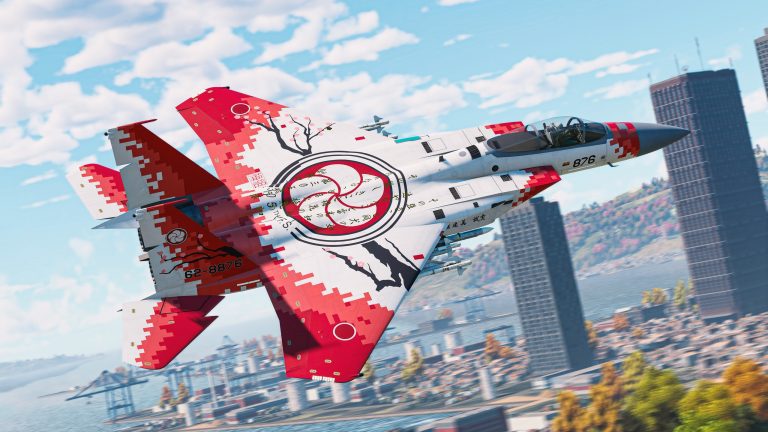
War Thunder DLSS 5 is coming with the Eagle’s Shadow major update in mid-November 2026. Gaijin has confirmed that the update will introduce NVIDIA’s 3D-Guided Neural Rendering, which changes how lighting, weather and material details appear in the game.
The new graphics option is not live in the main game on 4 November. NVIDIA driver 621.14 is already available, but installing it won’t add an option that Gaijin has yet to release. The game patch is the essential second half.
War Thunder DLSS 5 release window
NVIDIA describes the Eagle’s Shadow release as mid-November, without naming a specific date or worldwide hour. Gaijin has previewed the update and opened a development-server test, but a test build isn’t the same as a live release for everyone.
Eagle’s Shadow also brings vehicles and combat changes. Those additions belong to the game update itself, not to the graphics technology, so players on other graphics cards can still follow the wider patch. A graphics-card restriction shouldn’t be mistaken for a restriction on the update’s content.
For War Thunder DLSS 5, the correct milestone is the official Eagle’s Shadow live patch, not the date a GeForce driver or development server becomes available.
What War Thunder DLSS 5 changes
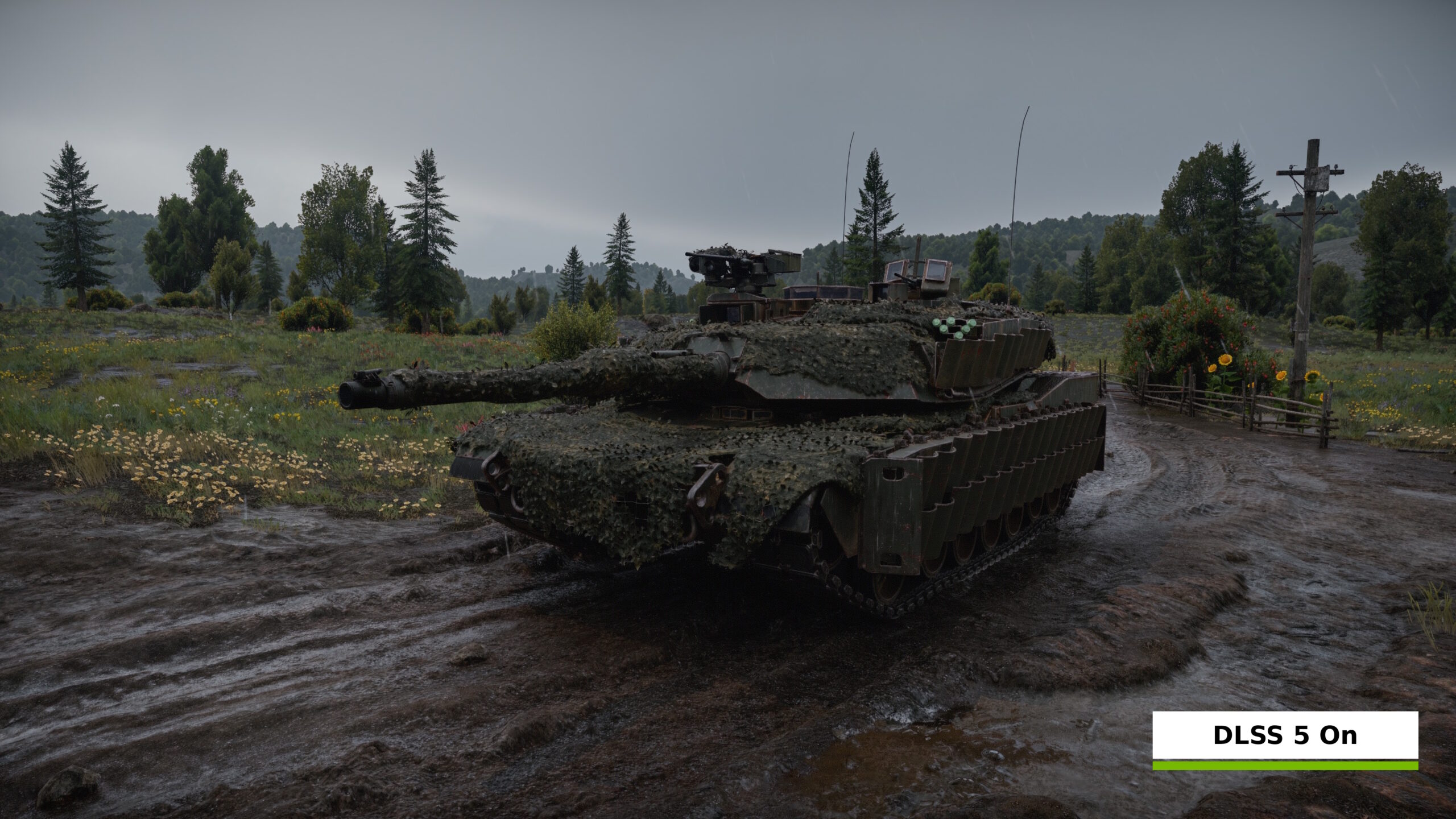
Gaijin’s before-and-after images show more pronounced light and shade, stronger atmosphere during rain and overcast weather, more realistic wet surfaces and subtler detail in materials. These differences are particularly noticeable on vehicles, road surfaces and terrain.
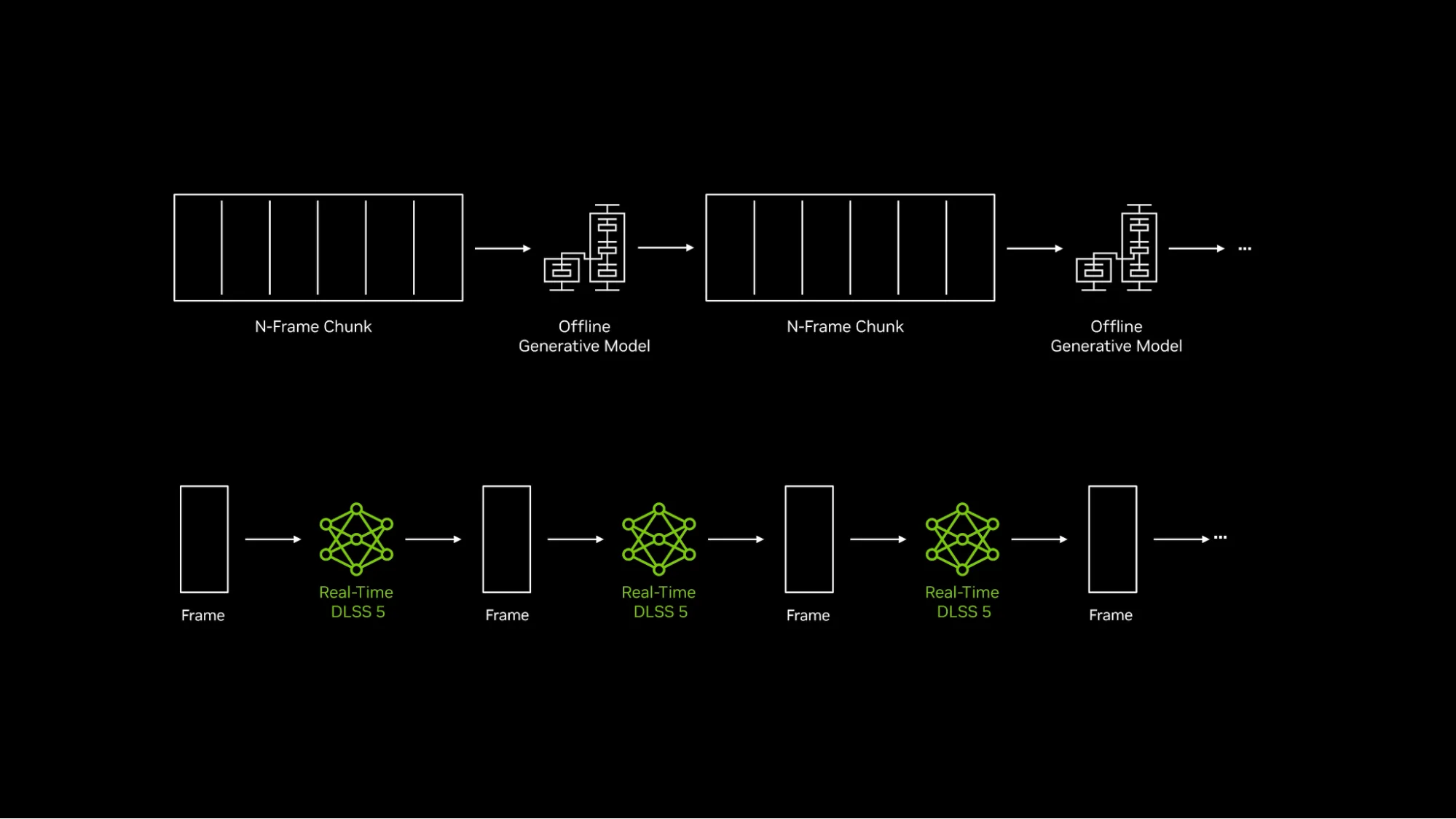
The underlying engine still provides the geometry and scene data. The neural model changes the final rendered appearance rather than vehicle physics, armour penetration or map layouts. In other words, War Thunder DLSS 5 is about presentation, not a gameplay balance patch.
Gaijin has also stated that players can leave the optional new effect switched off if they prefer the existing appearance. You won’t be required to adopt a different rendering style to keep playing.
War Thunder DLSS 5 supported GPUs
The current local compatibility list covers GeForce RTX 50-series desktop and laptop cards and NVIDIA RTX Spark systems. Gaijin’s official team has answered users directly to confirm RTX 50 and RTX Spark support.
GeForce NOW Ultimate is included in NVIDIA’s broader DLSS 5 cloud-support announcement, although its use in War Thunder still depends on a supported game build being available through the service. A suitable cloud membership is not a guarantee that the game’s new update has rolled out there at the same instant.
RTX 40 and RTX 30 owners can keep using compatible older DLSS options. Gaijin has confirmed the game already includes a DLSS 4.5 model, available through Options, Graphics, DLSS Model. That model setting is not evidence the separate 3D-Guided Neural Rendering stage is already active.
War Thunder DLSS 5 is not announced for AMD Radeon or Intel Arc cards, but those players are not being excluded from the Eagle’s Shadow gameplay patch.
How to enable War Thunder DLSS 5
Wait for Gaijin’s release announcement and install the Eagle’s Shadow update. Then make sure your NVIDIA GPU is supported and your driver is current. NVIDIA’s 621.14 Game Ready Driver was released ahead of the new game support.
Gaijin has confirmed the feature is optional but has not yet provided a final verified click-by-click menu path for its new control. Do not mistake the older DLSS Model dropdown for proof that Neural Rendering can already be switched on, and don’t use an unsupported third-party tool to try to force it.
If War Thunder DLSS 5 is missing after launch, the useful checks are the installed game patch, graphics hardware and driver version. AMD RX 5000 driver timeouts and Intel Arc visual glitches are unrelated problems. They have separate workarounds and shouldn’t be blamed on an unavailable NVIDIA setting.
Is it the same as DLSS Super Resolution or path tracing?
No. Super Resolution reconstructs a higher-resolution image from a lower-resolution frame. The new 3D-Guided Neural Rendering stage enhances lighting and materials in the final image. They can complement each other when a game implements both, but they aren’t interchangeable.
Path tracing is a separate method of calculating lighting effects within a game engine. Gaijin discusses War Thunder DLSS 5 alongside demanding path-traced graphics, which doesn’t mean every supported GPU will achieve identical results at maximum settings.
NVIDIA’s promotional demonstrations use selected GeForce hardware and specific test conditions. Figures such as high frame rates at 4K or 1440p are showcase results, not an FPS guarantee for every battle, resolution and machine. Frame-generation settings also affect the displayed numbers.
Is it worth using in War Thunder?
Once the update arrives, compare the same battlefield in similar lighting and weather conditions with Neural Rendering on and off. Rain, dusk and reflective surfaces are sensible places to check the visual difference because those are the areas Gaijin has highlighted.
If you prefer the current look, you can leave the effect off. If you’re playing on a card not eligible for War Thunder DLSS 5, you can still tune your existing DLSS or other supported graphics settings without waiting for this particular feature.
For now, the release window and hardware list are confirmed. Exact launch-day menu instructions belong in the guide only once Gaijin has shipped and documented the final build.
Related Guides
Official source: Gaijin’s War Thunder DLSS 5 announcement.