DOORS Archives Entities and How to Survive Them covers a roster that cannot be handled with one universal hiding rule. The Archives mixes fast corridor threats with memory checks, ticket encounters, Gold pressure and special rooms, and each one asks for a different response.
The easiest way to learn the Archives roster is to remember the cue first, then the counter. Bash is about hearing the approach and clearing the route. Forget-Me-Not is a memory puzzle. Teller is a number-and-ticket encounter. Alma punishes careless camera attention, while Honcho turns the run into an objective sequence.
DOORS Archives Entities and How to Survive Them
The room usually tells you what kind of problem you are dealing with. A strong approach cue means movement matters. Repeating scenery means compare details. A service counter means read the numbers. Heavy visual interference is a sign to slow down rather than force the next door.
| Entity | Main cue | Basic response |
|---|---|---|
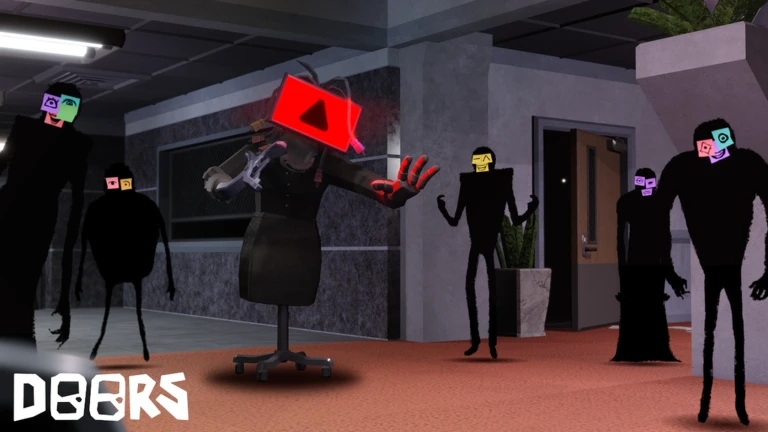
| Drones | Moving office crowd | Keep out of the crowd path and give the group space. |
| Bash | Fast approach and audio cue | Clear the route and react to the warning sound. |
| Ransom | Gold pressure | Keep some Gold available and follow the room prompt. |
| Forget-Me-Not | Repeated flower room | Compare the six positions. Same means forward, changed means back. |
| Teller | Ticket and number display | Track your number and respond when it is called. |
| Alma | Attention-sensitive encounter | Use controlled camera movement and avoid staring. |
| Honcho | Forced office and mail-room task | Read the requested package number and complete the sorting objective. |
Bash, Ransom and Scribbles
Several Archives threats echo ideas from the older Rooms content, but they are not simple copies. The important point is to recognise the type of pressure without assuming an old timing rule still applies.
Bash is one of the clearest examples of why listening comes first. The approach cue gives you time to get out of the route. Ransom is tied to your resources, so reaching later sectors with no Gold can leave you with fewer options. Scribbles interferes with your ability to read what is happening, which makes blindly pushing forward worse than taking a moment somewhere safe.
Forget-Me-Not is a memory check
Forget-Me-Not catches players who rush the repeated room. Memorise the six flower positions before you leave the station, then compare the arrangement when the room repeats. If the positions are unchanged, continue forward. If something changed, turn back.
A simple left-to-right callout works better than trying to remember the entire room. In a group, let one person call the pattern so several different memories are not competing at the same time.
Teller is about the ticket number
Teller is a good example of why the Archives cannot be reduced to “find a hiding place.” The service-counter setup gives you a Waiting Ticket and a visible number. Keep track of the ticket you received and be ready when the display reaches it.
Stay close enough to follow the queue without wandering around the room unnecessarily. The difficulty is paying attention to the number while still reading the rest of the encounter.
Alma punishes careless camera movement
Alma is easier when you stop making huge camera swings. Use short, deliberate looks and listen to the room rather than holding your view on the entity. If the encounter escalates, respond to the immediate survival cue instead of trying to study the model.
That controlled approach fits the wider lesson of the Archives: several threats are designed to punish automatic habits. Sometimes the safest move is to look less, move less or spend a second checking what changed.
Honcho turns the run into a work objective
Honcho needs a completely different response again. He can redirect a sector transition into an executive office and mail-room task. Read the requested package information, find the matching numbered box and keep the sorting sequence moving while he applies pressure. Treating Honcho like a normal rush entity wastes the time you should be spending on the assignment.
Creak and Noise belong to The Stairwell
The Stairwell arrived alongside the wider Archives content, but it is a separate hidden route from The Mines. Creak and Noise belong there rather than the normal A to Z Archives path. Keeping that distinction clear stops you preparing for threats that are not on your current floor.
Creak calls for brief, controlled looks, while Noise punishes movement and rewards stopping as the static pressure rises. If you are heading for The Stairwell, learn those cues before you spend the Skeleton Key around Door 152.
Use the room as the clue
If you forget an entity name, look at what the room is asking from you. A crowd means space matters. A service counter means numbers matter. Repeating scenery means compare details. A forced office detour means finish the task. That is the simplest way to survive the Archives without trying to memorise every encounter as a separate script.
You can launch the current version from DOORS on Roblox. LSPLASH can rebalance timings, so live cues should always beat an old clip. Use this DOORS Archives Entities and How to Survive Them guide as a quick reference for the response to each encounter, then let the current room tell you exactly when to act.