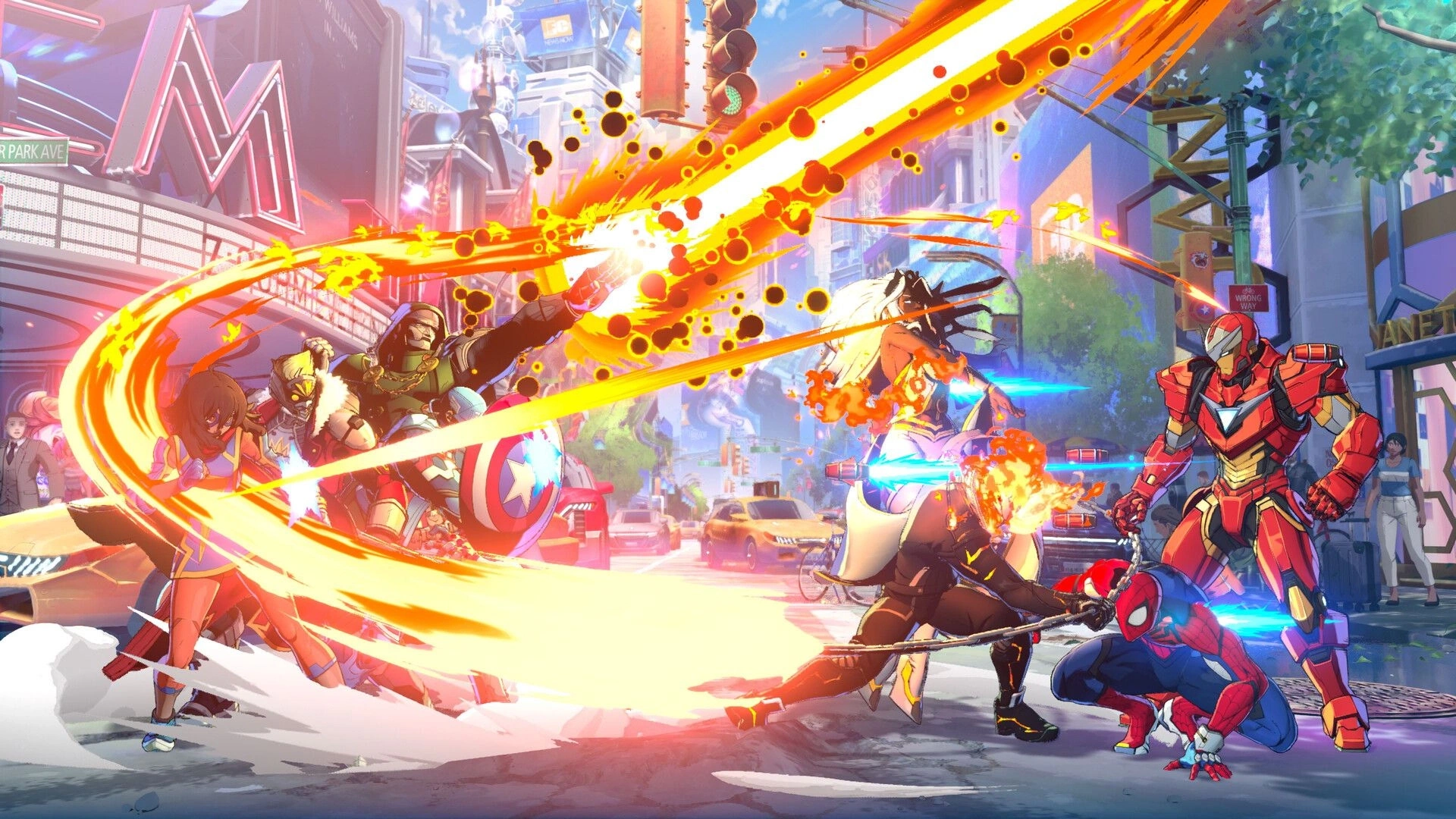
Marvel Tōkon Stage Transitions allow fights to move between connected areas while also helping players assemble the third and fourth members of their team. Unlike a purely visual background change, Marvel Tōkon Stage Transitions are tied directly to the game’s combat system, making positioning near the edge of an arena much more important.
Players can trigger a transition by successfully landing certain moves, combos or a throw beside the edge of an area. Completing one of these actions can unlock another teammate, giving Stage Transitions a genuine tactical purpose during every match.
| Feature | Details |
|---|---|
| Mechanic | Stage Transition |
| Triggered near stage edges | Yes |
| Requires a successful attack | Yes |
| Moves the fight to another area | Yes |
| Can unlock another teammate | Yes |
| Available on multi-area stages | Yes |
| Alternative mechanic | Wall Bounce |
What Are Marvel Tōkon Stage Transitions?
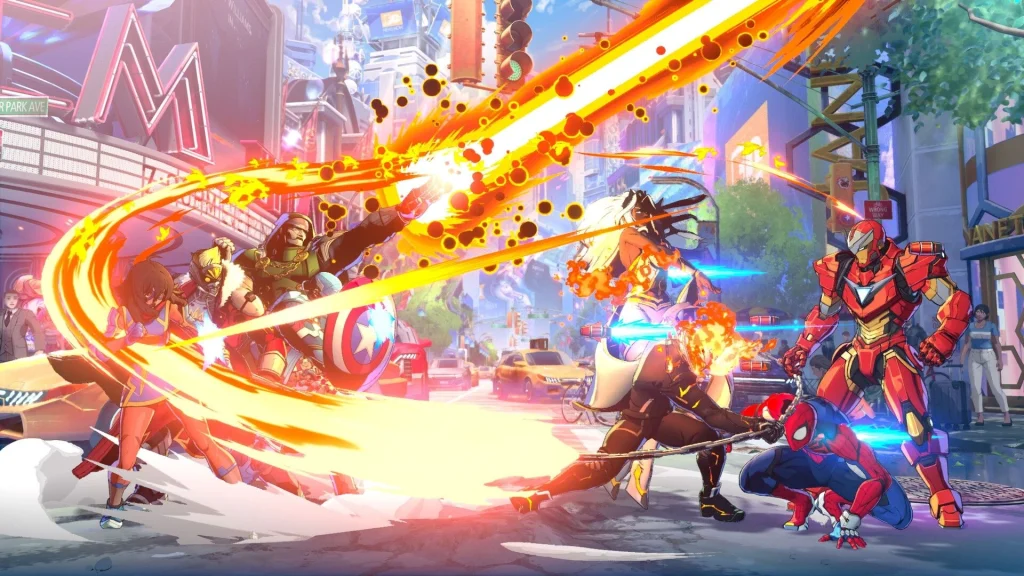
Marvel Tōkon Stage Transitions move the battle from one part of a stage into another connected area.
Several stages contain multiple sections rather than one fixed arena. A successful transition sends the action into the next part of the environment, creating a more cinematic fight while also affecting the team system.
Stage Transitions are not activated by simply walking toward the edge. Players must successfully land an appropriate move, combo or throw while positioned beside the boundary of the current area.
The transition only happens when the required attack connects. Standing near the edge and hoping the scenery changes out of sympathy will achieve very little.
How to Trigger Marvel Tōkon Stage Transitions
To trigger Marvel Tōkon Stage Transitions, move the opponent close to the edge of an area and successfully connect with a compatible attack.
Official information confirms that the mechanic can be activated by:
| Trigger | Can cause a Stage Transition? |
|---|---|
| Specific moves | Yes |
| Successful combos | Yes |
| Throws near the edge | Yes |
| Walking into the boundary | No |
| Missing an attack | No |
The precise attack used depends on the character and current situation. What matters is that the move, combo or throw lands successfully beside the edge of an area capable of transitioning.
Training Mode is the best place to practise because it allows players to experiment with positioning and determine which attacks reliably move an opponent into the next stage section.
Why Marvel Tōkon Stage Transitions Matter
Marvel Tōkon Stage Transitions do more than change the background.
Successfully triggering one can help assemble the rest of your four-character team. Every player begins a match with access to only the first two selected fighters. The third and fourth teammates become available as the battle progresses.
Completing a successful Stage Transition or Wall Bounce is one of the confirmed ways to unlock another member of the squad.
| Team progression | Characters available |
|---|---|
| Beginning of the match | First two characters |
| After a successful unlock condition | Third character joins |
| After another unlock condition | Fourth character joins |
| After losing a round | Another teammate can also be assembled |
This means a player who understands Marvel Tōkon Stage Transitions may gain access to additional assists and switching options sooner.
The mechanic therefore connects stage positioning, offence and team progression rather than existing as a decorative animation.
Which Stages Have Multiple Areas?
Several launch stages contain connected sections that can support Marvel Tōkon Stage Transitions.
| Stage | Confirmed areas |
|---|---|
| Marvel’s New York Day | City Center, Hell’s Kitchen and Avengers Park |
| Marvel’s New York Night | City Center, Hell’s Kitchen and Avengers Park |
| Wakanda | Warrior Falls, Royal Palace and Shuri’s Lab |
| Savage Land | Five separate areas |
| Knowhere | Multiple connected cosmic sections |
X-Mansion is also part of the launch stage selection, although official descriptions focus on it as the famous X-Men headquarters rather than detailing multiple named areas.
Savage Land contains five sections, making it the launch battlefield with the largest officially confirmed number of distinct areas.
Stage Transitions and Wall Bounces
Marvel Tōkon Stage Transitions and Wall Bounces are closely connected but are not exactly the same result.
Both can be triggered by successfully landing certain attacks near the edge of an area, and both can help unlock additional teammates.
| Mechanic | Result |
|---|---|
| Stage Transition | Moves the fight into another connected area |
| Wall Bounce | Sends the opponent bouncing from the boundary |
| Team benefit | Either can assemble another teammate |
| Positioning requirement | Both involve the edge of an area |
The outcome depends on the stage, position and attack that connects.
A Stage Transition changes the active environment. A Wall Bounce keeps the fight within the current area while creating another combat interaction against the boundary.
We will cover the second mechanic separately in our Marvel Tōkon Wall Bounce guide.
Do Stage Transitions Happen Automatically?
No.
Marvel Tōkon Stage Transitions require a successful combat action near the edge of a compatible area.
A transition will not automatically occur simply because:
- The timer reaches a certain point.
- The Vital Gauge falls below a specific amount.
- A character walks close to the boundary.
- A teammate becomes available.
- The round begins or ends.
Players must create the correct positioning and successfully land an attack, combo or throw.
This makes Stage Transitions something that can be pursued deliberately rather than a random event that interrupts the match.
Can Losing a Round Replace a Stage Transition?
Losing a round is another confirmed way to assemble an additional teammate.
That does not trigger a Stage Transition, but it prevents players from being permanently restricted to their first two characters if they fail to activate the stage mechanics.
| Condition | Unlocks another teammate? |
|---|---|
| Successful Stage Transition | Yes |
| Successful Wall Bounce | Yes |
| Losing a round | Yes |
| Simply reaching the stage edge | No |
The losing player therefore receives another team member even if they have not yet completed a transition or bounce.
How Stage Transitions Affect Team Strategy
Because Marvel Tōkon Stage Transitions can unlock teammates, the edge of the stage becomes strategically important.
Gaining access to a third or fourth character provides additional options, including:
- More Assemble Assists.
- Additional character-switching choices.
- Different attacks and movement styles.
- New team combinations during the match.
- Greater flexibility when responding to an opponent.
A player fighting near the boundary may therefore be pursuing more than damage. They may also be trying to trigger the mechanic that expands their available team.
This creates an interesting decision for the defending player. Escaping the corner does not merely avoid another attack; it may also stop the opponent from assembling another teammate.
How to Practise Marvel Tōkon Stage Transitions
Start by selecting a multi-area stage in Training Mode.
Move the training opponent toward the edge and test your chosen character’s attacks, throws and simple combos. Pay attention to which actions produce a Wall Bounce and which move the fight into another stage section.
A useful practice routine is:
- Choose one lead character.
- Move the opponent close to the stage boundary.
- Test a throw near the edge.
- Try a reliable Link Attack sequence.
- Test character-specific moves.
- Watch whether the result is a transition or Wall Bounce.
- Repeat until the positioning becomes consistent.
You do not need to memorise every possible transition route immediately. Learning one dependable method with your lead character is enough to begin using the system intentionally.
Marvel Tōkon Stage Transitions FAQ
How do you trigger a Stage Transition?
Successfully land a compatible move, combo or throw beside the edge of an area.
Do Stage Transitions unlock characters?
A successful Stage Transition can assemble another teammate, helping unlock the third and fourth members of your selected team.
Do all stages have multiple areas?
Several launch stages contain multiple connected sections, but official descriptions do not present every battlefield in exactly the same way.
Is a Stage Transition the same as a Wall Bounce?
No. A Stage Transition moves the battle into another area, while a Wall Bounce sends the opponent back from the boundary. Both can help assemble another teammate.
Can a Stage Transition happen randomly?
No. It requires a successful attack, combo or throw near the edge of an area.
What happens if I never trigger one?
Losing a round is another confirmed way to assemble an additional teammate.
Marvel Tōkon Stage Transitions are a core part of the game’s combat and team progression. By landing the right attack near the edge of a multi-area stage, players can move the battle into a new location while gaining access to another member of their squad.
Learning one reliable transition setup will make stage positioning more meaningful and help you assemble the complete four-character team earlier in a match.