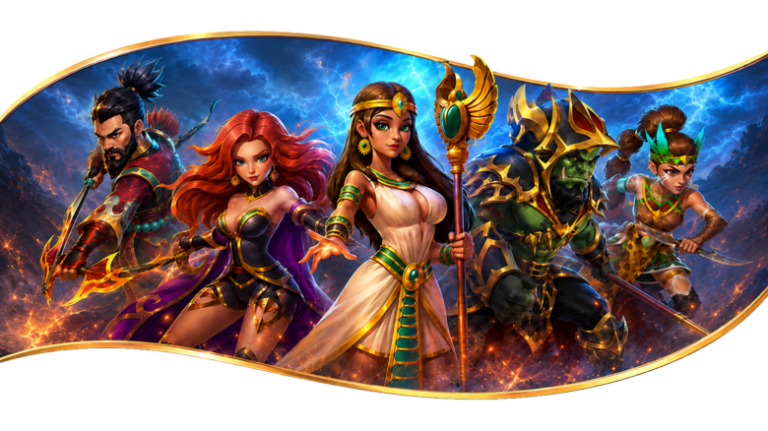
A strong Firestone team formation brings together up to five heroes who benefit from your existing equipment and upgrades, while giving you the damage and support needed to clear the next wave. As your roster grows, look beyond the individual power ratings and consider which characters work well together.
Your choice of leader also matters because their active abilities are the ones you control during battles. Non-leader auto abilities are enabled by default following version 9.0.7, and the Party menu lets you manage individual automatic abilities as their controls become available.
How to change your Firestone team formation
Open the Party menu (P on PC once it has been unlocked) and look at the heroes you have available. You can field up to five at a time and choose one to lead your party, which determines the active hero abilities you control during battles. Melee heroes occupy the front area, while ranged heroes and spellcasters stand further back. You can rearrange heroes within their permitted area, but you can’t move a ranged hero into a melee position or put a melee hero in the back row.
When you’re changing the leader, look at the three abilities available and the resource they consume. On PC you can trigger them with the number keys 1–3, but the timing depends on whether your chosen hero uses Mana, Rage or Energy.
Damage, Tank and Healer specialisations
Firestone separates its heroes into Damage, Tank and Healer specialisations. Damage heroes focus on attacking, tanks are built to take hits, and healers can restore health while also contributing damage. There’s no need to force a fixed number of each role into your five slots if a different combination works better with your upgrades.
If you’re clearing waves slowly, look at which heroes benefit from your damage research and whether their equipment is up to date. If your party is regularly being wiped out, try a tank or healer with better defensive or healing abilities; a Firestone team formation that suits another player’s account may not be the best fit for your own upgrades.
How Mana, Rage and Energy affect your party
Mana regenerates slowly but has a larger pool, while Rage builds as heroes attack or are attacked and gradually drains over time. Damage specialists who use Rage generate more from attacking, whereas tanks gain more when taking hits. Energy replenishes quickly in a smaller pool, with the first ability building combo points to strengthen the second and third abilities.
Melee, Ranged and Spellcaster are separate attack styles, and some research upgrades apply only to heroes with a particular style or resource type. If you’ve invested heavily in spellcaster bonuses, a group of Mana spellcasters can make good use of those shared upgrades instead of forcing you to develop several unrelated types of bonus at once.
Choosing a Firestone team formation for your current stage
Compare the equipment and upgrades behind each hero’s displayed attributes, because two characters at a similar level can perform very differently if one has better gear or benefits from more of your research. Your Firestone team formation should make the most of those existing bonuses before you invest in a completely different lineup.
When adjusting your Firestone team formation, change one hero or your leader at a time and try the same wave again. You’ll get a much clearer idea of whether the new ability or the extra damage is helping than if you replace the entire group at once.
Firestone hero roles and abilities.