If you’ve come back to Project Zomboid after playing Build 41, Project Zomboid Carpentry XP is one of the biggest surprises. Pulling apart half the furniture in town no longer gives you the usual progress on standard Build 42 settings. You’re better off turning logs into planks, reading the matching book and building things you need.
It’s a change I rather like in principle, although it catches plenty of returning players out. You can still dismantle beds, tables and other furniture for materials, but on the normal Build 42 presets that work doesn’t give you the familiar Carpentry XP. The fastest way forward is to set up a small supply of logs, nails and tools, then choose jobs that suit your current level.
How to get Project Zomboid Carpentry XP in Build 42
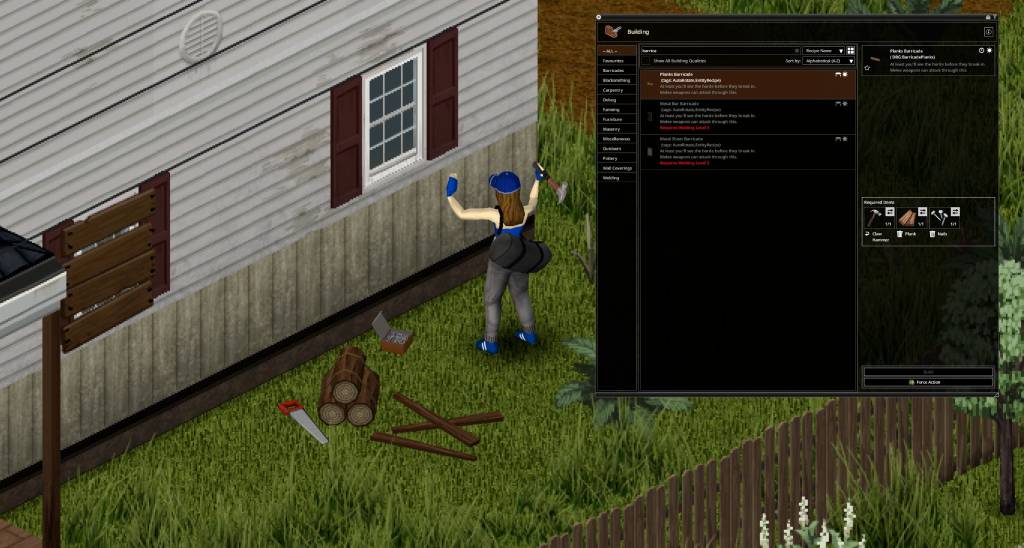
Start with a saw and a source of logs. Sawing logs into planks is accessible very early and gives you useful wood for your next project at the same time. You don’t need to flatten an entire forest; a few nearby trees and a place to store planks will keep you busy for a good while. Keep a hammer handy and gather nails from garages, workshops or other buildings with tools.
At low Carpentry levels, a basic wooden floor costs one plank and one nail, so it’s a practical early XP project as well as a way to improve the shelter. Check the level requirement in the Build menu before you gather a huge stack of materials. Once you have materials, use the game’s Build and Crafting interfaces to make items your current skill allows. As you unlock walls, frames, floors, crates and other wooden structures, build something that helps your base instead of littering the road with objects made only for experience. The exact recipe XP can vary, so watch the skill bar rather than assuming an old Build 41 method still pays the same amount.
Why dismantling furniture is no longer the best method
This is the big Build 42 trap. In older versions, stripping out a house was a popular way to level Carpentry. The Indie Stone deliberately changed the default approach because multiplayer maps were being emptied of furniture and useful containers purely for XP. Scrapping and dismantling became ways to salvage resources, rather than an easy source of unlimited skill growth.
There’s one exception worth knowing: sandbox settings can change how dismantling XP works. If your server has adjusted those settings, you may still earn experience from some dismantling actions. That’s why two people on different servers can report completely different results. On a standard Build 42 world, don’t make furniture destruction your main plan.
Read Carpentry books before spending your supplies
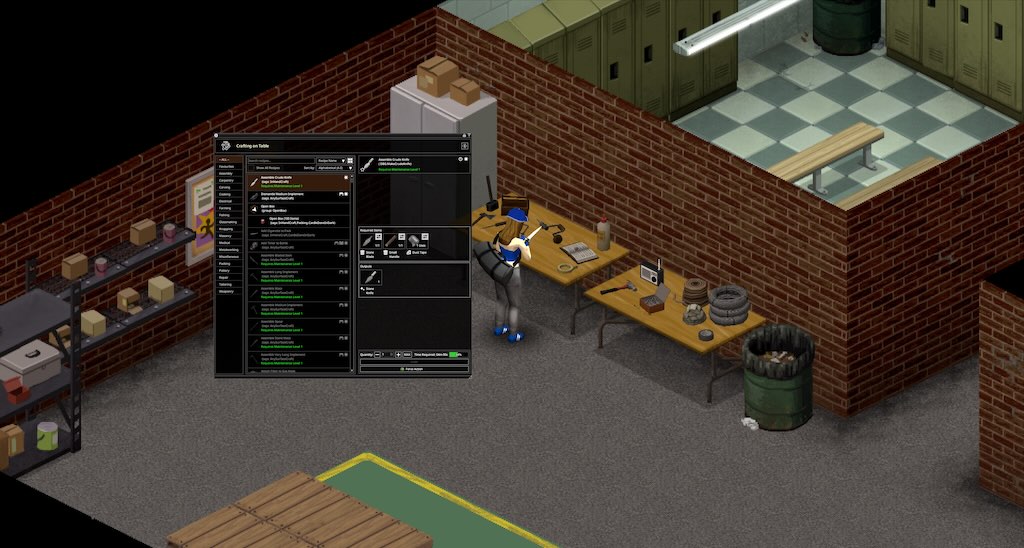
The skill books are worth looking for before you start a serious building session. Each appropriate volume boosts experience for its level range; it doesn’t directly hand you a level. Read the book that matches your current Carpentry level, then do the work while that multiplier is active. Reading one book far above your level won’t magically unlock high-tier furniture.
If you’re planning a longer run, keep the volumes together in a safe spot. It feels much better to spend a day building shelves and walls with a boost than to find the book after you’ve used your last stack of planks.
What should you build at low levels?
At the very beginning, the unglamorous work of processing logs is useful. Once wooden frames and simple walls become available, they make a good next step. Crates are another sensible project because you’ll need somewhere to keep all those tools and food tins. There’s no point building fifty storage boxes if you only own three bags of supplies, though: make what your base actually needs and move to the next upgrade when it becomes available.
Higher Carpentry levels make it easier to construct sturdier and more useful features. But you’ll gain much more from keeping your project supplied than from memorising one allegedly optimal recipe. Pick a site with room to work, collect wood without dragging a horde home and leave yourself a clear escape route if the noise attracts zombies.
The easiest Carpentry levelling mistake to avoid
Don’t start sawing and building while exhausted or surrounded. A dozen planks aren’t worth losing the character over, and carrying too much wood makes you painfully slow. Make smaller trips, keep your saw and hammer in one place and stop when you can’t safely move the materials.
The old routine of dismantling a whole street’s worth of furniture isn’t the answer any more. Keep a saw, hammer, nails and books together at your base, then spend the daylight on projects you actually need. You’ll gain levels while making the shelter better.
Official source: The Indie Stone’s Build 42 crafting and construction overview.