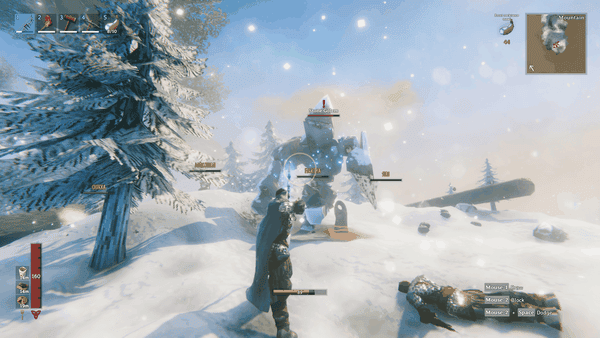
The Valheim death penalty on the normal world setting removes 5% from every skill level, drops the items you were carrying into a tombstone and resets progress toward the next skill level. Dying also gives you 10 minutes of No Skill Drain, so another death during the recovery attempt does not immediately take another chunk from your skills.
What Happens When You Die
The normal Valheim death penalty creates a tombstone containing the equipment and inventory you were carrying. The tombstone remains in the world rather than disappearing after a short timer, and dying again does not erase the first grave. If you had no claimed bed, or your claimed bed has been destroyed, you respawn at the Sacrificial Stones.
How Much Skill XP Do You Lose?
On Normal, the Valheim death penalty cuts 5% from the value of every skill and removes any progress you had toward the next level. The loss scales with the level itself, so a high Run, Bows or weapon skill can drop several displayed levels at once. This is not simply 5% of the XP bar currently visible.
No Skill Drain Explained
After death, the Valheim death penalty gives the character a No Skill Drain status for 10 minutes. If you die again while that effect is active, the second death does not reduce the skills again. The timer resets on another death, which is specifically useful during a difficult corpse-recovery chain.
How Corpse Run Helps
Empty your tombstone completely and you gain Corpse Run for 50 seconds. During that short window the Valheim death penalty becomes much easier to recover from: running and jumping use 75% less stamina, physical blunt, slash and pierce damage is reduced, health regenerates quickly and carry capacity increases by 150.
Does Your Tombstone Expire?
No. A normal tombstone does not expire just because you take a long time to return, and closing the server does not remove it. Deep-water deaths create a floating tombstone, which prevents the normal problem of an inventory container sinking beyond reach. The map also leaves a skull marker at the death location until you remove that marker yourself.
World Modifiers Change Death
The Valheim death penalty is configurable. Casual keeps equipped gear and only removes 1% of skills; Very Easy still drops items but also uses 1%; Easy uses 2.5%; Normal uses 5%; Hard raises skill loss to 7.5% and destroys the non-equipped inventory; Hardcore destroys all carried items and applies 100% skill loss. These choices are set at world level.
Best Way to Reduce the Damage
The safest answer to the Valheim death penalty is preparation before the dangerous trip. Set a nearby spawn point, keep spare food and basic gear at the bed, mark portals and avoid making the first recovery run while hungry or un-rested. The ten-minute No Skill Drain window means there is little benefit in panic-rushing naked into the same danger repeatedly.
What Happens After You Recover Everything
Once every item is removed from the tombstone, the container disappears and Corpse Run activates. If you leave even one item in the grave, the effect does not trigger. That makes inventory space important: arrive with enough room to empty the grave in one action, then use the Valheim death penalty recovery buff to get clear before reorganising.
Current Valheim 1.0 Rules
The Valheim death penalty described here applies to the current 1.0 game and can still be changed through World Modifiers. The official Valheim website is the only external source linked from this guide; the practical recovery articles below remain within The Click.
Does Dying Again Make the First Grave Disappear?
No. Multiple tombstones can exist at the same time, which is important when a recovery route goes badly. The Valheim death penalty may create a second grave, but the earlier one remains where it was. Use the map markers to separate them and recover the dangerous grave first if it contains your main equipment.
One More Useful Detail
The Valheim death penalty is separate from losing temporary food buffs or rested time. Food effects end when you die, so the character that respawns is weaker even before the missing equipment is considered. Eating again before the run is one of the simplest ways to stop a recovery chain becoming worse.