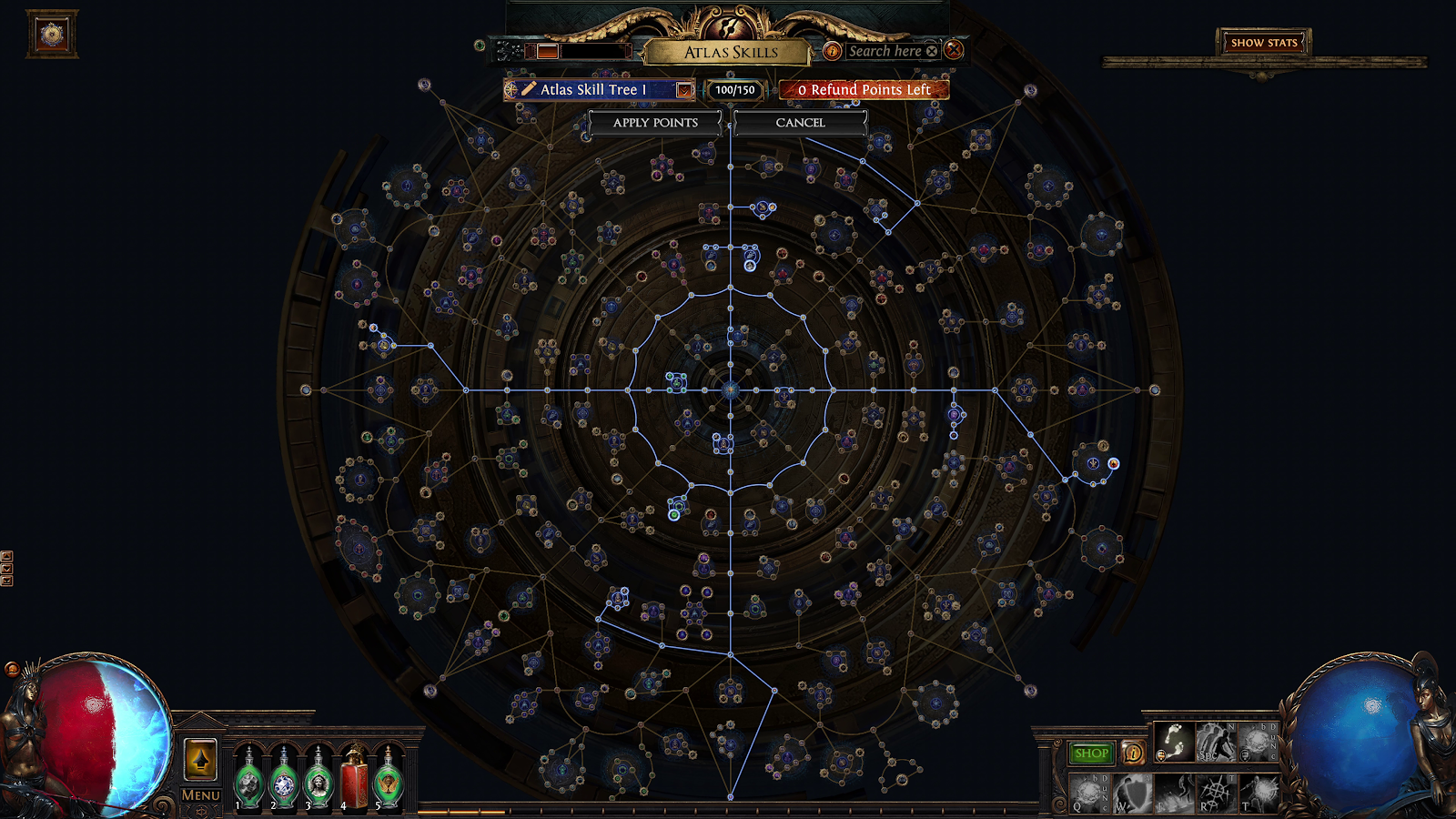
The PoE Atlas passive tree in PoE 3.30 has been rebuilt, changing how you plan your endgame Maps. The redesigned tree starts in a new place, offers more total points and works alongside shifting regions that can supply league mechanics without consuming your own Threads of Creation.
If you’ve spent the last league following a saved Atlas tree screenshot, don’t copy it blindly into Covens of Umbra. Grinding Gear Games has rebuilt the PoE Atlas passive tree and moved many old Scarab effects onto it. You can still specialise in the content you enjoy, but the route you take to those bonuses won’t look the same.
What changed in the PoE Atlas passive tree?
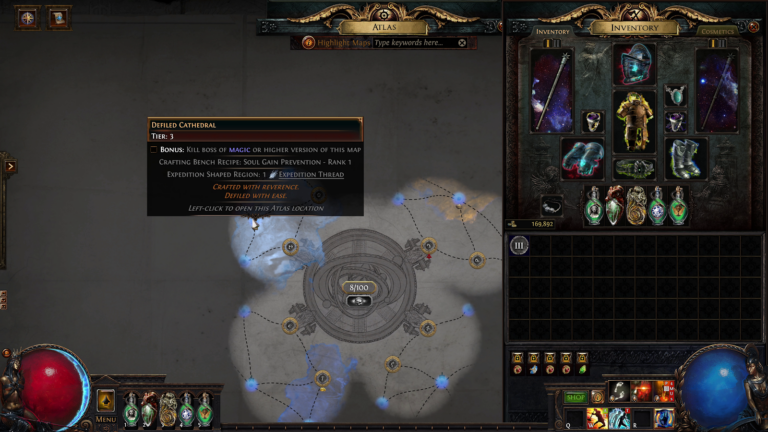
The PoE Atlas passive tree now begins in the centre instead of following the previous layout. The maximum number of earnable Atlas passive skill points increases from 138 to 150, giving players 12 additional points to work toward. That’s the number you can earn through progression; you won’t begin a new league with all 150 available to spend.
Grinding Gear Games has added new wheels, stats and effects, including bonuses that previously came from Scarabs. This is part of the reason Scarabs are being removed in 3.30. The Atlas tree and the new Threads of Creation system are meant to work together rather than replicate the old setup one-to-one.
For a returning player, the practical approach is to identify the mechanics you want to run, find their new passive clusters and build outward from the centre. Don’t assume an old allocation path still exists in the same position.
How shaped regions work with the PoE Atlas passive tree
Alongside the PoE Atlas passive tree, shaped regions now provide particular league mechanics. A Map inside a shaped region can receive a matching mechanic as though you’d applied the appropriate Thread, without spending a Thread from your inventory.
That free effect is especially useful when it covers a Map you’re already interested in farming. You can benefit from the region without committing one of your own items, leaving the Threads you own for other Maps or for a more deliberate farming setup.
The catch is that the region isn’t fixed. Running affected Maps causes it to retreat and change its coverage. Grinding Gear Games’ FAQ says you only need to run the Map once for the region to retreat; you don’t have to engage with the mechanic itself. There’s no need to drag an unwanted encounter out just to make a region move.
Do primary mechanics still spawn randomly?
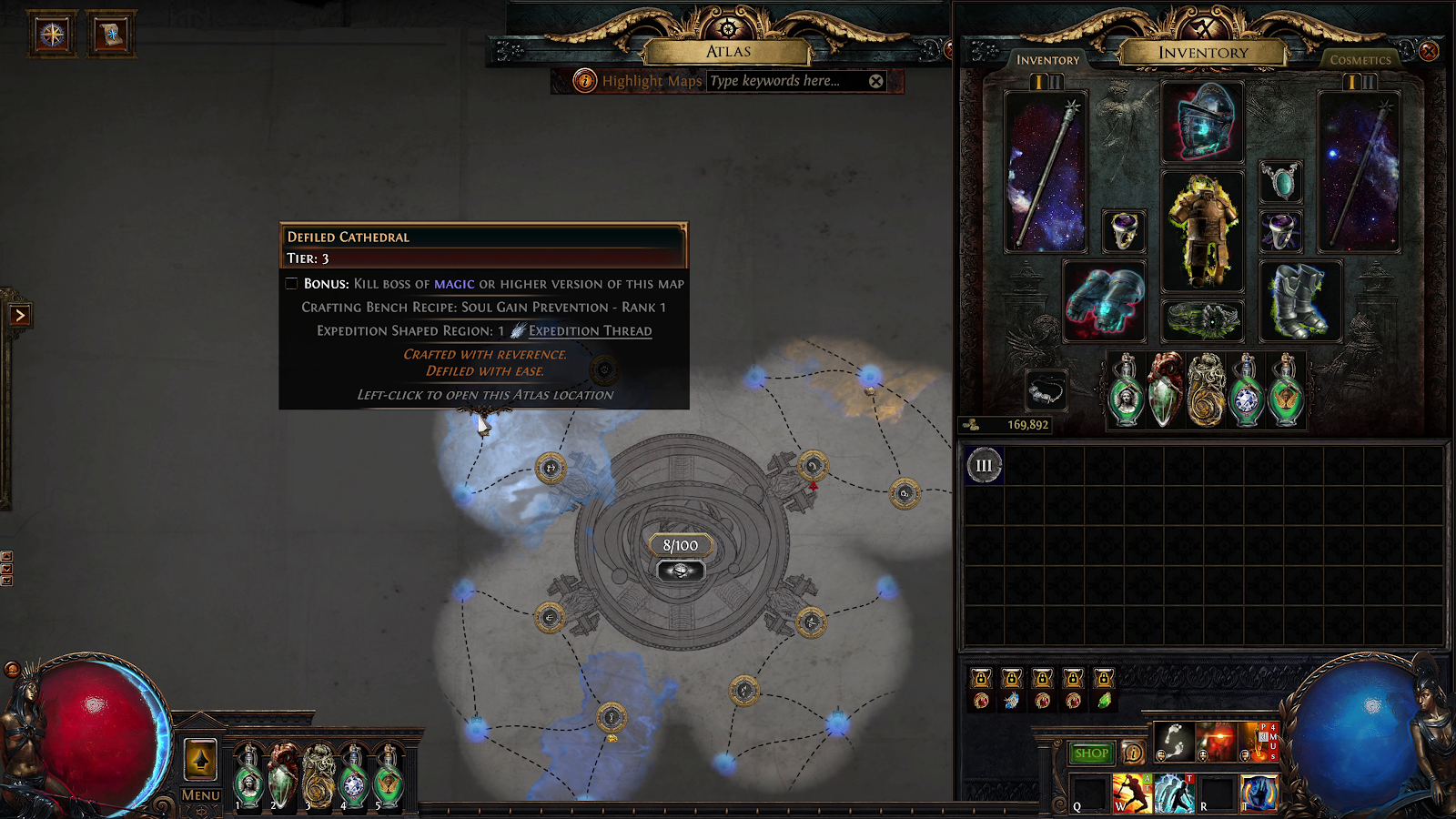
Primary league mechanics associated with Threads don’t simply appear at random as before. The official FAQ says they appear when you use the appropriate Thread or run a Map inside a region shaped for that mechanic. This also removes much of the reason for the old ‘block the mechanic I hate’ strategy.
That doesn’t mean every possible encounter in the game has vanished from ordinary play. It means that the primary mechanics covered by Threads now follow an opt-in or shaped-region rule. Keep that distinction in mind rather than treating it as a statement about every monster event or Map modifier.
How to spend PoE Atlas passive tree points
The extra points give you options, but the best route still depends on the content you want to farm. A player farming a familiar mechanic in quick, safe Maps will have different priorities from someone targeting hard bosses and stacking difficult content.
Start with the passives that directly support your intended mechanic. Next, look at how far you must travel to reach any additional clusters. Leave room to adapt when you see which shaped regions are conveniently placed on the current Atlas. The final twelve points can add flexibility, but they won’t rescue an unfocused tree on their own.
The 3.30 Atlas update also rotates the available Maps, with 31 added and 31 removed in the patch notes. That can change which layouts you prefer even if the mechanic you’re farming stays the same. Check the new Atlas before planning a route around a Map you ran constantly last league.
How Threads fit into the new Atlas
Threads are the new items you put into the Map Device to choose league mechanics. Spending additional Threads increases the chance of strong randomised effects, with a cap of eight expended for that scaling, but only three primary league mechanics can be guaranteed together.
The PoE Atlas passive tree and shaped regions offer another way to obtain a matching mechanic. Use the free shaped regions when they line up with your farming plans, and save your own Threads for Maps where you want specific mechanics. That’s more practical than assuming every Map deserves the maximum possible investment.
The overhaul releases with Covens of Umbra on 13 November 2026, Pacific time. Any picture of an old Atlas tree is already a poor reference for the new routing. Use the redesigned tree shown in the current client when deciding where to spend your points.
Official source: Grinding Gear Games, Covens of Umbra.